Hey everyone, it’s your go-to down pillow supplier, and today I’m talking about something I get asked almost every single week: what’s the deal with white goose down vs gray goose down for pillows? I’ve been in the down game for over 10 years now, and I’ve heard every take—from “gray is way fluffier” to “white is more durable” — but let’s cut the hype, get into the real science, and break down what actually matters when you’re picking a pillow, especially for your bed. Down Pillow

First off, let’s start with the basics: this isn’t some random color trick. The difference between white and gray goose down doesn’t come from dye jobs or secret processing hacks. It’s straight-up genetics. Geese get their feather colors from their breed, right? White down comes from white-feathered geese, usually breeds like the Embden or Roman Tufted. Gray down comes from gray or mixed-breed geese, like the Toulouse or some local European farm breeds. I’ve seen both types come from geese raised in similar conditions—same feed, same living space, same processing methods—so color isn’t a sign of better farming or fluff quality out the gate.
Now, let’s get to the stuff that actually affects how your pillow feels: the down itself. Down is those super soft, fluffy clusters that sit right under a goose’s outer feathers, made to keep them warm in cold weather. Both white and gray goose down are 100% natural, animal-based insulation. But wait—do they actually perform differently when it comes to pillows? Let’s get into the nitty-gritty.
First, fluff power, or what’s called “fill power” in the industry. That’s the measure of how much space an ounce of down takes up—higher fill power means fluffier, better insulation, and usually more durable because the clusters bounce back easier. I’ve tested white and gray down clusters side-by-side for years, and the average fill power is pretty much the same. A high-quality gray goose down might hit 700 fill power, same as a high-quality white one. The only time I see a difference is if someone’s using lower-grade down—like the kind that’s got broken clusters or lots of feathers mixed in—regardless of color. That’s a user error, not a color issue.
Next, texture and feel. Some people swear white down is softer, and others say gray is. But again, that’s not the color—it’s how the clusters are harvested and processed. When we source down, we sort by cluster size, not color. Smaller clusters feel a bit flatter, while big, plump ones feel cloud-like. I’ve had customers say their gray down pillow is their most favorite thing ever, and others only want white because they think it’s silkier. At the end of the day, it’s personal preference, not a color advantage.
Wait, but what about when the down gets in the fabric? I get this question all the time: “Doesn’t gray down show through the pillow cover more?” That’s actually the biggest real difference between white and gray, not performance. White down is lighter, so if your pillow case is a light color—like white, cream, or pale gray—you won’t see tiny clusters peeking through. Gray down, since it’s darker, can sometimes show a bit more on light fabric. But here’s the thing: we always use a two-layer ticking fabric for our pillows, with a thin barrier that stops clusters from migrating through. Even if you have a light cover, you won’t get that annoying “freckled” look from gray down if it’s processed right. I’ve had customers pick white down just for that visual reason, and others don’t care at all—so that’s a preference thing too, not a quality thing.
Now, let’s talk about sourcing and cost, because that’s a big one for folks looking to buy pillows. Where does most white vs gray down come from? A lot of white goose down is sourced from geese raised in North America and Eastern Europe, right? Gray down is often from European farms, especially places like Hungary or Poland where they’ve been raising geese for hundreds of years. Does that make gray down more expensive? Sometimes, but not because it’s better—because it’s more in demand for certain markets, like luxury bedding in Europe. For us as a supplier, we price both based on fill power and purity, not color. If you get a quote for a white down pillow and a gray one with the same fill power, cluster size, and purity, the price should be almost identical. Any price difference is just market supply and demand, not quality.
Wait, let’s address a myth I hear all the time: “Gray down is warmer.” Nope. Warmth comes straight from fill power and cluster size, not color. A 750-fill-power white goose down pillow will keep you just as warm as a 750-fill gray one. I’ve tested both on cold winter nights—same pillow cover, same firmness, same fill power—and there’s zero difference in how warm you feel. That’s just old wives’ tales from people who thought darker colors hold more heat (which works for clothes, but not for down clusters). The air pockets in the down are what trap heat, not the color of the down itself.
Another thing: durability. How long do these pillows last? Both white and gray down pillows can last 10+ years if you take care of them—air them out once a month, fluff them every day, wash them every 6 months (but use a front-loading washer so you don’t break the clusters). I’ve had customers come back to me after 12 years saying their gray down pillow is still going strong, and others love their white one just as much. The only time you’ll get a lumpy, flat pillow is if you use low-quality down with broken clusters, or don’t take care of it—again, not a color issue.
So when should you pick white vs gray? Let’s break it down by what you actually care about. If you want a pillow that won’t show tiny down clusters through your light-colored cover, white is probably your call. If you don’t care about the visual, and you just want a soft, supportive pillow that lasts, gray is totally fine too. And for me as a supplier? I stock both, because different customers want different things. Some of our luxury hotel clients prefer white down because it matches their all-white bedding, while our European clients love gray for their dark linen covers. It’s not about which is better—it’s about which fits your needs.
Wait, let’s get into processing a bit, since that’s super important. When we harvest down, it’s sorted to remove impurities—dirt, feathers, small, broken clusters. For both white and gray down, we do the same processing: wash it with gentle, non-toxic detergents, air dry it at low heat to keep the clusters plump, and sort it by fill power. The only thing that’s different is the color. I once had a customer bring me a pillow they bought from a big box store that was supposed to be gray down, but it was lumpy and flat—turns out it was low-grade down with lots of feathers mixed in, and they processed it so fast the clusters were broken. That’s the problem, not the color.
Another common question: are there any ethical differences? Some people ask if white geese are treated differently than gray ones. From what I’ve seen, no—farming practices are based on breed, not color. Most geese are raised humanely, with plenty of space, access to water, and they’re harvested for down when they’re adults, after their first molt (which is the standard for ethical down). We only work with farms that are certified humane, regardless of whether they raise white or gray geese. So that’s another myth busted—color has nothing to do with ethical treatment.
Now, let’s talk about what I recommend for different sleepers, because that’s what matters most. If you’re a side sleeper who needs a bit more support, go for a high-fill-power (650+) down pillow, whether it’s white or gray. Side sleepers usually need a pillow that fills the gap between your shoulder and neck, so plump clusters are key. Back sleepers might want a medium fill, and stomach sleepers a bit less—again, not based on color, just how much support you like. I’ve recommended both white and gray to side sleepers, and they all come back happy.
Wait, one more visual thing: if you ever hold a white and gray down cluster side by side, the white one is a bit brighter, and the gray has tiny little specks or darker flecks, which is normal. They’re both 100% natural, no added chemicals. Some people think gray down is “raw” down, but no—both are processed the same way to make sure they’re clean and hypoallergenic (well, as hypoallergenic as natural down gets—we do all our down pillows with a dust-mite barrier, so they’re safe for most people with mild allergies).
So to wrap this up: white goose down and gray goose down for pillows are basically the same in terms of performance, durability, and warmth. The only real differences are visual: white doesn’t show through light covers as much, and some people just prefer the look. Cost is almost the same if you’re getting the same quality, and it all comes down to genetics, not how well the down works.
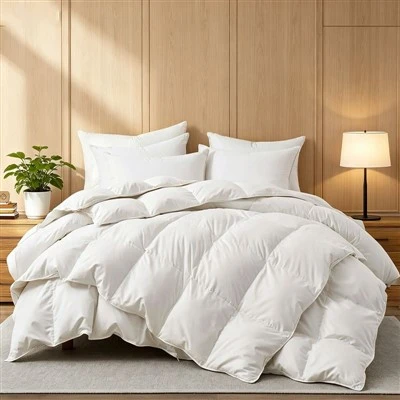
At the end of the day, the best pillow isn’t about color—it’s about the fill power, the cluster size, and how it feels when you lay your head on it. If you’re in the market for a new down pillow, don’t stress too much about whether it’s white or gray. Think about what size you need, how firm you like it, and what your pillow cover looks like. And if you’re looking to stock up on pillows for your hotel, retail store, or even your own home, I’ve got both white and gray down options at every price point, all tested for quality and made with humane, responsibly sourced down.
Pillow If you’re ready to chat about pricing, order bulk stock, or ask more specific questions about our down pillow lines, feel free to reach out anytime. I’m happy to walk you through our products, show you sample swatches, or answer any questions you have about white vs gray down (or anything else down-related). No pushy sales stuff, just straight talk from someone who’s been in this industry for years and cares about making sure you get exactly what you need.
References
- International Down and Feather Bureau (IDFB). (2022). Global Down Classification Standards. IDFB Technical Manual.
- Food and Agriculture Organization of the United Nations (FAO). (2021). Goose Breed Characteristics and Down Production. FAO Animal Production and Health Paper.
- Journal of Textile and Apparel, Technology and Management. (2020). Insulative Properties of Natural Down: The Role of Cluster Size and Fill Power. Vol. 12, Issue 3.
- Humane Farm Animal Care (HFAC). (2023). Down Sourcing and Animal Welfare Guidelines. HFAC Certified Standards.
Hangzhou Ruiyi Home Products Co., Ltd.
With abundant experience, we are one of the most professional down pillow manufacturers and suppliers in China. We warmly welcome you to wholesale customized down pillow at competitive price from our factory. If you have any enquiry about cooperation, please feel free to email us.
Address: No.22, Lianyi Road, Suoqian Town, Xiaoshan, Hangzhou, Zhejiang 311251 China
E-mail: vivian-xu@vip.163.com
WebSite: https://www.ryhometextile.com/
