If you’ve ever scoured industrial property listings or tried to book space for your growing manufacturing, logistics, or light assembly operation, you’ve probably seen the terms “warehouse” and “industrial shed” thrown around interchangeably. I get it—when you’re juggling production deadlines, inventory management, and supply chain bottlenecks, the last thing you need is jargon confusion that leads you to book the wrong space. As someone who’s supplied industrial sheds for over a decade, I’ve seen firsthand how mixing these two up can derail a small business’s growth plans or leave a larger operation scrambling for critical space. Let’s break down the core differences, why they matter for your business, and what to look for when choosing between them. Industrial Sheds
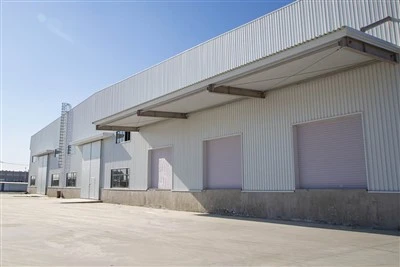
First, let’s ground this in real-world use cases, not textbook definitions. A warehouse is purpose-built for inventory storage, order fulfillment, and movement of goods—end of story. If you’re running an e-commerce business, a third-party logistics (3PL) provider, or a wholesale distribution center, a warehouse is designed to handle high volumes of goods, often with complex loading and unloading infrastructure. Think: wide, column-free floor plans that let you stack pallets 30 feet high, multiple dock doors for semi-trucks, climate control for perishable goods, and automated systems like conveyor belts or racking that streamline order picking. Warehouses are regulated too—they have to meet specific health and safety standards for storing hazardous materials, handling heavy inventory, and managing pedestrian and forklift traffic. For example, a cold storage warehouse for frozen food will have insulated walls, refrigeration units, and strict temperature monitoring that you won’t find in a typical industrial space.
Now, industrial sheds—what I supply every day—are the workhorses of the industrial world, built for versatility in light to medium manufacturing, maintenance workshops, equipment storage, and small-scale assembly. Unlike warehouses, which are focused almost exclusively on moving and storing goods, sheds balance storage space with the ability to accommodate active industrial processes. Let’s paint a picture: a small metal fabrication business might use a 5,000-square-foot industrial shed to store steel beams, set up a plasma cutting station, and do final assembly of custom metal parts. A construction company might rent a shed to store excavators, dump trucks, and building materials, with enough space to change equipment’s oil or do minor repairs on-site. A pharmaceutical startup might use a smaller shed as a temporary lab space for testing new drug formulations, with enough room for workbenches and chemical storage cabinets. The key here is flexibility—sheds are designed to adapt to your specific operational needs, not just generic storage.
One of the biggest practical differences comes down to structural design and layout. Warehouses almost always prioritize open, unobstructed space to maximize storage capacity. Columns are spaced far apart (often 40 to 60 feet apart) to accommodate large racks and forklift movement, and ceiling heights are usually 20 feet or higher to maximize vertical storage. Most warehouses have dedicated dock areas, ground level doors, and sometimes mezzanines for office space, but the core design is built around handling high-volume, large-scale cargo movement.
Industrial sheds, on the other hand, have a more flexible structural design. While they can have open floor plans, they often feature smaller column spacing (typically 20 to 30 feet apart) which supports lighter structural loads, making them ideal for adding workbenches, machinery, or storage racks. Ceiling heights in sheds are usually between 12 and 18 feet—enough for storing heavy equipment or palletized goods, but not as high as a warehouse. That lower ceiling also means sheds are easier and cheaper to build, which is why they’re a popular choice for businesses that don’t need the super-sized vertical space of a warehouse. Another key structural detail: sheds often have roll-up doors instead of dock doors, which work well for smaller vehicles like pickup trucks, construction equipment, or delivery vans, rather than the semi-trucks that service warehouses.
Utilities and space efficiency are another area where the two differ dramatically. Warehouses rely heavily on specialized utilities to support their core functions. For example, a 3PL warehouse might have 3-phase power to run conveyor systems, lighting that’s optimized for order picking, and dedicated drainage for loading docks. If you’re storing hazardous materials, you’ll need specialized ventilation systems, fire suppression, and containment structures that meet OSHA standards. Warehouses are also often located in industrial zones close to major highways, rail lines, or ports to minimize transportation time for cargo.
Industrial sheds, by contrast, are built to accommodate a wider range of utility needs, but with a focus on adaptability. Many of the sheds I supply can be customized with 3-phase power, compressed air lines for machinery, and even basic climate control if you need to work with temperature-sensitive materials. They’re also often located in industrial parks that are accessible to local businesses, not just national logistics networks. That makes sheds perfect for businesses that don’t need to ship full semi loads across the country—instead, they’re serving local clients, doing on-site work, or storing equipment that doesn’t require high-volume cargo movement.
Wait, you might be thinking, can’t a warehouse be used as a shed, or vice versa? In some very limited cases, but that’s not a good long-term strategy. Let’s say you’re a small custom furniture maker. If you rent a 20,000-square-foot warehouse that’s designed for palletized inventory and semi-truck loads, you’re wasting a lot of money on space you don’t need. That warehouse has high ceilings you can’t use for your woodworking machinery, and dock doors that are too big for your small delivery vans. On the flip side, if you’re a 3PL provider handling 1,000 pallets of electronics a month, a 5,000-square-foot industrial shed with 12-foot ceilings and roll-up doors won’t have enough space to stack your pallets, or the infrastructure to handle your high-volume order picking. You’d be forced to pay extra to modify the space—modifying a warehouse to work like a shed is expensive, and modifying a shed to work like a warehouse is often not feasible at all.
Let’s talk about cost, because that’s a big factor for small and medium businesses. Industrial sheds are generally more affordable to build, rent, or purchase than warehouses, because their structural design is simpler and they don’t require the heavy infrastructure needed for high-volume cargo movement. For a growing startup that needs space to expand its operations, a shed offers a cheaper entry point that can be customized as the business grows. Warehouses, on the other hand, are a bigger investment, because they’re built to handle large-scale, long-term logistics operations. If you’re a business that expects to grow 20% a year and needs to scale your storage space, a good industrial shed can be expanded or modified more easily than a warehouse, which is often fixed once it’s built.
Another underrated difference is zoning and flexibility for use. Many industrial zones have different regulations for warehouses and sheds. Warehouses are almost exclusively zoned for storage and logistics, so you can’t easily turn a warehouse into a small manufacturing space or a workshop. Industrial sheds, by contrast, are often zoned for a wider range of industrial uses, so you can use the same space for storing equipment, doing light assembly, and even office space, all in one place. That versatility is why so many small to medium businesses turn to industrial sheds when they’re starting out or expanding—you don’t have to rent multiple spaces for different parts of your operation.
Over the years, I’ve seen too many businesses make the wrong choice because they didn’t understand these differences. A few years back, I worked with a local custom bakery that was looking for space to store ingredients, set up a commercial kitchen, and deliver baked goods to local cafes. They initially rented a small warehouse that was perfect for storing bulk flour and sugar, but it had 30-foot ceilings and dock doors that were too big for their delivery vans. They were also restricted from doing any commercial baking because the warehouse was zoned only for storage. They came to me looking for a solution, and we modified a 6,000-square-foot industrial shed to include a commercial kitchen, ingredient storage, and roll-up doors that fit their vans. It was cheaper than expanding the warehouse, and it let them run their entire operation in one space. That’s the real value of understanding the difference between the two spaces—it’s not just about size, it’s about matching the space to how you actually work.
So how do you decide which one is right for your business? Start by asking yourself a few key questions: What will you use the space for? If your core operation is storing and moving large volumes of inventory for distribution to other regions, a warehouse is the way to go. If you need space for active work—machinery, manufacturing, equipment storage, or local delivery—an industrial shed is almost certainly a better fit. Next, think about your space needs: Do you need high ceilings and dock doors for semi-trucks? Or do you need flexible space that can be adapted to your specific tools and processes? Finally, consider your budget and growth plans. If you’re a small business just starting out, a shed offers a lower cost entry point and more flexibility to expand as you grow. If you’re a larger business with national distribution needs, a warehouse is a long-term investment in your supply chain.

At the end of the day, the line between warehouses and industrial sheds isn’t always hard and fast, but the core principles hold. Both are critical parts of the industrial ecosystem, but they’re built for different jobs. If you’re in the market for industrial space, and you’re not sure whether a warehouse or an industrial shed is right for you, I’m here to help. I’ve worked with hundreds of businesses across industries to design and supply sheds that fit their exact operational needs, from small workshops to mid-sized manufacturing operations. Let’s talk through your requirements, your space needs, and your growth plans, so you can make a decision that works for your business, not just the listings. Reach out today to arrange a consultation and see how a custom industrial shed can support your operations.
Steel Hotel Buildings References
- Industrial Development Research Council. (2022). Industrial Property Types: A Comprehensive Guide for Businesses.
- Occupational Safety and Health Administration (OSHA). (2021). Standards for Industrial Facility Design and Operations.
- National Association of Industrial and Office Properties (NAIOP). (2023). Market Trends in Industrial Space Utilization for Small and Medium Enterprises.
- Local Government Industrial Zoning Handbook. (2022). Zoning Regulations for Industrial Sheds and Warehouse Spaces in Urban Industrial Parks.
Shandong Honstar Construction Co., Ltd.
As one of the most experienced industrial sheds manufacturers in China, we have world-leading production equipment and strong manufacturing capabilities. Please feel free to buy cost-efficient industrial sheds for sale here from our factory. Contact us for more details.
Address: No.365, Xinhai street, Weifang, Shandong, China
E-mail: info@honstarconstruction.com
WebSite: https://www.steelbuildingchina.com/
