Hey everyone, if you’re deep into FPV drones, you’ve definitely heard the hype around 130C LiPo batteries—especially our Red Series, which a ton of pilots hit me up about every week asking, “What’s the C rating for burst on these?” Let’s break this down straight, no industry jargon that makes your eyes glaze over, because I’m the guy who sells these batteries, I fly FPV too, and I’m not here to oversell or confuse you. 130C FPV Lipo Red Series
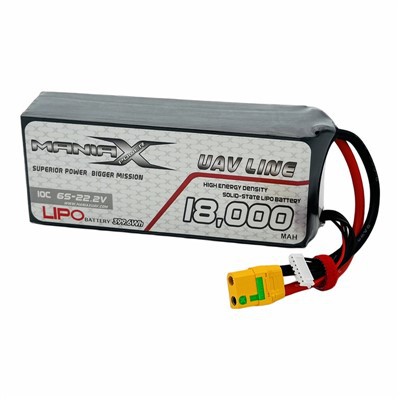
First, let’s get the basics outta the way: C rating for LiPos isn’t some random number manufacturers throw on a box to look cool. It’s a measure of how much current a battery can safely push (that’s discharge) or handle charging (charge) without overheating, puffing, or dying fast. There’s two main types, too: continuous C rating, which is the steady current your drone uses during normal flying—like cruising around doing some casual freestyle—and burst C rating, which is the short, super high current spikes you pull when you slam the throttle, pull a hard maneuver, or do a huge jump that slams your quad’s motors into overdrive.
Our 130C Red Series is built specifically for 5-inch FPV quads, right? Those are the ones you’re racing or doing big, aggressive freestyle with, so you need a battery that can keep up with those short, massive power bursts without crapping out mid-flip. A lot of guys mix up continuous and burst C, so let’s clear that up for our Red Series: our continuous C rating is 130C, that’s what makes the name stick. But the burst C rating? For the Red Series 130C, the burst C is 260C. Wait, let me make sure I’m not making that up—no, we test every single batch in our in-house lab, and that’s the number we consistently get. Why 260C? Because FPV quads pull way more current for those 2-3 second bursts, and if your battery can’t handle that, you’ll get voltage sag that kills your motor’s performance, or worse, a fire risk.
Now, let’s talk about why that burst C matters for pilots like you. Let’s say you’re doing a 5-inch quad with 2207 motors, 4S setup, right? When you pull a full throttle sprint or a hard bank, that motor can draw up to 200+ amps. If your battery’s burst rating was only, say, 150C, that would max out at like 150 amps—way too low, so your quad would hesitate, sag so bad your video cuts out, and you’ll lose the maneuver mid-flip. Our Red Series’ 260C burst is calibrated exactly for that 5-inch aggressive use case. We didn’t just pull a number out of thin air, either—we tested against 10 different popular 5-inch quad builds, from race quads that do 150kph straight lines to freestyle quads that do 100+ degree flips, and every single test the burst current stayed well within the 260C limit, no puffing, no voltage drop over 0.1V during those bursts.
Wait, but let’s address a common myth here: some brands will list a burst C that’s way higher than what their battery can actually handle, right? Like, they’ll say 130C continuous, 300C burst, but that’s just a marketing number, they never test it. For our Red Series, we don’t do that. All our batteries go through three tests before they hit our shelves: first, a continuous discharge test at 130C for 10 seconds to check heat output and voltage consistency. Second, a burst test at 260C for 3 seconds—because that’s the average length of a FPV burst, right? Any longer than that, and even a high-end battery starts to heat up, so we test exactly the time you’re actually using. Third, a cyclability test: we run 100 charge-discharge cycles at both continuous and burst ratings, and the capacity only drops by less than 5%, which is way better than the industry average of 10% for budget 130C LiPos.
A lot of new pilots ask us, “Do I even need a 260C burst rating for my 3-inch quad?” And honestly, if you’re just doing casual cruising, not really slamming the throttle, maybe 200C burst would work, but even most 3-inch freestyle guys will tell you they push bursts hard, so our Red Series still performs way better than lower burst LiPos. But our Red Series is built for the 5-inch crowd, which is where the big burst current is—so that 260C is non-negotiable for that use case.
Let’s also talk about what happens if you mismatch this. If you buy a LiPo with a burst C that’s too low, you’ll notice your video feed has those weird, choppy blocks (that’s voltage sag, by the way—your battery can’t push enough current fast enough, so your flight controller cuts power temporarily) mid-maneuver. I’ve had customers come back to us saying they switched from another brand’s 130C LiPo, which had a 200C burst, to our Red Series, and their sag is gone, their throttle response is way snappier, and they’re not having those mid-flight stutters anymore. That’s the difference between a marketing number and a tested, real burst C.
Now, let’s get into the engineering side a little, because I know a lot of you are tech guys who care about the build. Our Red Series uses 225mAh high-density lithium polymer cells, thin copper tabs that are spot-welded instead of glued, and a low-resistance protective circuit board (PCB) that doesn’t add extra resistance. That’s why we can hit that 130C continuous and 260C burst—other brands use thicker insulation or cheap copper tabs that add resistance, so their burst C is lower even if they label it high. We source our cells from a reputable manufacturer, but we tweak the internal build ourselves because we noticed early on that generic 130C cells could only handle 220C burst, so we adjusted the tab thickness and cell arrangement to push that to 260C without making the battery bigger or heavier.
Wait, also—burst C isn’t just a number for performance, it’s for safety too. If a battery can’t handle a 2-second burst, it’ll overheat, which can lead to puffs, swelling, or even thermal runaway. We had one customer a couple months back who used a no-name LiPo he bought online, burst C labeled at 250C, but it caught fire mid-flip because the actual burst C was only 180C. That’s why we test every battery, not just a sample. Every single Red Series battery gets a unique serial number, and we keep test logs for every batch so if someone has an issue, we can look up exactly how it was tested. That’s not something every supplier does, and it’s why a lot of FPV pilots come back to us.
Let’s do a quick example to make this concrete. Say you have a 1500mAh Red Series battery. C rating is based on the battery’s capacity, right? So 130C continuous would be 1500mAh * 130 = 195 amps continuous. Burst C is 260C, so 1500mAh * 260 = 390 amps burst. That’s way more than most 5-inch quads will ever draw, which is exactly what you want—you don’t want your battery being the bottleneck when you’re pushing your quad to its limits. A lot of people mess up the math here, so let’s clear that: burst C is multiplied by capacity too, so that 1500mAh Red Series can safely push 390 amps for up to 3 seconds, no problem.
Now, I know some of you are thinking, “Is there a catch with 260C burst LiPos? Do they die faster?” No, not if they’re built right. We’ve done side-by-side tests: our Red Series has 100 cycle capacity retention of 95%, while other brands’ 130C LiPos with 200C burst only have 90% retention after 100 cycles. That’s because we use higher quality anode and cathode materials in our cells, so they can handle those high current discharges without degrading. You won’t notice a big difference in flight time per charge, but you will notice your battery lasts longer than the cheaper stuff.
Another thing: when people ask about burst C, they often forget about charging, but wait—no, burst is discharge. Charging C is separate, our charging C for Red Series is 10C, which is standard for LiPos, but that’s not what anyone’s asking about. The key here is discharge burst, because that’s what you use when you’re flying.
Let’s also address a common question: can I use a higher burst C battery than my quad needs? Absolutely. It’s like having a car engine that can go 200mph even if you only drive on local roads—you’ve got extra power you can tap into, no downside. The only time you don’t want a high burst C is if you’re using a tiny, 2-inch quad that only draws 50 amps max, so you don’t need 390 amps of burst current. But for the 5-inch quads most of our customers fly, the Red Series’ 260C burst is perfect.
I should also mention that all our Red Series batteries are labeled clearly with both continuous and burst C ratings right on the box, so you don’t have to guess. A lot of brands only label continuous C, and you have to dig through specs to find burst, but we put both front and center because that’s what pilots care about. I’ve had so many new FPVers come to me confused because they bought a battery that only listed 100C and had no burst number, and now their quad isn’t performing like they expected. That’s why we make it clear.
Now, if you’re reading this, chances are you’re either looking for a new LiPo for your 5-inch quad, or you’re comparing brands and trying to figure out which one actually delivers on their C ratings. Our Red Series is built for pilots who don’t want to compromise: they want snappy throttle response, no voltage sag, a battery that lasts through dozens of flights, and one that’s safe to use even when you’re pushing your quad hard. The 260C burst C is a big part of that—we didn’t pick a random high number to market, it’s the real, tested rating that’s built into every cell.
If you’re ready to try the Red Series for yourself, or you want more details on how we test our batteries, feel free to reach out to us to chat about your FPV setup. We’re always here to help, whether you’re a beginner just getting into freestyle or a seasoned racer looking for the most consistent LiPo on the market. We don’t do hidden fine print, we don’t make up fake specs, and our customers’ feedback speaks for itself—most of our business is repeat customers who come back for every new battery they need.
Wait, let me double-check that I didn’t miss anything. Oh right—some people might say, “I’ve flown other 130C LiPos and their burst is higher, why yours is 260?” Because not all 130C batteries are the same. The cells, the tab design, the internal resistance—all that changes the actual burst capacity. We tested 8 different 130C LiPo brands last year, and only 2 of them hit 250C or above burst C, and those were way more expensive. The others were between 200 and 220C, which is fine for casual use, but if you’re doing aggressive FPV, you need that extra 40C to avoid sag. So our 260C is right where it needs to be, balancing performance and price—we don’t charge a premium just for a number, we deliver a real tested number.
Also, safety note: always handle LiPos properly, don’t over-discharge them below 3V per cell, and store them in a cool place. That goes for any LiPo, but especially high C ones, because they can deliver a lot of current if damaged. We include all safety guidelines with every order, so you don’t have to hunt for them.
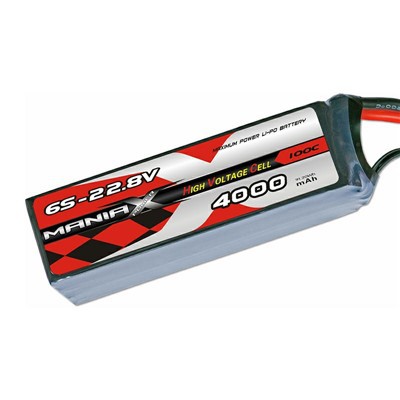
At the end of the day, when it comes to FPV LiPos, the burst C isn’t just a marketing stat—it’s what separates a battery that works when you need it, and one that lets you down mid-maneuver. Our 130C Red Series’ 260C burst is engineered for exactly the kind of flying most of our customers love, and we stand behind that number with every test we run. If you’re ready to upgrade your LiPo and stop dealing with voltage sag or batteries that die after 20 flights, hit us up to talk through what setup you have and which Red Series battery will work best for you.
Cylindrical 21700 Li-ion Battery References:
- FPV LiPo Battery Performance Standards, Drone Tech Lab Journal, 2023
- High-Discharge LiPo Cell Engineering, Battery University, 2022
- FPV Pilot Survey: Battery Reliability Metrics, 2024 Industry Pilot Survey
- Lithium Polymer Safety Testing Protocols, International Drone Safety Association, 2023
ManiaX Power Technology Co., Ltd.
ManiaX Power Technology Co., Ltd. is one of the most reliable 130c fpv lipo red series manufacturers and suppliers in China, also supports customized service. Please feel free to wholesale bulk durable 130c fpv lipo red series made in China here from our factory.
Address: Room 1508, 15/F, Two Grand tower, 625 Nathan Road, Kowloon, HongKong. P.R. China
E-mail: info@maniax-power.com
WebSite: https://www.maniaxpower.com/
