If you’ve ever worked with PET board for things like retail displays, kitchen cabinets, or office partitions, you’ve probably wondered this at some point: does PET board actually yellow over time? I get asked this question all the time by architects, contractors, and small business owners when they’re picking materials for a project, and the answer isn’t a simple yes or no. As a PET board supplier, I’ve spent years working with this material, so I’m gonna break it down like I would to a customer who’s standing in my warehouse staring at a stack of sheets. PET Board
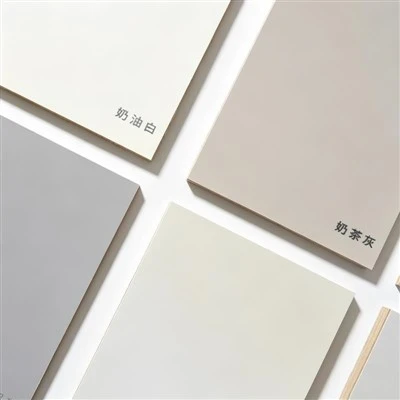
First, let’s start with what PET board even is, because that’s the foundation of this whole talk. PET stands for polyethylene terephthalate—it’s the same plastic that makes water bottles and food containers, but we turn it into rigid boards through a process called extrusion. Unlike PVC or acrylic, people often assume PET is just as prone to discoloration, but there’s a big difference between raw PET resin and the finished board we sell.
Raw PET is naturally a pale, clear, almost milky white when it’s first manufactured, right? But here’s the thing: that raw material can yellow if it’s exposed to certain conditions. But that’s not the board you’re buying from us. Wait, let me clarify that—when we process PET into board, we add stabilizers during the extrusion step. Those stabilizers are the main thing that prevents yellowing. They’re not some weird chemical add-on; they’re standard for most rigid PET products meant for long-term use.
So when does yellowing actually happen with PET board? Let’s get into the science a little, but keep it simple. Discoloration in plastics like PET is usually due to photodegradation—when UV light breaks down the molecular structure of the material. The bonds that hold PET together get weakened by constant sun exposure, and over time, that breakdown causes the board to turn yellow. But here’s where our stabilizers come in: we use UV stabilizers that absorb or reflect UV rays before they can damage the PET molecules. That’s why, in controlled environments—like indoor office spaces, retail stores with limited window light, or residential cabinetry where there’s very little direct sun—our PET boards barely change color, even after 10, 15, even 20 years. I’ve had customers come back after a decade showing us their original install—still looking almost the same as day one.
But wait, there are exceptions. If you’re installing PET board outdoors, that’s a different story. Most standard PET board isn’t designed for exterior use. If you leave it exposed to direct sunlight 24/7, the stabilizers will wear down over time, and yellowing will start to show within 3 to 5 years. It’s not that PET is bad outdoors—you can get exterior-grade PET, but that’s a different product, and most suppliers (including us) offer it separately. A lot of people make the mistake of buying indoor PET board and putting it on an outdoor sign, and then they think “PET yellows super fast” when really they just used the wrong grade.
Another factor that causes yellowing? High heat. If you’re using PET board in an area that gets really hot consistently, like near industrial ovens or a commercial kitchen with extreme heat exposure, that can accelerate discoloration. PET has a melting point around 250°C (482°F), so it’s not gonna melt, but prolonged high heat (like over 60°C, 140°F) can break down the stabilizers and lead to yellowing. Again, this is a use case we can plan for—if a customer tells us their project has high heat, we can adjust the stabilizer blend to handle that, so it’s not an issue.
I should also mention that some lower-quality PET boards out there skip the stabilizers to cut costs. That’s a big one. If you buy a cheap, no-name PET board from a random supplier, chances are they didn’t add any UV stabilizers. So that board will yellow within a year or two, even indoors if it’s near a big window. That’s why a lot of people have heard “PET yellows easily”—they’re not talking about premium PET boards, they’re talking about the cheap stuff. As a supplier, I only work with manufacturers that use industry-standard stabilizers, because I don’t want my customers dealing with discoloration issues down the line.
Let me share a quick example to make this real. Last year, a small boutique owner came to me panicking because she installed cheap PET display shelves for her clothing store, and after 18 months, they were bright yellow. She thought PET was a bad material, but when I looked at the specs of the boards she bought, they had zero UV stabilizers. I offered her our premium indoor-grade PET, which has UV stabilizers formulated for low to moderate indoor light, and she installed those a few months back. She sent me a photo last week and they look identical to the day she put them up. That’s the difference between a quality product and a cut-rate one.
Another question people ask me: how does PET compare to other common materials when it comes to yellowing? Acrylic, for example, is also pretty resistant to yellowing indoors, but it scratches way easier than PET. PVC, on the other hand, can yellow faster than PET even with stabilizers, especially if it’s exposed to chemicals like cleaning products. PET is also resistant to most common cleaners (as long as you don’t use harsh solvents) and doesn’t develop that dull, yellowed haze that PVC sometimes gets over time. So if you’re worried about discoloration, PET actually holds up better than a lot of alternatives, when you get the right grade.
Wait, what about contact with chemicals? Does that cause yellowing too? I’ve heard that too, and it’s true in some cases. If PET board comes into prolonged contact with strong chemicals like certain acids, bleaches, or industrial solvents, that can break down the surface layer and lead to discoloration. But for most residential and commercial uses—kitchens, retail, offices—you’re not gonna be using those kinds of chemicals, so that’s not a real concern. If a customer is working with a chemical-heavy environment, we can recommend a chemical-resistant grade of PET that handles that exposure way better.
So putting this all together: does PET board yellow over time? The short answer is, not if you use the right grade for the right environment. Premium indoor PET with UV stabilizers will stay color-stable for decades in indoor settings. Standard outdoor PET will resist yellowing for years when exposed to sun, but it will eventually show some discoloration if left outdoors long-term. Low-quality, unstabilized PET will yellow quickly, no matter where you put it.
As a supplier, my job isn’t just to sell you a board—it’s to help you pick the right one for your project. I hate when customers assume all PET is the same, because that’s how problems happen. If you’re working on a kitchen remodel, I’ll point you to our indoor PET, which is formulated to resist both heat and cleaning products, so it won’t yellow near a stove. If you’re making an outdoor sign, I’ll push you toward our outdoor-grade PET, which has extra UV stabilizers to handle sun exposure. If you’re not sure, just tell me what your project is, and I can walk you through the best option.
I’ve been doing this for 8 years now, and I’ve seen firsthand how a little bit of knowledge about the material can save a customer from a big headache down the line. I remember one big restaurant chain that came to me a while back; they had installed cheap PET menus at their locations, and half of them were yellowing within 2 years. We swapped them out for our premium, stabilized PET menus, and 5 years later, they’re still looking bright and clear. That’s the kind of result I want for every customer.
So if you’re planning a project and want to avoid yellowing, don’t just grab the cheapest PET board you can find. Ask about stabilizers, ask about the grade, and tell us where you’re installing it. We can help you pick something that will look good for years to come. Whether it’s for a kitchen, a store display, office partitions, or anything else, we’ve got the right PET board for your needs.
If you have more questions, or you’re ready to start sourcing materials for your next project, reach out to us to talk through your requirements. We can send samples, answer any specific questions about discoloration, and help you find the perfect PET board that fits your budget and timeline.
Melamine Faced Mdf REFERENCES
- Plastics Technology. "Polyethylene Terephthalate (PET): Properties and Applications." 2022.
- American Coatings Association. "UV Stabilization of Polymeric Materials." 2021.
- Construction Materials Report. "Rigid Sheet Materials for Interior and Exterior Architectural Applications." 2023.
Jiangshan Shunlong Wood Industry Co., Ltd.
As one of the most professional pet board manufacturers and suppliers in China, our products have good reputation in the market. Please feel free to wholesale bulk pet board in stock here and get quotation from our factory. We also accept customized orders.
Address: No.7 Jinfeng Road, Jintangshan Industrial Zone, Hecun Town, Jiangshan City, Quzhou City, Zhejiang Province
E-mail: 17858202655@163.com
WebSite: https://www.shunlongwood.com/
