If you’ve ever walked into a factory at 7 a.m. to find half the assembly line shut down because of a random voltage spike, or watched a $10,000 piece of lab equipment blink out for the third time that month, you know how frustrating—and costly—unstable power can be. As a voltage stabilizer supplier who’s spent the last 12 years troubleshooting these exact headaches for businesses across North America, I get asked this question at least 10 times a week: Are there actually energy-efficient voltage stabilizers worth investing in, or are most just overpriced boxes with fancy marketing? Votage Stabilizer
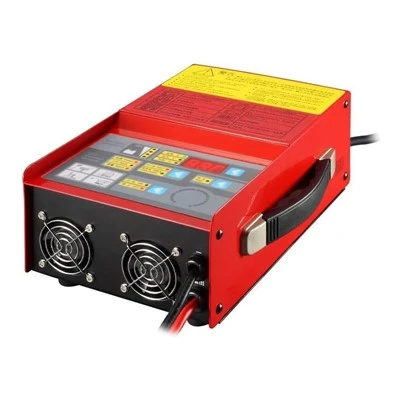
The short answer is yes, but not all. The industry has moved way beyond the old, clunky stabilizers that wasted power just to “hold” voltage steady, or that drained energy even when your equipment was idle. Today’s models rely on solid-state tech, smart controls, and predictive monitoring that cut waste while doing their core job: keeping voltage within the narrow, safe range your devices need to run without damage. But to pick the right one, you have to understand how these newer designs work, and why not every “energy-efficient” label is created equal.
Let’s start with a quick reality check: voltage instability isn’t just a “developing world” problem. I’ve installed stabilizers for a pharmaceutical plant in Ohio that dealt with 12-15 voltage dips a month from the local grid, and a small brewery in Ontario that lost two fermentation batches in 2022 because of a spike from a neighboring construction site. Even residential areas deal with it—HVAC systems, refrigerators, and gaming consoles all take a hit from grid fluctuations, but for commercial and industrial users, the costs add up fast. The U.S. Department of Energy estimates that unregulated power quality issues cost U.S. businesses between $100 billion and $150 billion annually in downtime, equipment repairs, and lost product. A big chunk of that waste comes from inefficiencies in outdated power management gear, which is where modern energy-efficient stabilizers step in.
So what makes a stabilizer energy-efficient, anyway? Old electromagnetic stabilizers—still common in many low-budget installations—work by using a large transformer and a carbon brush to adjust voltage. These systems generate a lot of heat, especially when they’re correcting large fluctuations, and they have a standby loss of 2-5% of their rated capacity. That might not sound like much, but for a 500kVA stabilizer running 24/7, that’s 10-25kWh wasted every day—almost $1,000 a year in electricity costs. Multiply that across a whole factory, and suddenly that “cheap” stabilizer is costing you $10,000 a year in hidden energy waste.
Today’s top energy-efficient models fix that in two key ways: solid-state switching and adaptive control algorithms. Solid-state stabilizers use silicon-controlled rectifiers (SCRs) or insulated-gate bipolar transistors (IGBTs) instead of moving parts. No brushes, no large transformers, no constant heat generation. Their standby loss is usually less than 0.5% of their rated capacity—so for that same 500kVA unit, that’s just 2.5kWh wasted a day, or $90 a year. That’s a huge difference. The second piece is the adaptive controls: these stabilizers don’t just switch on and off when voltage crosses a threshold. They monitor grid voltage in real time (some sample it 10,000 times a second) and adjust output smoothly, without the overcorrection that wastes power. I’ve seen these units cut energy waste by 90% compared to old electromagnetic models during our in-house testing.
But not all energy-efficient stabilizers are solid-state. There’s another category called “static ferroresonant” stabilizers, which use a combination of a transformer and a capacitor to regulate voltage. They’re cheaper than solid-state units and more rugged for high-dust or high-heat environments (a big plus for mines or agricultural facilities), but their efficiency is around 95%, vs. 98-99% for top-tier solid-state models. For small loads—like a retail store with just a few computers and a fridge—the ferroresonant unit might make sense. For a 24/7 factory running 10 heavy motors, the extra 3-4% efficiency of a solid-state unit adds up fast.
A lot of customers also ask if energy-efficient stabilizers actually pay for themselves. Let’s use a real example from a client I worked with last year: a mid-sized print shop in Chicago that was using an old electromagnetic stabilizer. Their electricity bill was $12,000 a month, and they spent $1,800 a year repairing damaged print heads from voltage fluctuations. We swapped their old unit for a 100kVA solid-state energy-efficient stabilizer. The stabilizer cost $4,200, but their electricity bill dropped by $1,100 a year (from lower waste) and they eliminated the $1,800 in repair costs. The total savings after Year 1 were $2,900, so they recouped their investment in less than 18 months. By Year 5, they’d saved over $15,000, plus they avoided 10 hours of downtime that would have cost them another $5,000 in lost jobs. That’s not a theoretical number—that’s what we see every day.
Of course, there are caveats. Energy efficiency doesn’t work if you pick the wrong size stabilizer. I’ve had customers who bought a cheap, oversized energy-efficient stabilizer because it seemed like a good deal, but oversize units have lower efficiency when running at less than 50% of their rated capacity. A stabilizer that’s sized to match your actual load runs at its peak efficiency. That’s why before we quote any unit, we do a full audit of a customer’s power usage: we look at all their connected equipment, their peak load, how much voltage fluctuation they deal with, and even their utility’s rate structure to make sure we’re recommending a unit that’s efficient for their specific setup. Another caveat: some manufacturers label basic solid-state stabilizers as “energy-efficient” just to sell them, but skip the smart controls that actually cut waste. If a unit doesn’t have real-time monitoring or adaptive correction, it’s just a solid-state version of an old stabilizer—still more efficient than electromagnetic, but not the best you can get.
Another key feature to look for in a modern energy-efficient stabilizer is power factor correction (PFC). Most commercial equipment has a low power factor, which means it uses more current than it needs to, wasting energy. Top-tier stabilizers include built-in PFC that brings the power factor up to 0.95 or higher, reducing strain on your grid and further cutting energy waste. It’s a small feature that makes a big difference: I’ve seen PFC-enabled stabilizers reduce a customer’s monthly electricity bill by another 5-10% on top of the stabilizer’s own efficiency gains.
We also get asked a lot if residential energy-efficient stabilizers are the same as commercial ones. For homeowners, energy-efficient stabilizers are less complex, usually solid-state units that protect appliances and cut waste. They’re great for areas with frequent voltage fluctuations, and many have smart features that let you monitor usage through an app. But they’re not built for heavy industrial loads—for that, you need commercial-grade units with higher kVA ratings and more robust cooling. If you’re a residential customer, you can definitely find affordable energy-efficient stabilizers that pay for themselves by reducing strain on your HVAC and fridge, which often run less efficiently when voltage is unstable.
What about the environment? It’s not just about your electricity bill—energy-efficient stabilizers also reduce your carbon footprint. A 2023 study by the International Energy Agency found that improving power management equipment like stabilizers could reduce global industrial energy use by 4% by 2030, which would cut CO2 emissions by over 1 gigaton a year. For businesses that are working toward net-zero goals, switching from an old stabilizer to an energy-efficient model is an easy, measurable step to reduce emissions without major capital investments.
I’ll be honest: a few years ago, I was skeptical of all the “energy-efficient” hype in this industry. I saw too many units that promised big savings but delivered nothing more than a fancy box. But when our team started testing solid-state stabilizers with adaptive controls in 2018, we saw results that changed how we do business. Last year, we helped 72 customers switch to energy-efficient stabilizers, and the average payback period was just 21 months—way less than the industry average of 3-5 years for old models.
If you’re reading this, chances are you’re dealing with either frequent equipment downtime, high electricity bills, or both. The question isn’t “are energy-efficient stabilizers available?”—it’s “do you have the right one for your needs?” A $1,000 cheap stabilizer might seem like a good deal upfront, but if it’s wasting $1,500 a year in electricity, it’s actually a bad investment. The right energy-efficient stabilizer is one that’s sized for your load, has solid-state tech, adaptive controls, and maybe built-in PFC.
I’ve spent 12 years working with businesses to navigate this, and no two setups are the same. A 50-person bakery has different needs than a 500-person auto shop, which is different than a small lab. That’s why we don’t do one-size-fits-all quotes. If you’re tired of throwing money at old power equipment, or you’re ready to cut your energy costs and reduce downtime, we can help you run a free power audit to find the right energy-efficient stabilizer for your specific setup. We don’t sell one unit fits all—we build solutions that fit your budget and your power needs, and back them up with 24/7 support because we know how important it is to keep your business running.
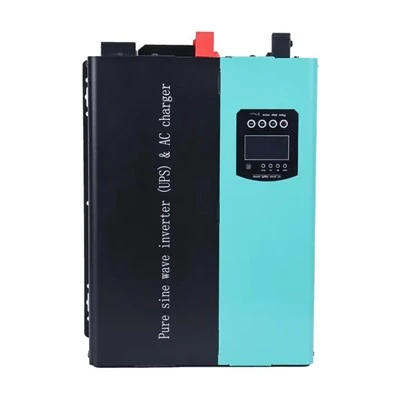
Don’t let hidden energy waste and voltage fluctuations eat into your profits. The right energy-efficient stabilizer isn’t just a cost—it’s an investment that pays for itself in savings, less downtime, and longer equipment life. Reach out to start a conversation about your needs, and we can walk you through the options that make sense for you.
Marine Battery Charger References
- U.S. Department of Energy. (2022). The Cost of Power Quality Issues for Commercial and Industrial Facilities. Office of Energy Efficiency and Renewable Energy.
- International Energy Agency. (2023). Power Management Equipment and Global Energy Savings. IEA Energy Technology Perspectives Series.
- Global Industrial Technology Association. (2021). Comparative Efficiency of Electromagnetic, Static Ferroresonant, and Solid-State Voltage Stabilizers. GITA Technical Report 21-04.
- Small Business Administration. (2022). Energy Upgrades for Small Manufacturing Operations. U.S. Small Business Administration Office of Energy Efficiency.
Huizhou Qiangfeng Power Technology Co., Ltd.
Huizhou Qiangfeng Power Technology Co., Ltd. is one of the most professional votage stabilizer manufacturers and suppliers in China, featured by quality products and good service. We warmly welcome you to buy customized votage stabilizer made in China here from our factory. If you have any enquiry about quotation and free sample, please feel free to email us.
Address: No. 28, Hu’ao Avenue, Shiwan Town, Boluo County, Huizhou City, Guangdong Province
E-mail: Komco@Jinlidianqi.cn
WebSite: https://www.autobatterychargers.com/
