If you’ve ever stood next to a truck mounted crane lifting a steel beam onto a construction site, loading a full pallet of masonry for a renovations job, or setting a prefabricated roof truss in place, you’ve probably wondered: how fast does that massive equipment actually move its load? As a truck mounted crane supplier who’s spent 12 years on job sites, talking to operators, contractors, and small business owners who rely on this gear, I can tell you the lifting speed isn’t a random number—it’s a balance of safety, load capacity, equipment limits, and the work you need to get done. Let’s break it down, straight from the perspective of someone who’s not just selling cranes, but using them every day to understand what matters most. Truck Mounted Crane
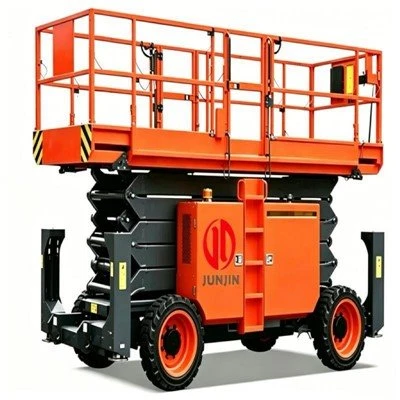
First, let’s get one thing clear: lifting speed for a truck mounted crane isn’t a single value. It’s split into two core movements, each with its own limits: hoist speed (how fast the hook lifts or lowers the load) and boom extension speed (how fast the crane’s arm stretches or retracts to reach a higher or farther work area). These speeds aren’t pulled from a hat—they’re defined by the crane’s make and model, its maximum load capacity, and even the terrain it’s sitting on. For example, a 10-ton light-duty truck mounted crane built for residential job sites will move very differently than a 50-ton heavy-duty model used for bridge construction.
Let’s start with hoist speed, since that’s the most people notice when watching a crane work. For light-duty cranes (1 to 15 tons), which are the most popular for small construction, tree removal, and equipment loading, average hoist speed is between 20 and 40 feet per minute (fpm) when lifting near the crane’s maximum capacity. If you’re lifting a lighter load—say, a 500-pound air conditioner onto a second-floor roof—that speed jumps to 50 to 80 fpm. I’ve watched residential operators speed up to 70 fpm when setting a small hot tub, but they always drop back to 30 fpm when lifting a full pallet of bricks, because that heavy load requires more control.
For mid-duty cranes (15 to 30 tons), used for commercial remodels, steel erection for small warehouses, and transporting heavy machinery, hoist speeds are a bit slower for heavy loads: 15 to 30 fpm when working at maximum capacity, and 40 to 60 fpm for lighter loads. These cranes have longer cables and heavier hoist motors, so there’s more stress on the system at full capacity. I had a client last year who was using a 25-ton crane to lift a 22-ton generator onto a trailer; he told me he kept the speed at 18 fpm the entire time, because even a tiny jolt could damage the generator’s wiring. That’s a perfect example of how load directly changes speed.
Heavy-duty truck mounted cranes (30 to 50 tons, and larger) have the slowest hoist speeds, even when lifting lighter loads. These cranes are built for big infrastructure jobs: lifting bridge girders, placing prefabricated building modules, or moving large construction equipment. Their hoist speed ranges from 10 to 25 fpm at maximum capacity, and only 30 to 45 fpm for lighter loads. The reason is simple: these cranes have longer booms and thicker cables, and any extra speed can put unnecessary strain on the truck’s chassis and the crane’s structural components. I worked on a highway bridge project two years ago where a 40-ton crane was lifting 35-ton steel girders; the operator stuck to 12 fpm, even though the crane was capable of going faster, because OSHA guidelines for high-capacity lifts recommend staying under 15 fpm to prevent swing.
Now, boom extension speed, which is just as important for job site efficiency. When a crane needs to reach a tall building or a far edge of a construction site, how fast does its boom stretch out? For light-duty cranes, boom extension speed is usually 10 to 20 feet per minute, regardless of load. Most residential jobs don’t require booms to stretch more than 50 feet, so operators don’t need to rush that movement. For mid-duty cranes, boom extension speed is a bit faster: 15 to 25 fpm, since they often work with booms that reach 100 feet or more. Heavy-duty cranes have the fastest boom extension speed, ranging from 20 to 35 fpm. Their booms are longer (some reach 180 feet or more), so getting into position quickly cuts down on job time. But again, operators slow down when the boom is near its maximum extension, because that’s when the crane’s stability is at its lowest.
Wait, I should mention stability—because that’s the reason speed limits are so strict. A truck mounted crane can tip if it moves too fast with a heavy load, especially if it’s on uneven ground. Every crane has a set of load charts, which are like instruction manuals for operators that tell them the maximum load they can lift at different boom lengths and angles, and the corresponding safe speed. I’ve seen new operators try to rush a lift, only to get a warning from the crane’s outrigger sensors, which are designed to stop the machine if it’s at risk of tipping. That’s not a flaw in the crane—it’s a safety feature.
Another factor that affects lifting speed is the truck’s own chassis. If a crane is mounted on a 2-axle truck (the most common for light and mid-duty cranes), it has less weight and stability than a 3-axle or 4-axle truck, so its hoist and boom speeds are slower. Heavy-duty cranes, which are mounted on 5-axle or larger trucks, have more weight to stabilize the load, so they can move a bit faster. But even then, operators err on the side of caution. I always tell my customers: the fastest speed isn’t always the best speed. A lift that takes an extra minute is way better than a damaged load, a broken crane, or, worse, an injury to someone on the job site.
Let’s get practical, because I know you don’t just want numbers—you want to know what this means for your work. If you’re a residential contractor needing to lift a roof truss, a 10-ton light-duty crane will have a hoist speed of around 50 fpm, so a 20-foot lift will take about 24 seconds. If you’re a commercial contractor lifting a 10,000-pound HVAC unit onto the roof of a 3-story building, a 25-ton mid-duty crane will have a hoist speed of around 35 fpm, so that 30-foot lift will take about 51 seconds. If you’re a utility worker lifting a 50-foot power pole onto a line truck, a 40-ton heavy-duty crane will have a hoist speed of around 20 fpm, so that 40-foot lift will take about two minutes. These numbers are estimates—your exact speed will depend on your crane’s model, your load, and the terrain—but they give you a rough idea of how long a lift will take.
I’ve heard a lot of myths over the years about lifting speed. Some people think faster is better, but that’s not true. Faster speed means more momentum, which makes the load swing. Swinging loads are one of the top causes of crane accidents, so most operators intentionally keep speeds low to minimize swing. Others think all cranes have the same speed, but as I said earlier, that’s not the case. A tiny 2-ton crane for garage work will have a much faster speed than a 50-ton crane for highway construction. I’ve even had customers come to me thinking they need a faster crane, only to realize that their jobs don’t require that speed—they just need a crane that can handle their typical loads safely.
If you’re in the market for a truck mounted crane, understanding lifting speed is key to choosing the right model for your work. You don’t want to buy a 50-ton crane if you only lift 500-pound loads for residential jobs, because that crane will be slower and more expensive to operate. On the other hand, if you’re doing commercial construction, a light-duty crane won’t have enough capacity or speed to get the job done efficiently. I always recommend that customers give me details about their typical jobs: what’s the maximum load you lift? How high do you need to lift it? How far do you need to reach? That way, I can point them to a crane with the right lifting speeds and capacity for their needs.
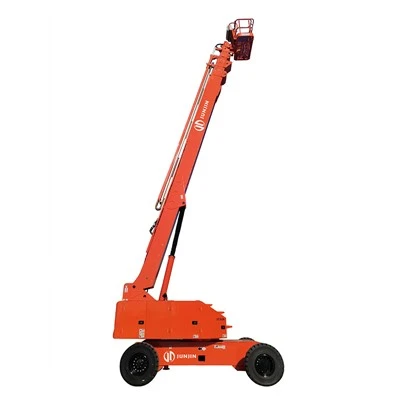
At the end of the day, lifting speed is a balance between efficiency and safety. A good operator will adjust their speed based on the load, the terrain, and the job at hand, not just what the crane is capable of. As a truck mounted crane supplier, my job isn’t just to sell equipment—it’s to make sure my customers have the right gear to get their jobs done safely and on time. If you’re in the market for a truck mounted crane and want to talk through what speed and capacity will work for your work, reach out to our team to connect for a consultation.
Telescopic Boom Lift References
- Occupational Safety and Health Administration (OSHA). 29 CFR 1926 Subpart CC: Cranes and Derricks in Construction, 2023.
- National Crane Operators Association (NCOA). Crane Speed and Stability Guidelines for Truck Mounted Cranes, 2022.
- Truck Mounted Crane Manufacturers Association. Model-Specific Lifting Speed Specifications for Light, Mid, and Heavy-Duty Cranes, 2021.
Yantai Quanrui International Trading Co., Ltd.
As one of the most reliable truck mounted crane manufacturers and suppliers in China, we’re featured by high quality customized products. Please rest assured to buy discount truck mounted crane made in China here from our factory. Contact us for pricelist and quotation.
Address: No. 278, Sanya Road, Gaotuan Town, Fushan District, Yantai City, Shandong Province, China
E-mail: Info@quanjin1588.com
WebSite: https://www.qr1588.com/
