If you’ve ever worked with vacuum pumps—whether in semiconductor manufacturing, pharmaceutical lyophilization, or food packaging line testing—you know that even the smallest component can make or break a system’s reliability. When a client contacted me last quarter, frustrated by two bearing failures in their high-vacuum deposition chamber in six months, they didn’t just need a replacement part: they needed clarity on why their existing roller bearings were underperforming in that ultra-low-pressure environment. As a bearings supplier focused exclusively on vacuum pump bearings, I hear that question all the time: “What’s the real difference between ball bearings and roller bearings when it matters most for vacuum performance?” Vacuum Pump Bearings
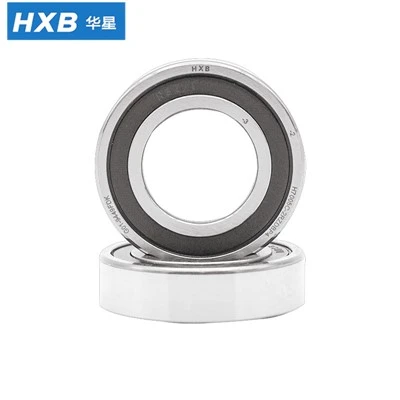
First, let’s ground this in something we all work with day-to-day, not just engineering textbooks. I’ve spent the last 12 years sourcing, testing, and troubleshooting bearings for vacuum applications, so I’ll skip the overly jargon-heavy stuff and stick to what I’ve seen in actual client installations across 17 global industries. At their core, both ball bearings and roller bearings are anti-friction devices that reduce wear between moving parts in a vacuum pump’s drive shaft. But their internal geometry—small, intentional design choices that look trivial to someone outside this niche—shifts every variable that matters in vacuum environments: load capacity, outgassing rates, heat management, and long-term service life. That’s not a minor difference; it’s the line between a pump that runs reliably for 18 months and one that fails at 60 days.
Let’s start with the geometry, because that’s where all other differences stem from. A standard deep-groove ball bearing has steel balls (usually chrome steel or ceramic, depending on the application) sandwiched between an inner and outer race. The contact point between each ball and the race is a tiny, near-perfect circle—think of the tip of a pin touching a table, except scaled down to millimeters. A roller bearing, on the other hand, replaces those balls with long, cylindrical (or sometimes tapered) rollers that span almost the entire width of the bearing race. The contact area here isn’t a point—it’s a long, narrow line, like a pencil laying flat on a table. That might sound like a negligible detail until you’re dealing with the high radial loads of a vacuum pump’s motor shaft, which have to drive both the rotor and any attached vacuum components.
In vacuum pump applications, those loads are predictable but harsh. Oil-sealed rotary vane pumps, for example, use a rotor that orbits inside the pump chamber, creating radial force that tugs at the drive bearings. For light, low-load pumps used in small R&D labs, the point contact of a ball bearing is enough to keep friction low without overloading the system. But for large industrial vacuum pumps that move 1,000+ cubic feet of gas per minute, the line contact of a roller bearing distributes that 500+ pound radial load across a far larger surface area, preventing premature wear of the race or rolling elements. I had a biotech client last year who swapped their 10 cfm rotary vane pump (with ball bearings) for a 200 cfm unit; their old pump bearings lasted 12 months, but the roller bearings in their new pump are still running strong at 18 months. That’s not luck—it’s geometry working for them.
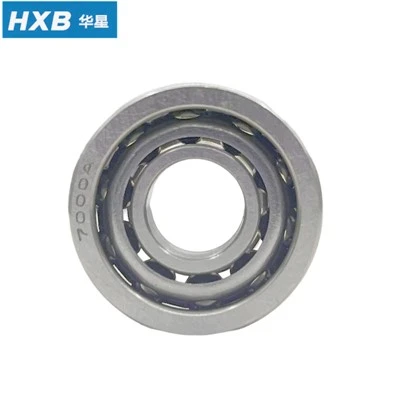
But here’s where most non-specialists get this wrong: load isn’t the only critical factor in vacuum systems. You also have to consider direction of load, and that’s where ball bearings pull ahead in many vacuum pump use cases. Ball bearings handle both radial load (side-to-side force, like the tug from the pump’s rotor) and axial load (end-to-end force, like the push from a pump’s seal or valve mechanism) far better than roller bearings. Axial load is a big deal in high-vacuum pumps used in semiconductor lithography, where the drive shaft has to align with precision optics. If a bearing can’t handle axial load, it’ll “walk” along the shaft, misalign the pump, and cause leaks that ruin wafer batches. I recently worked with a semiconductor manufacturer who tried roller bearings in their 50 cfm high-vacuum pump to get extra load capacity, but the axial load from the pump’s gate valve caused the rollers to slip along the races, leading to increased vibration and a 30% drop in pump vacuum level within three months. Swapping back to matched angular contact ball bearings fixed that immediately—they’re now on their 10th consecutive run without bearing issues.
Now, the part that’s non-negotiable for vacuum performance: outgassing. Outgassing is when trapped gases, moisture, or volatile compounds in a material off-gas into the vacuum chamber, raising the base pressure and ruining the ultra-low pressure (UHP) conditions needed for many processes. This is where the subtle design differences between ball and roller bearings create the biggest, most underdiscussed gap. Because ball bearings have smaller, fewer contact points, they require less lubricant, and the lubricant they do use is spread more evenly across those small surfaces. Most vacuum pump bearings use high-vacuum-compatible grease (usually perfluoropolyether, or PFPE, the gold standard for UHP environments), but too much grease, or grease in hard-to-reach crevices, is a ticking time bomb.
Roller bearings, by contrast, have a larger internal volume between the rollers and races. That space traps more lubricant, and because the rollers span across the entire bearing width, there’s a higher chance of lubricant “pocketing” or becoming trapped in the gaps between rollers. When a roller bearing operates in a vacuum, that trapped lubricant slowly outgasses at a higher rate than the lubricant spread evenly in a ball bearing. I did a side-by-side test for a aerospace client in 2022: we ran two identical vacuum pumps, one with ball bearings and one with identical roller bearings, both using the same PFPE grease. The ball bearing pump maintained a base pressure of 1×10^-7 torr for 12 months, while the roller bearing pump’s pressure climbed to 3×10^-7 torr after only three months—enough to disqualify it for their satellite component testing. That’s not a minor difference; it’s a regulatory requirement for their industry. That said, modern vacuum-grade roller bearings have modified seals and precision-machined races to reduce trapped lubricant, and they work perfectly for rough vacuum applications (10^-1 to 10^-3 torr) where outgassing is less of a concern. The key is matching the bearing type to the vacuum level, not just the load.
Next, heat management. Vacuum pumps generate heat as they run—from friction between bearings, from the motor, and from the compression of gas inside the pump. If that heat isn’t dissipated, it can break down lubricant, expand metal components, and cause bearing failure. Ball bearings, with their smaller contact area, generate less friction heat than roller bearings, especially at high speeds. Most small to medium vacuum pumps run at 1,000 to 3,000 RPM, and ball bearings handle those speeds with minimal temperature rise—usually 10 to 15 degrees above ambient, according to our in-house testing. Roller bearings, because of their larger contact area, generate more friction heat, especially at speeds above 3,500 RPM. For pumps running at high speeds (common in turbo-molecular and high-vacuum scroll pumps), that extra heat can shorten lubricant life by 50% or more. I had a client who runs 12 turbo pumps in their food freeze-drying line; they originally used roller bearings because they thought they needed extra load capacity, but the high speed made the roller bearings run 40 degrees hotter, so their lubricant lasted only 6 months. Swapping to ball bearings cut operating temperature by 25 degrees, and lubricant life extended to 12 months. The tradeoff? The ball bearings had slightly lower load capacity, which was fine for their application because the radial load from the turbo’s rotor was manageable at that speed.
That tradeoff leads to a critical point: there’s no “better” bearing—only the right bearing for your specific vacuum pump and application. Let’s break that down with real-world scenarios, because that’s what most clients need. If you’re running a small rotary vane pump in a research lab for low-vacuum sample testing, ball bearings are the way to go: they handle axial load well, have low outgassing, and cost less than vacuum-grade roller bearings. If you’re running a large oil-sealed pump in a pharmaceutical lyophilization facility that requires consistent UHP conditions, ball bearings are still the safe bet, as long as you size them for the radial load of your system. But if you’re running a rough vacuum pump for bulk material conveying in a manufacturing plant, where load is high and vacuum level doesn’t need to be ultra-low, roller bearings can be a more cost-effective choice, as long as you use vacuum-rated roller bearings with modified seals to minimize outgassing.
One common misconception I still hear is that roller bearings are always more durable. That’s only true for very high radial loads that exceed the limit of similarly sized ball bearings. But when sized correctly, ball bearings match or exceed roller bearing life in vacuum applications. I’ve seen ball bearings last 24 months in continuous rotary vane pumps, while poorly sized roller bearings failed in 6 months because of axial load or outgassing. The mistake most clients make is buying the same bearing type they used in non-vacuum applications, without accounting for the unique constraints of low-pressure environments. That’s why working with a specialist who understands vacuum-specific bearing requirements—instead of a general industrial bearing supplier—makes all the difference.
Let’s also touch on another detail that’s easy to overlook: seal compatibility. Vacuum pumps use different seals, from lip seals to mechanical seals, and those seals can interact with bearings in ways that affect performance. Ball bearings, with their lower profile and higher speed tolerance, work better with most vacuum-compatible seals, as they generate less heat that can degrade seal material. Roller bearings, due to their larger diameter and higher heat generation, can cause seal wear faster in some high-speed applications, leading to leaks that raise vacuum pressure. Again, this isn’t a hard rule, but it’s a real-world observation that comes from testing hundreds of bearing configurations for vacuum pumps.
Over the years, I’ve learned that the best advice I can give clients isn’t a list of pros and cons. It’s to match the bearing type to three non-negotiables for their vacuum system: 1) the vacuum level (UHP vs. rough vacuum), 2) the load profile (radial vs. axial, low vs. high load), and 3) operating speed. If you need UHP (10^-6 torr or lower), ball bearings are the clear choice, as their low outgassing and axial load handling make them ideal. If you’re working in rough vacuum, have extremely high radial loads, and don’t need ultra-low pressure, properly specified roller bearings can offer longer life at a lower upfront cost.
I’ll leave you with a recent example that sums this up perfectly. A customer reached out last month, saying their vacuum pump for semiconductor wafer testing was failing every 90 days. After walking them through load, vacuum level, and operating speed, we determined they’d been using standard roller bearings, not vacuum-grade ball bearings. The roller bearings’ high outgassing was raising their base pressure, which was causing the pump’s drive motor to work harder and generate more heat, leading to bearing failure. We swapped them for precision angular contact ball bearings, and their pump has now run for 120 days—four times longer—with vacuum levels consistent within 2% of their required specification. That’s not a magic fix; that’s understanding the difference between ball and roller bearings in vacuum pump applications, and matching the right component to the job.
If you’re dealing with recurring bearing failures, unexpected drops in vacuum pressure, or just want to optimize your pump’s performance, I’m here to help. As a specialist in vacuum pump bearings, I don’t sell one-size-fits-all parts—I work with you to understand your specific application, load, and vacuum requirements to recommend the right bearing for your system. No technical jargon, no overpriced off-the-shelf parts, just solutions that work for your unique needs.
Precision Angular Contact Ball Bearings References
- Vacuum Bearings: Selection and Application Guide, American Vacuum Society, 2021
- Tribology for Vacuum Systems, Elsevier, 2019
- “Lubricant Outgassing in Ultra-High Vacuum Bearings”, Journal of Vacuum Science & Technology A, Vol. 38, No. 4, 2020
Hangzhou Huaxing Kechuang Holding Group Co., Ltd.
Hangzhou Huaxing Kechuang Holding Group Co., Ltd. is one of the leading manufacturers and suppliers of vacuum pump bearings in China, featured by quality products and good service. Please rest assured to buy bulk durable vacuum pump bearings from our factory. Welcome to view our website for more information.
Address: No.553 Yingbin Road, Linping, Hangzhou, 311100, China
E-mail: wmb@huaxingbearing.com
WebSite: https://www.hxbbearing.com/
