Hey there! If you’re deep in the LED game—whether you’re a lighting designer, a product buyer, or just someone trying to wrap your head around all the different LED tech terms floating around—you’ve probably heard “AC COB” and “AC LED” thrown around. I’m gonna break this down straight, no stuffy lab jargon, and since I’m a supplier of AC COB LEDs, I’ll call it like I see it from the warehouse floor and the client calls I take every week. AC COB LED
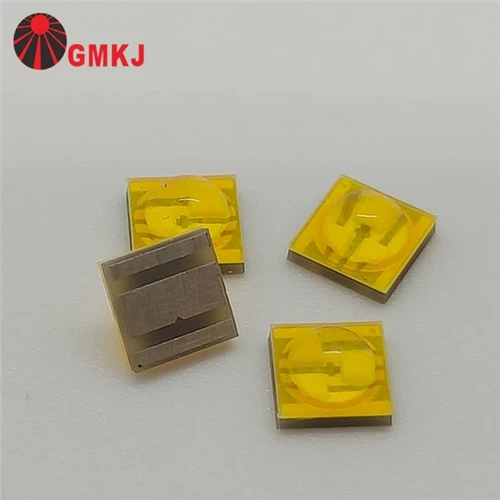
First, let’s cut to the chase: what even is an AC LED, anyway? For years, most LEDs ran on DC power, right? That’s the stuff from a battery or a wall adapter. AC is the power that comes straight out of your wall socket—alternating current, the kind that powers your fridge, your TV, everything. Traditional LEDs need that DC conversion, which means you gotta tack on a driver: that boxy thing that clogs up your light fixture, adds cost, and sometimes fails before the LED itself does.
An AC LED skips the driver entirely. It’s built to run on the raw AC current from the wall. Simple enough, right? But here’s where the confusion starts: AC LEDs aren’t a one-size-fits-all. The term “AC LED” covers two main types, and that’s where AC COB comes in. Wait, you might’ve seen COB too—chip-on-board. What’s that? Instead of individual tiny LED chips on a circuit board, COB packs a bunch of microchips right onto a single substrate, all covered in phosphor. It makes the light output way smoother, no hot spots, and the whole thing is more compact than a bunch of discrete LEDs glued next to each other.
Let’s get specific on the first type of AC LED: the string AC LED. Imagine a string of tiny, individual LEDs wired up in series, all tuned to run on AC. Each one has its own little current-regulating component, like a tiny rectifier, to make sure it doesn’t burn out when the current flips directions 50 or 60 times a second (that’s the cycle rate for your wall power). They’re cheap to make, for real—like, super low upfront cost. But here’s the catch: those individual chips are tiny, so the light you get is kinda spotty, not smooth. And because each has its own little regulator, over time, those components can fail, and the whole string dies. I’ve had clients come to me after buying those cheap string AC LEDs for retail display lighting, and half the strings are dead in 6 months. Not great for long-term use.
Then there’s AC COB LED, which is the type I supply. Instead of those tiny, scattered individual chips, we build a COB array specifically designed for AC power. The whole array is a single integrated unit, no separate string of chips. We integrate the current-regulation circuitry right onto the same substrate as the LED chips, so there’s no extra bits hanging around that can break. Wait, let me explain that again in plain terms: when you power an AC COB, the current flows through the entire bonded array of chips at once. No individual chip fighting against the next one, no tiny regulators that burn out. That’s a big difference from string AC LEDs.
Let’s dive into the performance stuff—this is where a lot of people miss the mark. String AC LEDs have this thing called flicker. Since each LED is turning on and off with the AC cycle (even if you can’t see it with your eyes, a camera will pick it up like crazy—blurry photos of your light fixtures is a dead giveaway), that flicker can mess with eyes over time, especially for people who work under lights all day. AC COBs? We design them to smooth out that current flip. Some use a tiny, built-in capacitor (not a big driver, just a mini one) that evens out the current, so the light is almost 100% flicker-free. That’s a huge win for offices, retail spaces, even home lighting where you’re staring at lamps for hours.
Cost is another big one people debate. String AC LEDs are cheaper upfront, but let’s do the math. That cheap string will die in 1-2 years, so you’re replacing it way more often. The AC COB I supply might cost a few bucks more per unit, but it has a 50,000-hour lifespan—like, 10 years of use if you run it 8 hours a day. Add to that no driver, so you save on fixture installation costs too—electricians don’t have to mount that big driver box inside the light. I had a client last year who switched from string AC LEDs to our AC COBs for their 1,000-store display lights. They told me their maintenance costs dropped 70% in the first year. That’s the real cost difference, not the initial price tag.
Wait, let’s clear up a common myth: some people think all AC LEDs are the same, but if you’re shopping, make sure you’re not mixing up string AC LEDs with AC COB. I’ve had so many buyers come to me saying “I need an AC LED” and they end up with those cheap strings, then come back frustrated because they’re failing. The key differentiator is the packaging: COB is integrated array, string is discrete chips. And the power handling—AC COBs can put out way more light. A string AC LED might do 100 lumens per watt max, while our AC COBs hit 130-150 lumens per watt. That means brighter light for less power, which saves on electricity bills too.
Another thing: heat management. LEDs hate heat, right? Too much heat and the lifespan drops. String AC LEDs have individual chips spread out, so heat can get trapped between them. AC COB has the chips all bonded to a single metal core substrate (that’s the stuff that sits behind the phosphor, right?), so heat dissipates way better. That’s why our AC COBs last so long—they don’t cook themselves from the inside out. I remember a client who used string AC LEDs in a outdoor marquee; after 6 months, the lights were dimmed and had dead spots. We swapped in our AC COBs, and two years later, they’re still going strong, no dimming.
Let’s talk about use cases, because that’s where the choice matters. If you’re doing a tiny, budget-focused Christmas light string for a temporary display, string AC LEDs might work. But if you’re designing a commercial lighting system—like a grocery store, a retail shop, or a office space—AC COB is the way to go. The flicker is bad for productivity (studies actually link flicker to eye strain and headaches) and the lifespan is way longer. Even for residential use: if you’re replacing a kitchen light or a table lamp, AC COB will give you smooth, warm light that doesn’t hurt your eyes.
Wait, should I mention the downsides of AC COB? No tech is perfect. Because it’s an integrated unit, if one part fails, sometimes you can’t fix individual chips—you have to replace the whole COB. But compared to the string AC LED, where if one chip fails the whole string is dead, that’s actually a wash. Wait, no—with string AC LEDs, you’re replacing the whole string way more often, so even if the COB is a single unit, the total replacement cost over time is lower. Also, because COB is a newer tech, it’s been getting more affordable the last few years. 5 years ago, the price gap was huge, but now you can get AC COBs that are only 15-20% more than string AC LEDs, and the value is night and day.
Let me circle back to the core difference to make it crystal clear. AC LED is a broad category of LEDs that run on AC power without a separate DC driver. Within that category, string AC LEDs use discrete, individual chips wired in series, while AC COB LEDs use a chip-on-board integrated array of microchips, with built-in AC regulation right on the substrate. That’s it. That’s the key line people miss—they just see “AC LED” and assume all are the same, but the packaging and build make all the difference in performance, lifespan, and cost.

As someone who’s been supplying AC COB LEDs for the past 8 years, I’ve talked to so many buyers who got burned by cheap string AC LEDs. They come to me looking for a reliable, long-lasting option, and that’s exactly what AC COB delivers. If you’re in the market for lighting that doesn’t need a bulky driver, lasts years, gives smooth flicker-free light, and saves you money on maintenance and electricity, AC COB is the clear choice.
UV SMD LED If you’re planning a project—whether it’s a small residential install, a commercial buildout, or a custom lighting display—I can walk you through the options, help you pick the right AC COB for your needs, and answer any questions you have. No sales pitch, just honest info from someone who works with these products every single day. Reach out to connect for a chat, I’d love to help you get the right lighting solution that fits your budget and performance goals.
References
- Narendran, N., & Gu, Y. (2010). Performance of LED lighting systems with AC drivers. Journal of Display Technology, 6(10), 518-522.
- International Electrotechnical Commission (IEC). (2018). IEC 62386-207: Digital addressable lighting interface – Part 207: Control gear for alternating current (AC) supplied light sources.
- Lin, C. Y., et al. (2020). Thermal management of chip-on-board (COB) LED packages for high-power applications. Microelectronics Reliability, 107, 113562.
Guangmai Technology Co., Ltd.
Guangmai Technology Co., Ltd. is one of the most professional ac cob led manufacturers and suppliers in China, specialized in providing high quality products with competitive price. We warmly welcome you to buy cheap ac cob led made in China here and get quotation from our factory. For datasheet and specification, contact us now.
Address: Guangmai Tech Park, No.96, Guangtian Rd, Yanluo, Baoan Dist, Shenzhen, China
E-mail: info@gmleds.com
WebSite: https://www.gmleds.com/
