Hey everyone, it’s Jake from your go-to Liquid Cooling Components supplier, and today we’re diving into one of the most common questions I get from builders, overclockers, and even small business IT teams: what liquid actually goes into custom liquid cooling loops? You’d be surprised how many folks assume it’s just water—nope, there’s way more to it, and picking the wrong fluid can turn a smooth, high-performing loop into a clogged mess or even damage your expensive CPU/GPU hardware. I’ve seen it firsthand, so let’s break this down like we do over a casual chat (no stuffy textbook jargon, promise). Liquid Cooling Components

First off, let’s get the basics straight: custom liquid cooling loop fluid isn’t just about cooling, it’s also about preserving your parts, stopping gunk from building up, and making sure your pump doesn’t burn out prematurely. Water is a base, but it’s never used straight—pure water sounds harmless, right? Wrong. Tap water has minerals like calcium and magnesium that leave scale over time, which blocks tubes, clogs radiators, and kills heat transfer. Even distilled water isn’t perfect on its own—it’s so pure it can actually corrode metal parts (hello, your brass fittings or aluminum radiator) because there’s no buffer to prevent that. So we add stuff to the water to make it work for long-term use.
Let’s start with the most popular go-to mix these days: distilled water plus a coolant additive. This is the bread and butter for most casual custom loop builders. Why? It’s cheap, easy to source, and you can tailor it to your setup. The key here is picking a high-quality coolant, not that cheap stuff you find at the auto parts store—car coolant has silicates that are bad for PC loops, trust me. PC-specific coolants are formulated to inhibit corrosion, prevent scale, and keep microbial growth (aka slime or algae) from taking over your tubes and blocks. I recommend mixing at a 50/50 ratio for most builds; too much additive and you’ll kill heat transfer, too little and you lose corrosion protection. We sell tons of these additives, and we always advise customers to check their loop materials too—if you have a mix of copper and plastic parts, get an additive that works for both, not just one metal.
Next up: premade liquid cooling fluids, AKA “pre-mix coolants” for short. These are ready to pour straight into your loop, no mixing required, and they come in a huge range of colors (neon blue, UV pink, even matte black) for those builders who love their rigs to look as good as they perform. Wait, hold on—don’t just buy any premix, either. A lot of cheap premixes use glycerin or propylene glycol as the base instead of water, and while glycerin is fine, some low-grade versions can leave residue over time. The good premixes are still water-based with built-in inhibitors, so they’re low-maintenance. I’ve had customers come back with slime buildup from cheap premixes, so look for ones that are labeled “non-toxic” and “non-corrosive for copper/aluminum.” Also, for anyone who runs transparent tubes, premixes can add a consistent, vibrant color without staining your tubing—just make sure you get ones that’re designed for PC loops, not radiator fluid for cars.
Now, let’s talk about specialty fluids for more niche setups. Overclockers and extreme rig builders (you know who you are) often look for fluids that offer extra performance. One that’s gaining traction is ethylene glycol-based coolant—wait, don’t panic, this isn’t car antifreeze. It’s formulated to have a lower freezing point and higher boiling point than water, so it works great for extreme overclocks that push parts to their absolute limit, or for builds that sit in very cold garages or hot server rooms. The downside? It’s more viscous than water, which means your pump has to work a little harder, so you’ll need a higher-flow pump to compensate. I always warn people to size their pumps up by 10-15% if they’re going with ethylene glycol, because no one wants a weak pump that dies mid-overclock.
Then there’s dielectric fluid. This is the stuff you use if you have a submergence cooling setup—super popular for data centers, or even DIY builds where you want to fully submerge your motherboard and GPU in fluid instead of using standard loop components. Dielectric fluids don’t conduct electricity, so if there’s a leak or a part touches the fluid, you won’t short out your hardware. The catch here? They’re way more expensive than water-based fluids, and they don’t transfer heat as well, so you need a larger radiator or more powerful chiller to get the same cooling performance. I’ve worked with a few small data centers testing submergence, and while it’s great for 24/7 operations, it’s overkill for most custom PC loops.
Wait, let’s not forget about the bad stuff—things you should never put in your loop. We get questions all the time about people wanting to use rubbing alcohol, vodka, even powerade? No. Just no. Rubbing alcohol evaporates super fast, so you’ll end up with a dry loop in a week and a half. Vodka is mostly water, but it has sugars and other additives that turn into gunk once it sits in a warm radiator for a while. Powerade has sugar that feeds bacteria—gross, sticky, slimy mess. Save those for your fridge, not your PC.
Now, let’s talk about what we recommend to our customers, based on real-world testing (we’ve been working with custom loops for years, so we’ve seen every mistake). For 90% of custom builds—whether it’s a high-end gaming rig or a quiet office PC—our top pick is a mix of distilled water and a corrosion inhibitor formulated for PC loops. It’s cost-effective, works with all common materials, and easy to top off if you get a small leak or evaporation over time. For builders who want to skip mixing entirely, our line of pre-mix coolants are tested to not stain tubing or corrode parts, and we carry both transparent and colored options for that custom aesthetic.
For the extreme overclockers or server builders, we partner with manufacturers that offer optimized ethylene glycol mixes, and we always help size pumps and radiators to go with them. And for anyone looking at submergence cooling, we can hook you up with dielectric fluids and even guide you on the right pumps and reservoirs to use, since that’s a whole different ballgame than standard loops.
One quick pro tip we give every new customer: no matter what fluid you pick, make sure you fill your loop properly, leave no air bubbles, and do a pressure test before you power on your parts. Air bubbles can ruin heat transfer, and a pressure test will catch any tiny leaks before they turn into a huge mess that ruins your GPU or CPU. Also, top off your loop every 3-6 months—water evaporates over time, so adding a bit more distilled water and inhibitor keeps things running smooth.
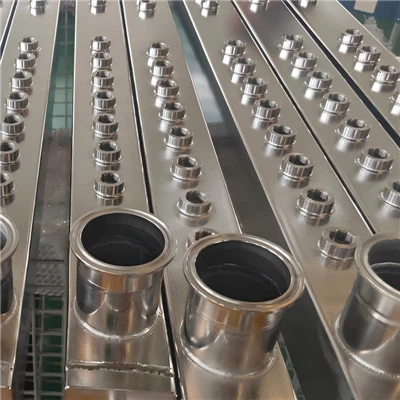
At the end of the day, the best fluid for your custom loop depends on your setup, your budget, and what you’re using the PC for. But there’s no one-size-fits-all answer, and skimping on fluid quality is a rookie mistake that can cost you way more in repairs than you save on cheap additives or premixes.
Corrugated Stainless Steel Tube If you’re building a custom liquid cooling loop and aren’t sure what fluid to use, or you need parts to go with your fluid (reservoirs, tubes, pumps, radiators, whatever), hit us up. We’ve got years of hands-on experience, not just theory, so we can help you pick the right fluid and components for your build so your loop runs cool, clean, and lasts for years. No stiff sales pitches—just real advice from people who actually work with liquid cooling every single day.
References
- "Custom Liquid Cooling: Fluid Selection and Maintenance," Tom’s Hardware, 2023.
- "Materials Compatibility in Water-Cooled PC Systems," PC Gamer, 2022.
- "Dielectric Fluids for Immersion Cooling: Performance and Use Cases," Data Center Frontier, 2021.
- "Overclocking with Liquid Coolants: Balancing Thermal Performance and Pump Efficiency," Overclockers Club, 2023.
- "Avoiding Common Liquid Cooling Failures: Fluid-Related Issues," Linus Tech Tips, 2022.
China Super Tech Co., Ltd.
As one of the most professional liquid cooling components manufacturers and suppliers in China, we’re featured by quality products and good service. Please rest assured to wholesale OEM liquid cooling components from our factory. Also, custom service is available.
Address: Wangjing Science and Technology Park, Guangshun North Street, Chaoyang District, Beijing
E-mail: sales@316liquidcooling.com
WebSite: https://www.316liquidcooling.com/
