If you’ve ever stepped into a pharmaceutical manufacturing facility, a semiconductor lab, or a food processing plant with strict contamination controls, you’ve likely walked through a clean room—and the panels that line those walls and ceilings are far from generic. As a supplier that’s spent years engineering and installing clean room wall sandwich panels for facilities across multiple industries, I get asked this question all the time: “What’s the real difference between single-skin and sandwich clean room panels?” It’s not just a matter of terminology, either—choosing the right panel can mean the difference between a facility that meets regulatory standards consistently and one that risks costly shutdowns or product contamination. Let’s break this down by design, performance, use cases, and practical considerations, rooted in the on-the-ground experience of working with these products daily. Clean Room Wall Sandwich Panels

First, let’s define each type clearly, starting with single-skin panels, the simpler of the two. Single-skin clean room panels are exactly what they sound like: a single, solid sheet of material, usually a rigid metal like aluminum, steel, or sometimes fiberglass-reinforced plastic (FRP). Unlike traditional wall panels used in offices or warehouses, these sheets are manufactured to be smooth, non-porous, and easy to sanitize—key for clean rooms where even a tiny dust particle can ruin a batch of drugs or a microchip. For context, early clean rooms (dating back to mid-20th century semiconductor production) relied almost exclusively on single-skin panels because they were cheap, quick to install, and did a basic job of creating a sealed space. But here’s where the confusion with sandwich panels starts: the name is a little misleading for newcomers. Sandwich panels (often called insulated clean room panels) are made of three layers, not two, so the “sandwich” refers to the two outer skins and the core material in between. So it’s two skins, plus a core—hence, sandwich structure.
Now, let’s get into the design and performance differences that matter most to facility managers. The core of a sandwich panel is where its biggest advantages lie. The core is typically a rigid, closed-cell foam (like polyurethane, polyisocyanurate, or polystyrene) or sometimes mineral wool for fire resistance, bonded tightly between two thin metal outer skins. That middle layer doesn’t just add thickness—it changes the panel’s insulation, structural strength, and ability to seal out contaminants. Single-skin panels, by contrast, have almost no insulation value. If you’re working in a clean room that needs to maintain a strict temperature (say, a vaccine storage area that must stay between 2 and 8 degrees Celsius) or humidity level, a single-skin panel will let heat or moisture seep through, forcing your HVAC system to work overtime. I’ve seen clients who tried to cut corners by using single-skin panels in a cold storage clean room end up with a 30% higher annual energy bill—hardly the savings they were hoping for.
Structurally, sandwich panels also outperform single-skin, especially for larger clean rooms or those in older buildings. A 4-inch thick sandwich panel, for example, is stiffer than a 16-gauge single-skin panel of the same dimensions, so it can span longer distances without additional support beams. That’s a big deal when you’re designing a clean room with high ceilings or open floor plans, common in biotech labs that need space for large equipment. Single-skin panels, on the other hand, require more structural framing, which adds installation time and upfront cost. I had a client last year who was building a 10,000 square foot pharmaceutical clean room; when they initially quoted single-skin panels, their structural engineering team added 20% to their bid for extra beams. By switching to sandwich panels, they cut installation time by two weeks and stayed under their budget.
But wait—single-skin panels aren’t obsolete, and there are scenarios where they’re the better choice. The biggest one is when weight is a critical factor. Single-skin panels are much lighter than sandwich panels, which means they’re easier to transport and install in spaces where structural load is limited. For example, retrofitting an existing small lab into a clean room on the second floor of an old building that wasn’t designed for extra weight can make single-skin the only viable option. Another case is dry, low-foot-traffic clean rooms where insulation isn’t a priority, like a small electronics testing lab that only needs basic dust control. Single-skin panels are also cheaper upfront for very small projects; if you need a 100 square foot clean room for a one-off prototype test, single-skin might be the way to go.
Where things get really interesting is in the clean room-specific attributes that separate these two products—like cleanability, seal integrity, and compliance with industry standards. Clean rooms rely on smooth, non-porous surfaces to prevent dust, bacteria, or chemicals from getting trapped, and both panel types can be made to meet that, but sandwich panels often have an edge here. The outer skins of sandwich panels are typically the same smooth, electrostatically coated steel or aluminum as single-skin, but the core is bonded so tightly that there are no gaps between layers. Single-skin panels, especially lower-cost ones, can have seams or edges where the metal is cut that leave tiny crevices—even if you caulk them, those crevices can trap contaminants over time, leading to higher particle counts in the clean room air. I’ve had clients who switched from single-skin to sandwich panels in their clean rooms and saw a 40% drop in airborne particles within three months, just because of that sealed core.
Seal integrity is another big one. Clean rooms require a positive pressure differential—meaning air inside the clean room is slightly higher pressure than the outside, so unfiltered air can’t seep in through gaps in walls. Sandwich panels, with their rigid core and interlocking edges, form a much tighter seal when installed; the edges are molded to fit together like puzzle pieces, so you only need a small amount of sealant to complete the seal. Single-skin panels usually use simpler butt joints, which require more sealant and are more prone to leaking if they shift over time. That’s a major compliance point for industries like medical device manufacturing, where the FDA requires clean rooms to meet ISO 14644-1 standards for particle count. Non-compliance can lead to product recalls or regulatory fines—something no facility wants to deal with.
Fire resistance is a factor that’s often overlooked, but it’s critical for clean rooms, especially those with expensive equipment or flammable materials. Sandwich panels can be engineered with different core materials to meet fire codes: mineral wool cores, for example, are non-combustible, which is required for clean rooms in chemical processing plants or high-tech semiconductor facilities. Single-skin metal panels are non-combustible too, but they don’t have the same fire resistance when considering the whole wall assembly—since the lack of insulation means heat can transfer through the panel much faster, risking the structural integrity of the wall in a fire. I once worked on a project where a client tried to use single-skin panels in a clean room storing flammable solvents; the local fire marshal rejected the design because the single-skin wall wouldn’t contain a fire long enough for evacuation. We switched to mineral-core sandwich panels, and that was a quick approval.
Cost is the final consideration, and it’s not as straightforward as “sandwich is more expensive.” Upfront, single-skin panels are often cheaper—usually 15 to 25% less per square foot than the same size sandwich panel. But when you factor in installation time, structural upgrades, energy costs, and long-term maintenance, the total cost of ownership often tips in sandwich panels’ favor. Let’s go back to that 10,000 square foot pharma clean room I mentioned earlier: the single-skin panels had a lower upfront cost, but the extra structural beams added $12,000 to installation, and higher energy bills added $8,000 a year. The sandwich panels cost $15,000 more upfront, but installation was $10,000 less, and energy bills were $5,000 lower annually. Over five years, the total cost for single-skin was $20,000 more than sandwich. For small projects, though, single-skin can still make sense—if you don’t have the space or budget for insulation or structural upgrades.
Let’s wrap this up with a real-world example to put it all in perspective. Last year, I worked with a startup biotech company that was building a small clean room to test a new gene therapy. They initially went with single-skin panels to save money, but six weeks into installation, they realized their HVAC system couldn’t maintain the temperature they needed for their cell cultures. The single-skin walls were letting too much heat in, and they were facing a $50,000 delay in their project timeline. We recommended switching to our 3-inch insulated sandwich panels, which cost them an extra $8,000 upfront, but fixed the temperature issue, cut their energy use by 25%, and let them meet their regulatory compliance timeline. That’s the kind of on-the-ground problem-solving we do day in and day out as a clean room wall sandwich panels supplier—we don’t just sell products, we help clients navigate the trade-offs.
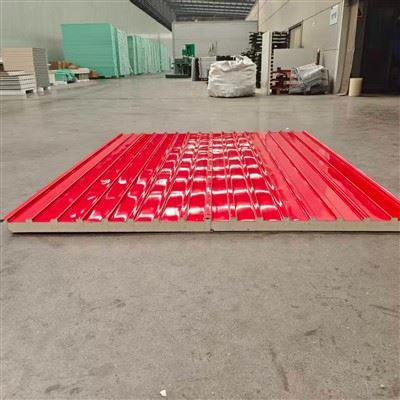
At the end of the day, there’s no one-size-fits-all answer to which panel is better. Single-skin panels are ideal for small, low-complexity clean rooms with weight or insulation constraints, while sandwich panels are the go-to for most industrial, pharmaceutical, and semiconductor clean rooms that need insulation, structural strength, and reliable seal integrity. If you’re currently planning a clean room build or upgrade and aren’t sure which type is right for your needs, don’t guess—reach out. We work with teams across industries to assess their space, compliance requirements, and budget, to recommend the panels that will keep your facility running smoothly for years to come.
Glass Wool Sandwich Panel References
- ISO 14644-1:1999, Cleanrooms and associated controlled environments — Part 1: Classification of air cleanliness by particle concentration
- U.S. Food and Drug Administration (FDA), Guideline for Cleanrooms and Laminar Flow Hoods (2004)
- National Fire Protection Association (NFPA), Standard for Clean Rooms and Clean Zones (NFPA 57A, 2021 Edition)
- Cleanroom Technology Association (CTA), Panel Materials and Installation Best Practices for Controlled Environments (2022)
Shandong Lantian New Material Technology Co., Ltd.
Shandong Lantian New Material Technology Co., Ltd. is one of the most reliable manufacturers and suppliers of clean room wall sandwich panels in China, featured by quality products and low price. Please rest assured to buy bulk clean room wall sandwich panels for sale here from our factory. Contact us for pricelist and customized service.
Address: North End of Wanshida Road, Dianzi Town Industrial Park, Boxing County, Binzhou City, Shandong Province
E-mail: Lantian023@ltaaaaa.com
WebSite: https://www.ltpirpanels.com/
