Hey everyone,
If you’ve ever worked with magnets—especially round countersunk ones—you’ve probably wondered more than once: do these things actually hold up over time, or will they just fade away? As someone who’s been selling round countersunk magnets for years, I get this question all the time, and it’s such a good one because chemical stability is what makes a magnet useful for anything longer than a quick, one-off project. Let’s break this down simply, no fancy lab jargon that makes your eyes glaze over—just what I’ve seen day to day, plus the actual science behind it. Round Countersunk Magnets
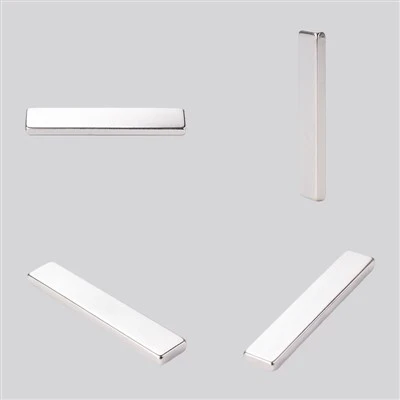
First, let’s get the basics straight: round countersunk magnets aren’t a single material. Most of the ones we sell are neodymium (that’s the super strong rare earth one), ferrite (the cheaper, more basic kind), or sometimes samarium cobalt, depending on what the customer needs. Each of these has totally different chemistry, so their stability is not a one-size-fits-all answer. That’s probably the biggest mistake I see people make when they assume all magnets are the same—nope, materials matter more here than any shape, even the countersunk part.
Let’s start with neodymium round countersunk magnets because that’s like 80% of what we ship. Neodymium itself is a pretty reactive metal, right? It loves to bond with oxygen. So if you leave a bare neodymium magnet out in the open, it’ll start to rust, fast—within weeks sometimes, if it’s damp. That’s why we always coat them, not just to look pretty, but for chemical stability. The coatings are what do the heavy lifting here. Most common is nickel-copper-nickel, which is three thin layers. Nickel is resistant to rust, copper acts as a barrier to stop any tiny pinholes in the first nickel layer from letting oxygen through, and the top nickel layer is easy to plate, so it’s smooth and durable. We also sell some with epoxy coatings for customers who need extra protection, like if their magnets are going outside, or in a place where they might get scratched often.
Wait, but here’s the thing: even with a coating, it’s not indestructible. I once had a customer who used neodymium round countersunk magnets for a door on a marine research boat—saltwater is brutal. He didn’t get the epoxy coating, just the nickel one, and after three months, the coating chipped in a couple spots, and the magnet started rusting underneath. That’s chemical stability 101: it’s not just about the material, it’s about how the material is sealed, and what environment it’s in. If you’re using them in dry, indoor conditions—like a cabinet door, or a craft project—nickel coated is totally fine, stays stable for years. If it’s going outside, near water, or even in a garage where there’s lots of humidity, you need that extra protective layer. That’s why we always ask customers what the application is before we recommend one—small detail, but it makes a huge difference.
What about ferrite round countersunk magnets? Those are the dark grey, a little more brittle ones, usually cheaper than neodymium. Ferrite is a ceramic mix of iron oxide and strontium or barium, so it’s way less reactive than neodymium. We almost never coat ferrite magnets because they don’t rust. Their chemical stability is way better in most environments. They won’t corrode, they don’t react with most chemicals, even mild acids or alkalis. But wait, they’re brittle—if you drop them or chip the edge, that’s not a chemical issue, that’s physical. But for chemical stuff, ferrite is super low maintenance. I’ve had customers use ferrite round countersunk magnets for outdoor signs, for example, and they’ve lasted 5+ years with no issues, no rust, no breakdown. That’s a big plus for anyone on a budget who doesn’t want to deal with coating upkeep.
Then there’s samarium cobalt, the other rare earth option. Those are for extreme environments—like if someone’s working in a factory with high heat, or even aerospace stuff. Samarium cobalt is super resistant to oxidation, way more than neodymium, so it’s almost impervious to chemical damage. We don’t sell a ton of these because they’re way pricier, but when a customer needs stability in harsh conditions, this is the one. I remember a company that makes industrial sensors, they needed round countersunk magnets that would hold up in a factory with cleaning chemicals that are pretty strong—samarium cobalt was the only thing that didn’t degrade after testing. But again, for most everyday uses, you don’t need that.
Let’s talk about what actually causes chemical breakdown in magnets, specifically round countersunk ones. Wait, the countersunk shape does matter a little here, actually. The countersink is that flat, angled hole on one side for a screw, right? So if the coating is applied during manufacturing, the edges of that countersink—especially the very top rim where the hole starts—can be thinner than the flat sides. If the coating is too thin there, that’s a weak spot. I’ve seen a few customers send back magnets where the coating chipped right on that countersink edge, not because the material was bad, but because the coating process didn’t cover that tiny spot perfectly. It’s a small part of the magnet, but because it’s a design feature, it’s something we’ve adjusted on our end—now we use a slightly thicker coating for all round countersunk magnets, especially on the countersink edges, to fix that. That’s a lesson we learned the hard way, from actual customer experience, not just reading textbooks.
Another thing people don’t think about: humidity and temperature swings. Even if a magnet is coated, really high humidity—like in a bathroom, or a greenhouse—can cause condensation over time, and if there’s any tiny flaw in the coating, that moisture can get in, start rusting, and the rust expands a little, which pushes the coating off. High heat is another one. Neodymium starts to lose some magnetic strength at higher temps, but chemically, it’s fine—just not ideal for certain uses. Wait, no, chemically it’s stable, just the magnetism drops. The chemical breakdown stuff is mostly about moisture and corrosive materials. What about chemicals like cleaning supplies, or even salt? For neodymium with nickel coating, mild stuff like window cleaner won’t hurt, but strong acids, like battery acid or heavy-duty drain cleaners, will eat through the nickel over time. That’s why we tell customers to avoid using our magnets in places where they’ll be exposed to those kinds of chemicals. Ferrite is more resistant to that, but even it can break down with really strong, repeated exposure.
Let’s get real, not all chemical instability is the magnet’s fault. I’ve had a customer who stored his round countersunk magnets in a cardboard box in his garage for a year, and they all had a little rust on them. Turned out the cardboard had a coating that released small amounts of moisture over time, and the magnets weren’t coated well enough for that. That’s a storage issue, not a product issue. We now warn all our customers not to store uncoated magnets (or even coated ones, for long periods) in porous materials that hold moisture—keep them in a dry, airtight container if they’re not using them right away. Small tip, but it saves so many headaches.
Wait, let’s clear up a common myth: some people think magnets will lose their magnetism if they’re chemically unstable, but that’s not exactly right. Corrosion is a separate issue from magnetic strength. A rusted magnet might still hold some force, but it’s weak, and the rust can flake off, which is messy, and it might damage whatever it’s attached to. Chemical stability is about keeping the magnet intact, not just keeping its pull. That’s a key point I wish more people knew.
So, putting this all together, what’s the takeaway for anyone looking at round countersunk magnets? If you’re using them indoors, in dry conditions, for crafts, cabinet doors, or similar, either nickel-coated neodymium or standard ferrite will be totally stable for years. If you’re using them outdoors, near water, in high humidity, or exposed to mild chemicals, go for epoxy-coated neodymium or plain ferrite. If you’re in a super harsh environment, industrial settings, aerospace, whatever, go for samarium cobalt. The countersunk shape doesn’t make the stability worse, it’s just that the edge of the countersink is a spot we have to make sure we coat properly, which we do now for all our products.

As someone who’s been in this game for years, I’ll be honest—chemical stability for round countersunk magnets isn’t rocket science, but it’s not just a checkbox either. It depends on material, coating, environment, even how you store and use them. We don’t just sell magnets; we help people pick the right one that won’t let them down. If you’re not sure which one fits your project, or you want to know more about our specific coatings, don’t hesitate to reach out to talk through your needs. We can give you samples, answer any questions, and make sure you get exactly what works for you.
Cube Magnets References
- "Handbook of Permanent Magnets and Their Applications" by John D. Livingston, Wiley, 2016
- "Corrosion Resistance of Rare Earth Magnets" – Journal of Magnetism and Magnetic Materials, Vol. 320, Issue 20, 2008
- "Ferrite Magnets: Properties and Applications" – American Ceramic Society Bulletin, Vol. 90, No. 10, 2011
- "Environmental Effects on Permanent Magnet Performance" – Proceedings of the 15th International Workshop on Rare Earth Magnets and Their Applications, 1999
Dongguan Jinconn New Material Holdings Co., Ltd.
We’re well-known as one of the leading round countersunk magnets manufacturers in China, featured by quality products and low price. Please rest assured to buy bulk advanced round countersunk magnets in stock here from our factory. We also accept customized orders.
Address: Xiaohe Industry Zone, Daojiao Town, Dongguan City,Guangdong Province,China
E-mail: lena@jinconn.com
WebSite: https://www.jinconnmagnet.com/
