If you’ve ever wandered through a manufacturing plant that cranks out metal parts by the thousands, you’ve probably spotted coil fed laser cutting lines humming away in a corner. As someone who supplies these full lines, I get asked all the time: “What actually can you run through a coil fed laser cutter, anyway?” It’s a fair question—most people picture it just for thin steel or aluminum, but the reality is way broader. Let me break this down, no boring tech jargon, just what I see every day on the production floor, plus the real limits we run into and what works best. Coil Fed Laser Cutting Production Lines
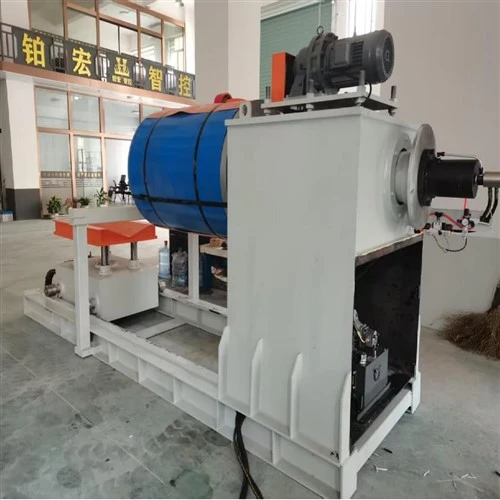
First, let’s get one thing straight: coil fed laser cutting isn’t the same as a sheet metal laser cutter. Sheet metal comes as individual, fixed-size pieces, you load ’em one by one, and you’re good. Coil fed means you’re working with continuous rolls of material, usually 3,000 to 10,000 feet long, that feed straight into the machine. That means we’re set up for high-volume, repetitive runs—we’re not making one-off custom brackets here, we’re making 100,000 identical washers or 50,000 HVAC fins for a supplier. So the materials we handle have to be able to roll that way—no super brittle stuff that’ll snap mid-feed, no super flexible stuff that’ll bunch up, but there’s still a ton of options.
Let’s start with the bread and butter: carbon steel. This is the workhorse of nearly every coil fed line I’ve set up. Most runs are cold-rolled carbon steel, usually 18 gauge to 20 gauge for thin parts, up to 12 gauge for heavier stuff like structural brackets. The laser cuts through it clean, no weird issues—we just adjust the power (usually 1,500 to 6,000 watts, depending on thickness) and the nitrogen or oxygen assist gas. Oxygen works great for carbon steel because it reacts with the hot metal, helps blow the molten material out of the cut edge, so we get a smooth, consistent cut every time. I’ve seen this used for everything from appliance cabinets to auto body parts—stuff that needs to hold up, but doesn’t need fancy corrosion resistance. The only caveat here: if the steel has a super thick galvanized coating, we have to slow the feed speed a little, because the zinc can vaporize and leave tiny bits on the cut edge. It’s not a dealbreaker, just a small adjustment.
Next up: aluminum. Aluminum is tricky sometimes because it reflects laser light, right? But modern fiber lasers—90% of the coil fed lines I sell these days use fiber lasers, not old CO2 ones—handle that way better. We can run aluminum from 20 gauge to 10 gauge, usually with nitrogen assist gas. Nitrogen gives a cut edge that’s smooth enough for parts that don’t need extra finishing, like heat sinks or beverage can ends (wait, yeah, those are made with coil fed aluminum, all the time). The big downside? Aluminum tends to spring back a little when you cut it, especially thinner gauges, so we run test cuts every time we switch from steel to aluminum to make sure the part dimensions are spot-on. I once had a customer who tried to cut 14 gauge aluminum without a test run, and 2,000 parts later, half of ’em were too big—wasted time and material. Lesson learned: even if it looks the same, every material needs a quick test.
Then there’s stainless steel. This is where things get a little more high-end. Stainless works for coil fed lines, perfect for parts that need corrosion resistance—like kitchen appliances, medical equipment parts, or outdoor fixtures. We usually run 22 gauge to 8 gauge stainless, and again, fiber lasers make this way easier than old CO2 setups. The assist gas here is usually nitrogen too, because oxygen can react with stainless to make a rough, discolored cut edge. For some thin gauges, even compressed air works, which saves money on gas—big plus for high-volume runs. The thing to watch with stainless: if it’s austenitic stainless (the common 304 or 316), it’s pretty flexible, feeds smoothly. If it’s martensitic (like 410), it’s a little harder, so we have to make sure the coil’s not too tight when it comes off the roll, otherwise it’ll warp mid-feed.
Wait, what about copper? Oh, copper’s a popular one these days, especially for electrical parts—bus bars, connectors, stuff that needs high conductivity. A lot of people don’t know coil fed lines can handle copper, but again, fiber lasers changed the game. We run copper from 18 gauge to 10 gauge, and we use high-powered lasers (6,000 watts or more) because copper is super reflective. The assist gas is oxygen, actually, because it helps the laser cut through the reflective material faster. The catch here: copper is soft, so if we feed it too fast, it can stretch a little, throwing off the part dimensions. We also have to clean the laser lens more often with copper runs, because the molten copper can leave residue on the lens, which messes with the cut quality. My best tip for copper: go a little slower on feed speed, even if it feels like you’re losing time—wasted material from bad parts is way more expensive.
What about the materials that aren’t metal? Wait, a lot of folks forget that coil fed laser lines can handle non-metallic coil stock too, right? Let’s talk about those. First up: polycarbonate and acrylic. We use clear polycarbonate for things like LED light covers, which are all made in coil runs—you want 10,000 identical covers, not one by one. Acrylic works too, usually thinner gauges, for signs or display parts. The laser cuts clean, no chipping, which is way better than sawing or routing. The assist gas here is just compressed air, because we don’t need a chemical reaction, just to blow the cut debris out. The big rule for non-metallics: no too-thick stuff. We max out at ¼ inch for polycarbonate, because beyond that, the laser can’t cut through evenly in a continuous coil feed. If you try to run ½ inch polycarbonate, the feed will get stuck halfway through, and you’ll ruin the whole coil.
Then there’s rubber and silicone coil stock. Yeah, this is a big one for gaskets—you know, the rubber seals for doors, windows, or industrial equipment. Coil fed lines cut these perfectly, no fraying, no uneven edges, way faster than die cutting. We run silicone up to 3/8 inch thick, usually with a lower power laser, like 1,000 to 2,000 watts, because too much power will burn the rubber. We also use a gentle air assist, not strong, because strong air will blow the rubber pieces around. I had a customer who switched from die cutting rubber gaskets to our coil fed line, and they cut their production time by 70%—no new tooling every time they changed a gasket design, which saved them thousands in tool costs. That’s the thing I love about coil fed lines, non-metal or metal: flexibility in design without the high setup fees.
Now, let’s talk about what doesn’t work. Because no line is perfect, right? You can’t just throw any coil stock into a coil fed laser cutter. First, super brittle materials. Like, if you have a coil of glass, even thin glass, it’s going to snap when it’s fed through the rollers. I tried that once for a customer who wanted thin glass covers—wasted a whole coil, never again. Then, materials that are too thick. We can’t handle anything over ¼ inch for non-metallics, and for metal, max is usually 12 to 14 gauge, depending on the material (copper and aluminum max out at 10 gauge, mostly). If you go too thick, the laser can’t cut through the full thickness in one pass, so you have to run multiple passes, which messes up the continuous feed. Also, materials with too much coating that’s uneven. Like, if a coil of steel has a spotty, inconsistent zinc coating, the laser will react weird, leaving bad cut edges. We test every coil before running it to check for that—small step, but it saves a lot of headaches.
Wait, another thing a lot of folks don’t ask about: coated materials. Like, pre-painted steel for appliances, or powder-coated aluminum for window frames. Can you run those? Absolutely. The laser will cut through the paint or powder coat clean, no chipping the coating, which is a huge win. Because if you cut paint with a saw, the edge gets all scratched and you have to repaint it. With laser cutting, the coating stays intact. The only thing: if the powder coat is really thick, you might get a little discoloration on the cut edge, but most customers just touch that up with a spray can, which is way easier than repainting the whole part. I’ve seen pre-painted steel used for everything from refrigerator doors to outdoor patio furniture, and it works flawlessly.
Let me also mention a couple of niche materials that are starting to take off. Like, brass—coil fed brass for decorative parts, electrical connectors, even musical instrument parts. It’s similar to copper, needs a high-powered laser, usually nitrogen assist. And then there’s galvanized steel, which I mentioned earlier—we can run it, just adjust the assist gas to a little more nitrogen instead of oxygen, to reduce zinc vapor buildup. Oh, and even some composite materials, like carbon fiber coil stock for aerospace or bike parts. Carbon fiber is tricky because it can fray, but with the right laser settings (low power, fast feed), it cuts clean, no frayed edges. We’ve had a couple aerospace customers switch to carbon fiber coil runs and cut their part weight by 30%, which is a big deal for them.
I know a lot of people hear “coil fed laser cutting” and think it’s only for big factories with thousands of parts a day. But even small manufacturing shops with 10,000-part runs can benefit, especially if they work with any of these materials. The key is picking the right line for your material—if you’re mostly running thin aluminum, you don’t need a 10,000-watt copper line. That’s why I always tell customers to tell me what materials they work with, how much they run, and what parts they make, so I can set them up with the right line, not a one-size-fits-all that doesn’t work for their needs.
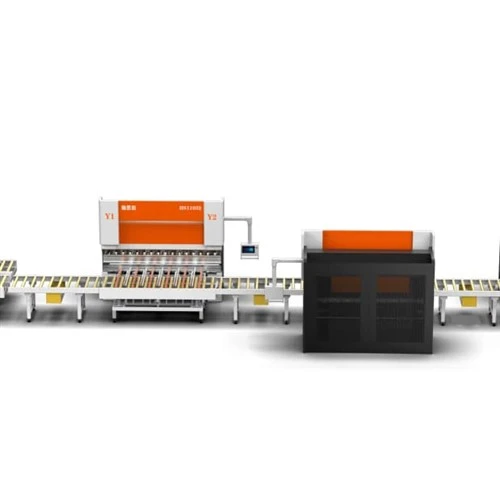
At the end of the day, the best part of coil fed laser cutting is that it’s versatile. It’s not limited to just a couple metals, it’s not just for big runs, and it’s way more flexible than old-fashioned punching or die cutting. Sure, there are materials that won’t work, but for 90% of the production runs I see come through plants, there’s a coil fed line that can handle it. If you’re looking to upgrade your production line, or you’re curious if coil fed laser cutting would work for your materials, I’m here to help. We can walk through your specific needs, answer questions, and figure out if it’s a good fit for your shop. Let’s connect and talk through the details—no sales pitch, just what works for your parts.
Flatbed Laser Cutting Machines References:
- Manufacturing Engineering Society International Conference (MESIC) 2022. Advances in Coil Fed Laser Cutting for Flexible Production Runs.
- Laser Institute of America. Guide to Material Compatibility for Fiber Laser Cutting of Coil Stock. 2023.
- Journal of Manufacturing Processes. High-Volume Cutting of Non-Metallic Coil Materials Using Laser Technology. 2021.
Yongkang City Bohong Intelligent Equipment Co., Ltd.
As one of the most reliable coil fed laser cutting production lines manufacturers and suppliers in China, we also support customized service. With abundant experience, we warmly welcome you to buy advanced coil fed laser cutting production lines from our factory. If you have any enquiry about quotation, please feel free to email us.
Address: No. 176 Yinggui North Road, Chengxi New Area, Yongkang City, Zhejiang Province
E-mail: bohonglasertech@Outlook.com
WebSite: https://www.bohonglasertech.com/
