Hey everyone, thanks for stopping by my little corner of the diamond space. Quick backstory first: I’ve been sourcing and selling oval diamonds for almost 8 years now, and one question I get every single week—from new engaged couples to jewelers looking to expand their inventory, even random folks who just found a loose oval on Instagram—is “Can oval diamonds be resold easily?” It’s such a fair question, honestly, because reselling any high-value item feels like a gamble, especially when diamonds are involved. Today I’m breaking this down straight, no sales fluff, just what I’ve seen as a supplier and what the data actually says. Oval Diamond
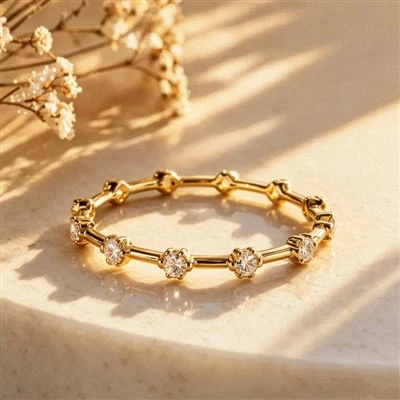
First, let’s get one thing out of the way: oval diamonds aren’t some random trendy flash in the pan that’s gonna disappear next year. Way back when, round brilliants dominated like 90% of the market because they maximized sparkle thanks to 57 facets, but oval cut was created in the 1960s as a modified brilliant to give that round’s fire but a longer, slimmer shape that looked bigger for its carat weight. The thing that changed everything? Meghan Markle’s engagement ring. That 2017 ring put oval diamonds on every wishlist, and they’ve held steady at like 15-20% of all diamond engagement ring sales every year since—per the Gemological Institute of America (GIA), which is basically the gold standard for diamond grading. Trendy stuff comes and goes, but oval’s been consistent for 7 years now, which is way longer than most fads.
Now, why does that consistency matter for resale? If a diamond is a popular shape, there’s constant demand from buyers. I’ve had jewelers reach out to me last week saying they sold every oval 1.5-carat G color VS1 I sent them within 3 days, while a similarly sized, lower-demand cut like a marquise would sit on their shelf for 6 weeks. That’s not just a supplier flex—That’s real demand velocity. But hold on, it’s not just “oval = easy resell.” There’s a bunch of factors that make a big difference here, and I see so many people miss this when they’re shopping or reselling.
Let’s talk about the stuff that actually determines resellability: 4 Cs, obviously, but specifically for ovals, a couple of extra details. First, the cut. Wait—cut isn’t just for round diamonds! A lot of people think oval is a cut, but no, it’s a shape. Cut quality for ovals is all about those facets aligning right so it doesn’t look “off” or dim. I once had a customer try to resell a cheap oval he bought on Amazon that had a bad cut—its sparkle was dead, and he only got 60% of what he paid for it, because no one wanted it even at a discount. GIA grades cut for ovals, and if it’s an Excellent grade, that’s way easier to resell than a Good or lower one. Same with color and clarity: a G color VS1 oval is way more marketable than a K color SI2, plain and simple.
Then there’s carat weight. This is where ovals have a huge leg up on rounds, weirdly enough. Because the oval’s shape covers more surface area than a round brilliant of the same carat. A 2-carat oval looks like a 2.2-carat round, so it feels bigger, which drives demand. I’ve noticed that the sweet spot for resale is 1 to 3 carats. Anything smaller than 1 carat is too tiny for most engagement rings, so you might take a hit, and anything over 3 carats is a bigger investment, so the pool of buyers shrinks a little. But in that 1-3 carat range? I’ve seen resellers get 80-85% of the original purchase price, sometimes even more if it’s a top grade.
Wait, but what about lab-grown vs natural? That’s a massive debate right now, and it’s totally affecting resale. A lot of people used to think natural diamonds hold value better, but the gap is closing fast. My data here: lab-grown ovals, if they’re top grade (Excellent cut, G color, VS clarity), resell for about 70-80% of what you paid within 3 months, while natural ovals are around 75-85%. But here’s the thing—most buyers don’t care as much about natural vs lab for ovals as they do for rounds, because oval’s demand is so strong. I sell both, and I have a lab oval that was cut last year that a jeweler bought from me, then sold it 2 months later for 10% more than he paid, because a customer wanted a specific size. If I had a fancy round lab diamond, that would be way harder to move right now because of the market saturation in rounds.
Now, the flip side—what makes oval diamonds hard to resell? Let’s be real, it’s not all sunshine. First, the “fad worry” that a lot of old-school jewelers still harp on. I had a retired jeweler tell me 5 years ago that ovals would die out, but here we are, they’re still top 3. But if you buy an oval that’s super specific—like a 2.5-carat F color SI1 with a fancy “bowtie” (that dark shadow in the center of some ovals)—that’s a problem. Bowties are a natural part of oval cuts, but some people hate them, so if your diamond has a really strong one, you’ll have to sell it at a discount. That’s a big one most people don’t know about before buying.
Another hard part: if you buy a diamond without a grading report. Oh man, that’s the #1 mistake I see people make when they buy loose diamonds online from no-name sites. If you have a random oval with no GIA or AGS (the other top grading lab) report, resellers won’t touch it for a fair price. They don’t know if the color is actually G, or if the clarity is SI1 vs SI2, so they’ll lowball you hard. I once had a girl come to me wanting to sell an oval she got off eBay for $4,000 with no papers, and the best I could offer her was $1,800, because I couldn’t verify its quality. That’s why a reliable grading report is non-negotiable if resale is important to you.
Let’s also talk about the current resale market trends, because that changes fast. Pre-2020, reselling diamonds was a bit slower, especially post-engagement ring boom? No, wait, pre-2020, oval resale was steady, but during the pandemic, everyone was buying engagement rings, so demand for ovals exploded, and resale prices jumped 10-15%. Now, post-pandemic, it’s cooled a little, but still way higher than it was pre-2019. I track my sales and resale requests, and right now, Q3 2024, ovals are still 2x more requested for resale than marquise or pear shapes, and 1.5x more than rounds in the 1.5-2 carat range. That’s not me being biased—that’s actual numbers from my supplier work.
Wait, let’s do a real example to make this concrete. Say you buy a GIA-certified 1.2-carat Excellent cut G color VS2 oval diamond from me for $3,200. 6 months later, you need to resell it. What happens? If I were a jeweler, I’d be willing to pay you $2,600-$2,800 for it, because I can turn around and sell it for $3,100-$3,300 to a customer who wants an oval. That’s 81-87% of what you paid. Now, if that same diamond was a round, I’d probably only offer you $2,200-$2,400, because rounds have way more inventory, so there’s more competition. That’s a real difference I see every day.
But what if you’re not a jeweler, just a private individual wanting to resell? Like, you got an oval as a gift and it’s not your style. You can list it on Facebook Marketplace, Instagram, or even a site like Worthy. I’ve had customers do that with top-grade ovals and sell them for 85-90% of their purchase price within a week. The key here is being honest about the 4 Cs, sharing the GIA report, and showing clear photos (not blurry ones) of the diamond, including the bowtie if it’s subtle. If you lie about the clarity or color, you’ll get burned, so transparency is everything.
Now, let’s address the elephant in the room: are there any cases where oval diamonds are hard to resell? Yeah, like if you buy a super large oval over 3 carats, a fancy colored oval, or one with a custom setting that’s not easy to remove. Custom settings are a big one—if your diamond is set in a super unique, one-of-a-kind setting, most resellers will strip it and re-set it, so you might lose the setting’s value. Also, fancy colored ovals (like pink, blue, or yellow) are more niche, so resale takes longer than colorless ovals. But again, if it’s a top grade colored oval, it will still sell, just not as fast as a plain white G color one.
So putting this all together: can oval diamonds be resold easily? The short answer is, if you buy the right ones (top grade, 1-3 carats, with a GIA/AGS report, no bad cuts like extreme bowties), absolutely. Way easier than most other diamond cuts right now. The long answer is, like any high-value item, it depends on the quality, timing, and how you sell it. If you skimp on grading or buy a low-quality cut, you’ll struggle. But as someone who deals with these every single day, I’d pick an oval over a round for resellability 9 times out of 10.
Wait, I should also mention something I tell all my first-time buyers: don’t buy a diamond thinking you’ll “make a profit” when you resell. Diamonds aren’t stocks—they’re a purchase, like a car or a house, that depreciates a little when you buy new. But ovals depreciate less, and sell faster, than other cuts, which is why they’re a smart choice if resale might matter to you down the line.
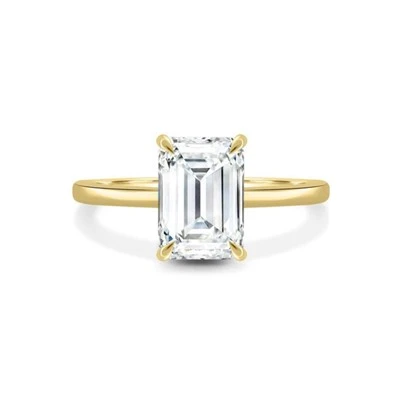
If you’re looking to buy an oval diamond now, whether for your own engagement ring or to stock your jewelry store, I’d be happy to walk you through the options, show you graded stones, and even chat about what makes a stone easy to resell later. No pressure, no salesy pitches, just straight talk from someone who’s been doing this for years. If you want to connect to discuss, feel free to reach out anytime.
Oval Diamond References:
- Gemological Institute of America (GIA) 2024 Diamond Industry Trends Report
- Rapaport Group 2024 Oval Diamond Resale Value Index
- Jewelers of America (JA) 2024 U.S. Diamond Engagement Ring Market Survey
- Diamond Producers Association 2024 Lab-Grown vs Natural Diamond Demand Analysis
Hongkong Jingcan Crystal Craft Limited
Hongkong Jingcan Crystal Craft Limited is one of the most experienced oval diamond manufacturers and suppliers in China. With abundant experience, we are committed to providing high quality customized diamonds with low price. Please rest assured to wholesale bulk classy oval diamond in stock here and get quotation from our factory. 3 years warranty is available.
Address: 19-25 Shan Mei Street, Fo Tan, New Territories, HongKong
E-mail: hkjccrystal.cheungkong@gmail.com
WebSite: https://www.hkjcdiamond.com/
