As a supplier of rare and special gas equipment, I’ve spent the last decade working hand in hand with semiconductor fabs, pharmaceutical R&D labs, and nuclear medicine facilities—spaces where even a tiny misstep around hazardous materials can have catastrophic consequences. Most folks who reach out to us focus first on performance: Does this gas cabinet seal properly? Will the mass flow regulator hold up under extreme pressure? But lately, I’ve noticed a gap in conversations when it comes to radiation protection for the equipment itself. Rare and special gases aren’t just toxic or flammable; many emit low-level or even high-energy radiation, depending on their use case, and the equipment designed to store, transport, or process them has to meet specific, non-negotiable standards to keep both workers and the surrounding environment safe. Rare/Special Gas Equipment
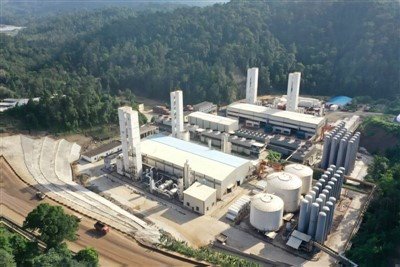
Today, I want to break down what those radiation protection requirements actually look like, based on the real-world challenges we see day in and day out, not just textbook guidelines. Let’s start by grounding this in what we actually supply: think xenon-133 for medical imaging, krypton-85 for industrial thickness gauging, tritium for lab research, and low-level radioisotopes used in specialty semiconductor doping. Each of these has unique radiation signatures, so one-size-fits-all protection just doesn’t work. That’s the first big rule we drive home with every client—not all rare gas equipment is created equal when it comes to radiation safety.
First, let’s talk about shielding design and material validation. This is the foundation of radiation protection for our equipment, and it’s not as simple as slapping a lead liner on a cabinet. For low-energy beta emitters like tritium, plastic or acrylic shielding works fine—lead would actually be overkill here, and worse, could create secondary radiation if the beta particles react with heavy metal atoms. But for high-energy gamma emitters like xenon-133 or cobalt-60 (wait, no, cobalt-60 isn’t a rare gas, my bad—stick to rare gases), xenon-133 emits gamma rays with energies around 81 keV, which means lead or steel shielding is necessary, but not just any lead. We require our shielding materials to be tested to meet NCRP Report 147 standards—specifically, that the transmission of gamma radiation through the material is less than 0.1% at the maximum operational pressure and temperature of the equipment. We don’t cut corners here: every lead-lined gas cylinder manifold we ship goes through independent testing to verify that the shielding thickness is correctly calculated for the specific radioisotope concentration the client is using. A common mistake we see is under-sizing shielding for temporary use: a lab testing xenon-133 for a week might think they don’t need full shielding, but even a small cylinder emitting 100 mCi of gamma radiation can exceed occupational exposure limits if the manifold isn’t properly lined.
Next, contamination control and surface radiation levels. This is another area where many of our clients underestimate the risk. Rare gases can be volatile, and even a tiny leak in a valve or a fitting can lead to surface contamination on the equipment, which then spreads to workers’ gloves, tools, and even lab surfaces. The requirement here is twofold: first, all our equipment is built with leak-tight valve assemblies that meet ISO 10648-2 standards for gas containment, so the concentration of radioactive gases inside doesn’t escape during normal operation or maintenance. Second, surface radiation levels on the exterior of the equipment have to comply with the International Atomic Energy Agency (IAEA) Safety Standards Series No. GS-G-1.3, which sets a maximum of 0.5 mSv per hour at 10 centimeters from the equipment surface. That’s not a number we pull out of thin air—this is the limit that keeps workers under the annual occupational exposure limit of 20 mSv, as set by most national regulatory bodies like the U.S. NRC or the EU’s Euratom Treaty. We test every unit we manufacture for external surface radiation with a calibrated Geiger-Müller counter, and we provide a full test certificate with every shipment—no exceptions. Last year, we had a client in the medical device industry who skipped this step with a competitor’s gas cabinet, and they ended up with surface contamination that triggered a full facility decontamination, costing them over $200,000 in downtime. That’s the kind of story that sticks with us, and it’s why we make surface radiation testing non-negotiable.
Then there’s shielding for maintenance and access points. Here’s a problem we run into all the time: clients design equipment with removable access panels for valve maintenance, but they forget that those panels are the weakest point for radiation leakage. For example, a gas cabinet with a removable front panel to access pressure regulators needs that panel to have shielding equivalent to the rest of the cabinet, and it needs a locking mechanism that only releases when the cabinet is in a depressurized state (more on that later). We work closely with our engineering team to design access panels that have integrated lead inserts, and we add interlock switches that cut off gas flow and release any residual pressure when the panel is opened. This isn’t just a nice feature—it’s a requirement set by the NRC for any equipment handling radioactive gases with activity levels over 1 mCi. Another point: if your equipment has a sampling port for gas analysis, that port has to have a shielded cap that’s radiation-locked when not in use. We’ve seen clients leave sampling ports exposed, and even with a low-energy emitter, that can create hot spots that workers accidentally brush against during routine checks.
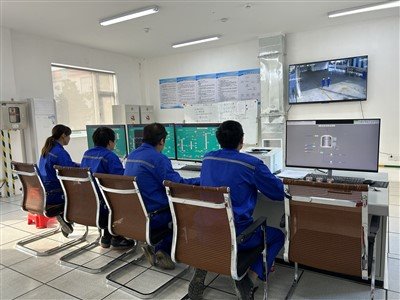
Pressure and safety interlock systems that tie into radiation monitoring. This is where the equipment’s safety features go beyond physical shielding. Rare and special gas equipment operates at high pressures—often up to 3000 psi for transport cylinders, and even higher for process equipment in semiconductor fabs. If a leak occurs, not only is there a radiation risk, but there’s also a risk of explosion or toxic exposure. So our equipment is designed with integrated radiation detectors that trigger pressure relief valves and gas shutoff systems if radiation levels exceed a pre-set threshold. For example, if a gas cylinder manifold we supply detects an increase in gamma radiation that indicates a leak, it automatically closes the main gas valve and activates a ventilation system that filters out radioactive gases before they can escape the facility. These interlock systems have to be tested to meet IEC 61508, the functional safety standard for electrical/electronic/programmable safety systems. We test each interlock three times before it leaves our warehouse, and we provide a maintenance schedule that clients have to follow to keep the systems calibrated. We also recently updated our equipment to add remote radiation monitoring capabilities, which let our clients track real-time radiation levels from a central control room—something that’s become critical for large semiconductor fabs with multiple processing lines handling radioactive gases.
Waste handling and decontamination requirements for end-of-life equipment. Most suppliers stop at delivering the equipment, but as a provider of rare and special gas gear, we take responsibility for the full lifecycle of our products. Radiation protection doesn’t end when the gas is used up; it extends to when the equipment is returned for disposal or refurbishment. All our equipment is marked with a radiation hazard label that complies with ISO 7010, so waste management teams know how to handle it. We also provide a decontamination protocol for clients to follow when returning equipment: all lines have to be purged with an inert gas, and surface radiation levels have to be below 0.2 mSv per hour before the equipment is transported back to our facility. We offer free decontamination consultations to all our clients, and for large-volume orders, we even send a technician to the site to help with end-of-life handling. Last year, we partnered with a nuclear research lab to refurbish 12 old gas cylinders that had been used for krypton processing, and we were able to decontaminate 90% of them to meet regulatory standards for reuse, saving the lab over $50,000 in new equipment costs. That’s the kind of value that comes from taking radiation protection seriously beyond the initial sale.
Regulatory compliance documentation and training support. Here’s a reality that many first-time buyers don’t realize: radiation protection requirements aren’t just about building safe equipment—they’re about proving you built safe equipment. Our clients have to submit detailed documentation to national regulatory bodies to get approval for equipment handling radioactive gases, and that documentation has to include shielding test reports, surface radiation data, interlock system test results, and lifecycle handling protocols. We don’t just sell you a cabinet and send you on your way; we provide a full compliance package tailored to your region, whether you’re in the U.S., EU, Asia, or anywhere else in the world. We also offer free radiation safety training for our clients’ staff, covering proper operation of the equipment, leak detection, and emergency response. We’ve had clients tell us that this documentation and training support was the deciding factor in choosing us over a competitor, because they didn’t have to hire a third-party consultant to navigate regulatory requirements. That’s a big weight off their shoulders.
Now, let’s talk about common pitfalls we see clients (and even some other suppliers) make that lead to radiation safety gaps. First, using generic shielding materials without calculating the exact radiation energy of the specific gas being used. For example, a client once ordered a gas manifold that had 1/4-inch lead shielding for krypton-85, which emits gamma rays at 514 keV—1/4-inch lead only attenuates about 50% of that radiation, which is way above the 0.1% limit. We caught that before shipment, adjusted the shielding to 3/8-inch lead, and avoided a costly regulatory issue. Second, skipping maintenance of interlock systems. We’ve seen clients operate equipment for years without calibrating their radiation detectors, leading to false negatives when leaks occur. Third, not accounting for secondary radiation. For example, when beta particles from tritium hit metal surfaces, they can produce X-rays (bremsstrahlung radiation), which adds an extra radiation layer most people don’t think about. Our equipment is designed with plastic shielding that also blocks this secondary X-ray emission, something many lower-quality suppliers overlook.
At the end of the day, radiation protection for rare and special gas equipment isn’t just a technical requirement—it’s a promise to keep workers safe, protect the environment, and keep our clients’ operations running without costly downtime. Every piece of equipment we supply is built with this promise at the core, combining rigorous testing, regulatory compliance, and real-world expertise from our team of engineers who have spent decades working with these unique gases.
If you’re working with rare or special gases—whether for medical imaging, semiconductor manufacturing, nuclear research, or industrial applications—and you need equipment that meets strict radiation protection standards, we’re here to help. Our team can walk you through custom shielding design, compliance documentation, and training to make sure your operations are safe and regulatory-ready. Reach out to us today to discuss your specific needs and request a quote, and let’s build equipment that you can trust.
Air Separation Unit References
- National Council on Radiation Protection and Measurements. (2002). Structural Shielding Design for Medical X-Ray and Gamma-Ray Facilities (Report No. 147). NCRP.
- International Atomic Energy Agency. (2010). Radiation Protection and Safety of Radiation Sources: International Basic Safety Standards (Safety Standards Series No. GS-G-1.3). IAEA.
- International Organization for Standardization. (2017). Gas cylinders – Valve outlets and valve connections (ISO 10648-2). ISO.
- International Electrotechnical Commission. (2010). Functional safety of electrical/electronic/programmable electronic safety-related systems (IEC 61508). IEC.
- International Organization for Standardization. (2012). Graphical symbols – Safety signs (ISO 7010). ISO.
Hanturbo Technology (Zhejiang) Co., Ltd.
Hanturbo Technology (Zhejiang) Co., Ltd. is one of the most professional rare/special gas equipment manufacturers and suppliers in China, also supports custom service. We warmly welcome you to buy discount rare/special gas equipment made in China here and get quotation from our factory. For price consultation, contact us.
Address: No.118, Wangluo Road, Deqing County, Huzhou City, Zhejiang Province, China.
E-mail: andyxu@hanturbo.com.cn
WebSite: https://www.hanturbo-gas.com/
