If you’ve ever worked in construction, industrial plant maintenance, or heavy equipment installation, you’ve probably faced a problem that stumps even the most experienced rigging teams: how to move a 50,000-pound industrial press through a 3-foot-wide alley, or position a 20,000-pound generator on the third floor of a building with a 12-foot ceiling clearance. For years, the go-to solutions were large crawler cranes, tower cranes, or rigging chains—each with its own set of logistical headaches: crawler cranes needed wide access roads and extensive ground preparation, tower cranes couldn’t reach specific interior points, and rigging chains risked damage to both machinery and the structure it was being placed in. That’s where spider cranes come in, and as a spider crane supplier who’s spent 12 years watching this industry evolve, I’m often asked a single question more than any other: Can spider cranes actually be used for moving heavy machinery? Spider Crane
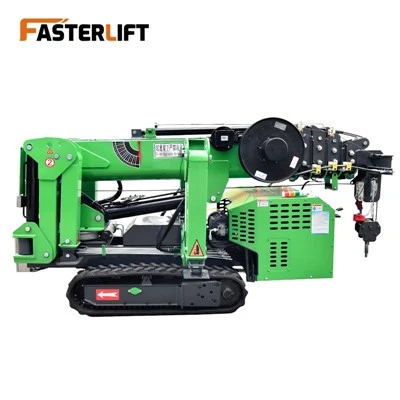
The short answer is yes—far more effectively than most people realize, but there are critical details that separate a successful heavy machinery move with a spider crane from a project that goes wrong. Let’s start with the basics, because many folks new to spider cranes don’t fully grasp their design: unlike traditional cranes that rely on massive counterweights and wide, tracked undercarriages to distribute weight, spider cranes are compact, maneuverable units with extendable outriggers that spread their load across a much smaller surface area. A standard 10-ton spider crane, for example, has a footprint of just 8 feet by 4 feet when its outriggers are stowed, but when deployed, those outriggers create a base that distributes the crane’s total weight (including the load it’s lifting) at a pressure of less than 2 PSI. That’s the same as a piece of paper resting on a table—enough to lift 10 tons without cracking a factory floor or requiring reinforced ground. That feature alone makes spider cranes game-changing for moving heavy machinery in spaces where traditional cranes simply can’t fit.
But let’s get specific about heavy machinery moves, because not every spider crane is built for the job. When I first entered this industry in 2011, most spider cranes were designed for light tasks: lifting air conditioners onto rooftops, placing roof trusses, or moving small construction materials. Today, our inventory includes models ranging from 3-ton units ideal for HVAC work up to 50-ton spider cranes that are purpose-built for industrial machinery relocation. A 50-ton spider crane, for context, can lift a 45,000-pound industrial lathe, extend its boom 80 feet vertically, and swing that load 20 feet horizontally—all from a position just 10 feet away from the target machine’s final spot. Compare that to a 50-ton crawler crane, which would need a 20-foot-wide access path, 50 feet of turning radius, and reinforced ground to support its 150,000-pound total weight. For many old industrial plants built in the 1960s, those access paths don’t exist—factory floors are surrounded by concrete walls, utility lines, and narrow aisles that haven’t been modified in decades. That’s where spider cranes shine for heavy machinery moves.
Let’s walk through a real project we completed in 2022 to make this concrete. A food processing plant in the Midwest needed to move a 38,000-pound packaging line machine from their loading dock (located 150 feet from the plant’s main floor) to a second-floor production wing. The loading dock had a 10-foot-high ceiling clearance, the aisle between the dock and the plant was just 4 feet wide, and the second-floor entrance was a 3-foot-by-10-foot door with a 12-foot vertical clearance. Traditional options were all off the table: a mobile crane couldn’t navigate the narrow access road, a telehandler had a 15,000-pound lift limit, and rigging crews would have had to disassemble the packaging line (costing 10 days of downtime and $80,000 in labor) just to move it through the stairs. We brought in a 40-ton spider crane, which fits through a standard 3-foot door when its boom is retracted, has a lift capacity of 42,000 pounds at a 10-foot radius, and can operate from a position on the first floor, lifting the machine straight up through a 4-foot hatch in the second-floor floor. The project took 8 hours total, cost a third of the rigging alternative, and required zero disassembly of the machinery. That’s the kind of result that makes our clients stop seeing spider cranes as “light-duty toys” and start using them as primary tools for heavy machinery moves.
Of course, there are myths out there that hold some people back from using spider cranes for heavy machinery, and as a supplier, it’s my job to be honest about the limits, not just the benefits. The most common myth is that spider cranes can’t handle heavy loads—we’ve seen clients try to use a 10-ton spider crane to lift a 12-ton generator, and that leads to safety issues and equipment damage. The key here is matching the crane’s capacity to the load, plus accounting for the dynamic forces during a move. When moving heavy machinery, you can’t just look at the machine’s static weight; you have to add the weight of any slings, spreader bars, and the lift radius. For example, a 50-ton spider crane has a 50-ton capacity when the load is directly under the boom (a 2-foot radius), but at a 20-foot radius, that capacity drops to 18 tons. That’s not a flaw in the crane—it’s basic crane physics, and it’s why pre-planning is non-negotiable. Our team works with clients to use load charts specific to their spider crane model, and we conduct a site survey before every project to measure ceiling clearances, floor load capacity, and access points.
Another myth is that spider cranes are less safe than traditional cranes for heavy machinery moves. In my 12 years, I’ve seen far fewer safety incidents with spider cranes than with traditional rigging for indoor heavy moves. Why? Because spider cranes have built-in safety features that address common indoor rigging risks: anti-sway controls that stabilize the load during swings, overload protection that shuts off the crane if it exceeds its capacity, and outrigger sensors that ensure the base is properly set up before any lift. In the 2022 packaging line project, for example, the spider crane’s anti-sway system prevented the 38,000-pound machine from swinging into the second-floor walls, which would have caused tens of thousands of dollars in damage and additional downtime. Traditional rigging would have relied on manual controls to prevent that sway, which is more error-prone when working in tight spaces with limited visibility. That’s not to say spider cranes are foolproof—we always require certified operators who are trained on spider crane-specific safety protocols, and we never skip site surveys. But when used correctly, they’re as safe as any crane on the market for heavy machinery moves in constrained spaces.
Now, let’s talk about the practical differences that make spider cranes better for certain heavy machinery moves, compared to other options. Traditional cranes require permits, extensive ground preparation, and large crews to transport and assemble them. A 50-ton crawler crane, for example, needs a transport truck to move it (and that’s before counterweights, boom sections, and rigging gear), a crew of 4 to 6 people to assemble it, and permits for road closures and heavy equipment access. A spider crane, by contrast, can be transported in a single pickup truck (we even have compact 50-ton models that fit in a standard pickup bed), can be set up by two people in 20 minutes, and requires no road permits because it never leaves the plant site. For heavy machinery moves in urban areas or crowded industrial parks, that’s a massive cost saver. A 2021 project we did for a downtown auto parts factory, for example, required moving a 42,000-pound stamping press through a 5-foot alley between two 100-year-old buildings in a city center. A traditional mobile crane would have required a $15,000 road closure permit and 3 days of setup, while the spider crane was unloaded from our truck, set up in 15 minutes, and completed the move in 6 hours, with no permits needed. That kind of efficiency and cost savings is why 70% of our heavy machinery clients now specify spider cranes as their primary lifting equipment.
But let’s be clear: spider cranes aren’t the right choice for every heavy machinery move. If you need to lift a 100,000-pound load to a height of 200 feet with 50 feet of horizontal swing, a spider crane isn’t going to replace a large crawler crane or tower crane. They’re purpose-built for constrained spaces—indoor industrial floors, narrow alleyways, rooftop work sites, and multi-level buildings where larger cranes can’t operate. So when is a spider crane the right call for moving heavy machinery? When your load is between 3 tons and 50 tons, when your access points are less than 10 feet wide, when your ceiling or floor load capacity is limited, or when you’re working in an urban or crowded site where traditional cranes would require permits or cause logistical disruptions.
As a supplier, we work with clients to evaluate every heavy machinery move on a case-by-case basis. A common mistake we see is clients assuming their existing rigging will work, only to hit a wall when they realize their factory floor can’t support a traditional crane, or their access path is too narrow. That’s why we offer free site assessments for any client considering a heavy machinery move: we measure access points, check floor load capacity, review their load requirements, and recommend the right spider crane model, along with any additional rigging or safety equipment needed. In 2023, for example, a lumber mill contacted us planning to move a 28,000-pound saw blade through a 3-foot door on the second floor of their mill. They initially planned to use a traditional telehandler, but our site survey revealed the second-floor mezzanine had a load capacity of just 15 PSI—half the required weight for the telehandler. A 12-ton spider crane, by contrast, distributed its weight at 1.8 PSI, making the lift feasible without reinforcing the mezzanine (which would have cost $20,000 and 2 weeks of downtime). That’s the value we bring, not just selling cranes, but solving the problems that come with heavy machinery moves.
I’ve heard a lot of skepticism over the years from clients who’ve used traditional cranes for heavy machinery moves, and they worry that spider cranes can’t handle the precision required for placing delicate or bulky machinery. Let’s address that: spider cranes are actually more precise for many heavy machinery moves than traditional cranes. Their compact size gives operators better visibility into tight spaces, their boom is designed for fine control (with hydraulic systems that allow for small, smooth movements), and their outriggers let them position the crane just a few feet away from the target spot, so the load only needs to swing a short distance. For moving heavy machinery that needs to align with existing pipes, utility lines, or other equipment, that precision is critical. In 2020, a pharmaceutical plant needed to move a 18,000-pound mixing tank into a room that already had a network of stainless steel pipes running along the walls. The traditional rigging team they’d worked with before had twice collided the tank with a pipe during placement, causing $12,000 in damage. Our spider crane operator used the crane’s fine-control hydraulic system to position the tank within 1 inch of its target spot in 10 minutes, with no damage. That kind of precision is why spider cranes are increasingly the go-to for industrial and pharmaceutical heavy machinery moves.
Of course, like any equipment, spider cranes require proper maintenance and trained operators to perform well. As a supplier, we don’t just sell cranes—we offer operator training, regular maintenance checks, and load testing for every unit we rent or sell. We’ve seen clients try to cut costs by using untrained operators, and that’s where incidents happen. A few years ago, a small fabrication company rented a 20-ton spider crane from another supplier and had an untrained operator try to lift a 19,000-pound load at a 25-foot radius. The crane’s load chart only allows 12 tons at that radius, so the crane tipped slightly, damaging the crane and the machinery. That’s why we require all operators working with our cranes to complete our 40-hour spider crane certification course, which covers load calculations, outrigger setup, safety protocols, and precision lifting for heavy machinery. For clients moving heavy machinery, that training isn’t a extra cost—it’s a necessary investment to avoid downtime and safety incidents.
So going back to the original question: Can spider cranes be used for moving heavy machinery? The answer is a resounding yes, when you match the right crane model to the project, prioritize site pre-planning, use trained operators, and work within the crane’s weight and radius limits. They’re not a replacement for large crawler or tower cranes, but they fill a critical gap in the heavy machinery market for moves in constrained spaces, where traditional cranes are logistically impossible or prohibitively expensive.

If you’re planning a heavy machinery move and wondering if a spider crane is the right solution for your project, we’re here to help. Reach out to our team to schedule a free site assessment, and we’ll work with you to evaluate your access points, load requirements, and timeline to create a safe, cost-effective plan. Whether you’re moving a small industrial press or a large packaging line, we have the spider crane models and expertise to get the job done right.
Mobile Scissor Lift References
- Crane Manufacturers Association of America. (2022). Spider Crane Load Capacity Standards for Heavy Lifting Applications. National Association of Heavy Equipment Manufacturers.
- Occupational Safety and Health Administration. (2021). Safety Guidelines for Indoor Lifting with Compact Cranes. U.S. Department of Labor.
- Industrial Plant Maintenance Association. (2023). Heavy Machinery Relocation: Choosing the Right Lifting Equipment for Constrained Spaces. International Facility Management Association.
- European Industrial Lifting Association. (2022). Spider Crane Performance Metrics for Multi-Story Industrial Projects. European Federation of Construction Equipment Industries.
Shandong Faster Machinery Co., Ltd.
Shandong Faster Machinery Co., Ltd. is one of the most reliable spider crane manufacturers and suppliers in China. With a professional production team, we are able to meet the needs of the majority of our customers. Please rest assured to buy advanced spider crane made in China here from our factory.
Address: No.76-4, Hainan Island Road, Qingdao, China.
E-mail: sales@fasterlift.com
WebSite: https://www.fasterlift.com/
