If you’ve ever grabbed a box off a shelf to ship a last-minute order, or pulled one out of your garage to store seasonal stuff, you’ve probably noticed how flimsy some cartons feel on humid days. I’ve been in the carton game for over 12 years, and let me tell you—humidity isn’t just a “minor annoyance” for our boxes; it’s one of the biggest headaches we (and our customers) deal with. Most people think a cardboard box is just… well, cardboard, but there’s a whole science to how those flimsy-looking layers hold up against moisture. Today I’m breaking down exactly how humidity messes with cartons, why it matters for your business, and what we do as a supplier to fight back. Cartons
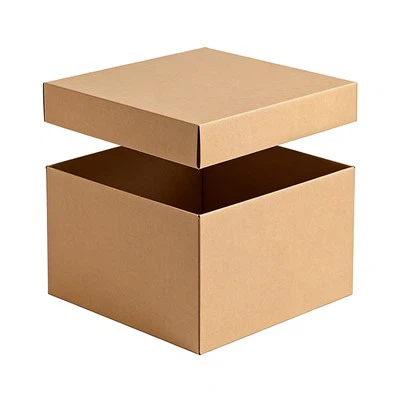
First, let’s get the basics straight. Cartons aren’t just thick paper—they’re made of layered paperboard, right? The main stuff is cellulose, which is basically plant fiber. Think of cotton or wood, same material. Cellulose has these tiny, invisible gaps that love to absorb water molecules from the air. When humidity spikes—say, a 90-degree summer day in Florida, or a damp winter in the Pacific Northwest where your warehouse is right next to a loading dock—those gaps swell up like a sponge. That’s the first problem. When cellulose swells, it stretches. And not just a little stretch—enough to make the whole box lose its structural integrity fast.
I see this play out all the time. Last year we had a customer in Atlanta, a small e-commerce shop selling outdoor gear, who ordered 500 medium shipping boxes for their peak summer sales. They stored them in a non-climate-controlled back room for two weeks before shipping, and by the time they used them, half the boxes were sagging so bad they couldn’t hold 15-pound packages without folding in on themselves. They blamed us, obviously, but when we checked the humidity logs for their warehouse that month, it was hovering around 75%—way higher than the 50% to 60% that’s ideal for corrugated cartons. That’s the kicker: humidity doesn’t just affect the box’s weight; it directly weakens the fiber bonds that hold those layers together.
Speaking of weight—here’s a weird, underrated effect of humidity. Dry cartons are light, right? A standard 12x10x6 shipping box weighs about 0.75 pounds when it’s dry. But crank the humidity up to 80%, and that same box can gain 20% of its weight in moisture. For shippers, that adds up fast. If you’re sending 10,000 boxes, that’s an extra 150 pounds of weight you’re paying for just because the box soaked up air moisture. Multiply that by fuel surcharges, dimensional weight fees, or even extra handling fees from carriers, and suddenly those cheap-seeming boxes end up costing you way more than you bargained for. I tell every new customer this: “Cheap boxes that soak up moisture cost you more in the long run.”
Then there’s the structural failure part, which is the big one for anyone shipping fragile or heavy items. Corrugated cartons have three main parts: the flat liner on top and bottom, and the wavy fluted middle that gives it strength. That fluted layer is what makes a box rigid. When humidity gets too high, the fluted fibers swell, and the glue that holds the flutes to the liners breaks down. I’ve tested this myself a hundred times—we do a quick crush test in our factory every day, where we apply pressure to a box to see how much weight it can hold. Dry boxes crush at about 250 pounds per square inch (PSI), but at 80% humidity, that number drops to around 150 PSI. That means a box that can hold 50 pounds empty will only hold 25 pounds in damp conditions.
I had another horror story a few years back: a customer in the medical supply space who shipped sensitive lab equipment. They stored their cartons in a warehouse with a broken dehumidifier for three weeks, then used them to ship temperature-sensitive test kits. The boxes started collapsing during transit, and half the kits were damaged beyond use. The cost? Over $12,000 in lost product, not to mention the hit to their reputation. When we audited the boxes, the flutes were literally falling apart—you could pull the liner off and see the glue was just a gooey mess from the moisture. That’s not a manufacturing defect; that’s humidity doing its dirty work.
Wait, but it’s not just high humidity that’s a problem, right? What about super dry air, like in the middle of the desert? Or heated office spaces in winter? I used to think low humidity was no big deal, but I learned the hard way. A customer in Phoenix ordered boxes for their electronics, and in the middle of summer, the humidity there drops to 20% or lower. Those boxes got so dry and brittle that when someone tried to fold the corners to seal them, the cardboard cracked right in half. I went out to their warehouse and picked up a box that had just been sitting on a pallet for a week—you could snap a corner like a pretzel. That’s the other side of the coin: humidity levels swing both ways, and cartons hate extremes, no matter if it’s too wet or too dry.
So why is this such a big deal right now? Well, supply chains are more volatile than ever. Warehouses are often not climate-controlled, shippers are cutting corners on storage, and customers are demanding faster turnaround times, which means less time for boxes to acclimate to their environment. I can’t tell you how many times I’ve heard a customer say, “I just need boxes yesterday, don’t worry about storing them for a week.” But if you don’t let the boxes adjust to your warehouse’s humidity, you’re setting yourself up for failure.
Now, as a supplier, we don’t just sell cardboard and walk away—we’ve had to adapt to this stuff over the years. First, we test every batch of boxes before shipping, not just for crush strength, but for moisture content. We keep our own factory humidity at a steady 55% so we ship boxes that are perfectly balanced, not too dry, not too damp. We also offer moisture-resistant coatings if a customer is shipping to a really humid area or storing boxes long-term. Last year we rolled out a line of water-based coating that doesn’t make the boxes feel weird or flaky—they just repel surface moisture without sacrificing that flexibility you need to fold and seal them.
Another thing we do is educate our customers. I know, not every supplier takes the time to do that, but it’s stupid not to. If I tell a customer, “Don’t store these boxes in the loading dock where it’s damp—keep them in a closed pallet near the middle of your warehouse,” that saves them from a thousand-dollar headache. We also send out free humidity strips with every large order—little adhesive strips that change color to show if the air around the boxes is too wet or too dry. It’s a small thing, but customers go crazy for it. Last quarter, a repeat customer told us that those strips saved them from an entire shipment of damaged goods. They had a dehumidifier on hand the second the strip turned blue (that’s our code for “too humid”), and avoided a disaster.
Let’s get into the science nerd stuff for a sec, just so you know I’m not making this up. Cellulose fibers have hydroxyl groups—chemical bonds that love water. When relative humidity (RH) is below 60%, those hydroxyl groups are stable, and the fibers stay as they should. Once RH goes above 65%, the fibers start absorbing moisture, and the glue (which is usually starch-based for corrugated boxes) starts to break down because starch dissolves in water. That’s why 60% RH is the sweet spot. And when RH drops below 40%, the fibers lose too much moisture, become brittle, and crack easily. That’s not my theory—this is straight from corrugated board engineering standards, the same ones we follow for every order.
I also want to talk about transit, because humidity doesn’t just affect boxes in your warehouse. If you’re shipping cross-country, your boxes might go from a cold, dry warehouse in Minnesota to a hot, humid truck in Texas in the middle of July. That’s a huge swing—sometimes RH can jump 30% in just a few hours of transit. Those boxes will soak up moisture mid-shipment, even if they were dry when they left. So if you’re shipping long distances, ask your supplier about moisture-resistant liners or sealed packaging for the box edges. We’ve had customers add edge protectors that have a moisture-blocking layer, and that cut their in-transit damage by 40% last year.
Wait, has anyone ever thought about how humidity affects printing on cartons? I sell a lot of custom-printed boxes, and that’s another hidden issue. If the carton is too damp when we print on it, the ink smudges, or the colors bleed. If it’s too dry, the ink doesn’t dry right, and it rubs off when you’re handling the boxes. I’ve had a customer who ordered custom branded boxes for a product launch, and we had to reprint 200 boxes because the humidity in their warehouse was so high when we delivered them that the ink smudged during loading. That’s a cost that no one plans for, but it’s totally avoidable if you pay attention to humidity.
So what can you do if you’re dealing with humidity and cartons? First, track the humidity in your storage and shipping areas. A $20 hygrometer will tell you exactly what you’re dealing with. Second, store boxes off the floor—pallets with gaps at the bottom let air circulate, so moisture doesn’t pool underneath. Third, don’t order more boxes than you can use in a month or two. Storing boxes long-term in a damp space is a recipe for disaster. And fourth, work with a supplier who actually knows this stuff. We’re not just someone who cuts cardboard—we live and breathe this. We’ve seen every bad scenario, so we can help you avoid them.
At the end of the day, cartons are a critical part of your business. They’re not just packaging—they’re what protects your product, what represents your brand, and what keeps your shipping costs from skyrocketing. Humidity isn’t going anywhere, especially with extreme weather events getting more common. But you don’t have to be a victim of it. Whether you’re a small e-commerce shop shipping t-shirts or a large medical company shipping sensitive equipment, there’s a way to make cartons work for you, even in damp or dry conditions.

If you’re tired of damaged shipments, sky-high shipping fees, or flimsy boxes that fall apart mid-use, I’d love to chat. We can talk through your storage setup, your transit routes, and what kind of boxes will work best for your needs—no jargon, no sales pitch, just straight talk about what’s going to keep your products safe and your business running smoothly. Reach out when you’re ready, and let’s figure this out together.
Toy Pulp Molded Packaging References
- Corrugated Packaging Engineering Association. (2022). Humidity Effects on Corrugated Board Performance. Technical Bulletin #412.
- American Society for Testing and Materials. (2021). Standard Test Method for Moisture Content of Paper and Paperboard. ASTM D646-21.
- International Transport Forum. (2023). Supply Chain Environmental Factors and Packaging Integrity. Logistics Research Report 18.
- Paper Science and Engineering Department, University of Maine. (2020). Cellulose Fiber-Moisture Interaction in Corrugated Packaging. Journal of Pulp and Paper Science, Vol. 46, No. 3.
Dongguang K.B.D Pulp Mould Package Products Co., Ltd.
We are one of the most experienced cartons manufacturers and suppliers in China, specialized in providing high quality products and service. Please feel free to buy bulk customized cartons from our factory. For quotation and free sample, contact us now.
Address: No.4 Caimei 1st Road, Longjiantian Country, Huangjiang Town, Dongguan, China
E-mail: Kevin.wang@kbd.com.cn
WebSite: https://www.kbd-pack.com/
