If you work with high-speed spindles—whether for CNC machining, robotics, or semiconductor assembly—you know the bearings are the unsung heroes. Spin a 50k RPM spindle without the right lube, and you’ll be replacing bearings faster than your production line can make parts. As a bearing supplier that’s spent over a decade troubleshooting spindle failures for shops around the world, I’ve seen first-hand how a single wrong lubricant choice can turn a $20k spindle into a paperweight. Today, let’s break down why lube type isn’t just a “maintenance afterthought”—it’s the difference between 1000 hours of reliable operation and a mid-shift catastrophe. High Speed Spindle Bearings
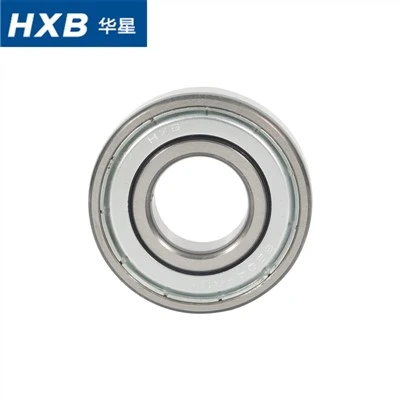
First, let’s get one thing straight: high-speed spindle bearings don’t work the same way as the bearings in your car’s alternator or a skateboard. At speeds over 20k RPM, you’re dealing with extreme centrifugal forces, tiny contact areas between rolling elements and races, and heat that can spike 10-20 degrees Celsius in minutes if not managed right. The lube’s job here isn’t just to reduce friction—it’s to form a stable, thin film between those rolling parts, stop metal-on-metal contact, and carry away heat before it warps the bearing’s precision-ground races. Pick the wrong lube, and that film either breaks down too fast (leading to wear) or is so thick it creates drag that eats into spindle speed and efficiency.
Let’s start with the three main lube types we see customers asking about daily: grease, oil-air, and oil-mist. Each has a sweet spot, and picking the wrong one is where we see 70% of the avoidable bearing failures our tech team gets called in for.
Grease is by far the most common for standard high-speed spindles—why? It’s easy to apply, no complex system needed, and it sticks around longer than liquid lubes, so you don’t have to top it off every few hours. But here’s the catch: not all grease is created equal. We used to push a generic lithium-based grease to a shop making 30k RPM aluminum cutting spindles, and within 6 months, they were replacing bearings every 8 weeks. Turns out, lithium grease has a shear stability problem at high RPM—those tiny grease thickeners get shredded apart by centrifugal force, leaving a thin oil layer that can’t handle the load. Now we recommend polyurea-based grease for that speed range—it’s way more shear-stable, so it keeps that protective film intact even when the spindle’s spinning fast enough to make your head spin. Another mistake shops make with grease: over-greasing. Stuff too much into the bearing, and you’re creating a churn effect that generates more heat than it prevents. We see this all the time—someone follows a “pack the bearing full” old rule from low-speed applications, and the spindle runs hot until it seizes. For grease-lubricated spindles, the rule is: 20-30% of the bearing’s internal volume, max. That’s enough to cover the parts without creating drag.
Then there’s oil-air lubrication, the go-to for high-speed spindles over 50k RPM, like those used in PCB drilling or die-mold machining. Oil-air works by mixing a tiny amount of oil (usually 0.1-0.5 mL per minute) with compressed air, delivering precise droplets directly to the bearing contact points. The air does double duty too—it flushes away heat, which is huge at speeds where bearing friction can hit 100W or more. But here’s what a lot of first-timers miss: oil viscosity matters way more with oil-air than with grease. If you use a high-viscosity oil (like a 68 grade), those droplets are too big—they don’t atomize properly, and you end up with excess oil that clogs the bearing’s internal passages. We had a medical device client who switched from grease to oil-air for a 70k RPM surgical tool spindle, and they used a 68 oil; the spindle ran 20% slower than rated and had consistent noise. Switched to a 10 or 15 grade synthetic oil, and suddenly it hit 72k RPM, ran 5 degrees cooler, and the tooling life jumped 35%. Synthetic is non-negotiable here too—petro-based oils break down under high temperature and RPM, leaving residue that gunked up their air lines after a few months. Oil-air is more work than grease (you need a dedicated system with a compressor and control valve), but for ultra-high speed, it’s non-negotiable.
Oil-mist is the third option, and it’s often confused with oil-air, but they’re not the same. Oil-mist uses a higher oil flow (1-5 mL per minute) and the oil forms a continuous mist that coats the bearing, rather than discrete droplets. It’s a bit cheaper to set up than oil-air, but it can be messier—we’ve seen shops with oil-mist systems have coolant contamination issues because excess mist gets pulled into the spindle’s air vents. The sweet spot for oil-mist is spindles around 30-50k RPM, where you want more heat removal than grease can provide but don’t need the precision of oil-air. The big mistake here: using mineral oil instead of synthetic. Synthetic oil has a lower pour point, so it stays fluid even in cold environments, and it has better oxidation resistance, so it doesn’t break down from repeated heating and cooling cycles. We had a shop making woodworking spindles (which run 40k RPM outdoors in winter) that switched to synthetic oil-mist and cut bearing failures by 80% compared to their old mineral oil setup.
Now, let’s talk about the specific factors that make lube type a make-or-break deal for high-speed bearings, beyond just RPM. One is load—spindles that do heavy cutting (like steel machining) put more radial and axial load on the bearings. Grease can handle light to medium loads, but for heavy-duty, oil-air’s thin, consistent film is better because it can support the load without creating too much drag. Another factor is temperature—if your spindle’s operating environment is 50C or higher, grease’s thickeners will break down faster, so synthetic oil is a better pick. We worked with a mold shop that ran their spindles in a climate-controlled room, so grease worked fine, but when they moved their production to a warehouse without AC, their grease-lubricated bearings started seizing. Switched to synthetic oil-mist, and they got another 12 months of bearing life without upgrading their spindle systems.
I can already hear the question: “Wait, why can’t I just use the same lube for all my spindles?” Short answer: you can, but you’ll be paying for it in downtime. A customer of ours came to us after buying a batch of spindles that came with standard lithium grease, thinking it was “one size fits all.” Their 25k RPM aluminum-cutting spindles were fine, but their 45k RPM brass machining spindles started having pre-mature wear after 3 months. We swapped the brass ones to polyurea grease, and the aluminum ones stayed on lithium (since it’s cheaper and works for their lower speed), and their bearing replacement costs dropped by $1,200 a month. That’s the math right there—if you pick the right lube for each spindle, you’re not just reducing failures, you’re saving money on parts, labor, and lost production.
Another common misconception: “If a little lube is good, more is better.” No, at high speed, more lube is a disaster. We had a customer who over-greased a spindle for a aerospace turbine blade machining job, and the excess grease churned so much it generated heat that caused the bearing’s steel races to expand unevenly, leading to a vibration that ruined a $50,000 turbine blade. That’s not just a bearing failure—that’s a product loss. For grease-lubricated bearings, we always use a “pack and spin” method: pack the bearing cavity with the right amount of grease, spin the spindle by hand a few times to work out air bubbles, then wipe off any excess. That way, you get the full protective film without the drag.
Now, let’s get into some real-world data we’ve collected over the years, because numbers help. For a set of angular contact ball bearings (the most common for high-speed spindles), grease-lubricated with polyurea had an average L10 life (that’s the time 90% of bearings will still be running) of 1,800 hours at 30k RPM. Same bearings with lithium grease had an L10 life of 900 hours—cut in half. For oil-air lubrication, those same bearings hit 4,500 hours at 60k RPM, with only minor wear detected after 6 months of continuous operation. That’s the kind of gap we see every day.
So, what does this mean for you? If you’re managing a production line with multiple high-speed spindles, don’t treat lube like an afterthought. Take 10 minutes to map each spindle’s RPM, load, operating temperature, and environment, and match the lube type to that specific setup. If you’re not sure which lube is right, that’s what we’re here for. We don’t just sell bearings—we’ve got techs who’ve worked in machine shops, so we can walk you through what’s caused your past failures, and help you pick the lube that’ll get you more uptime.
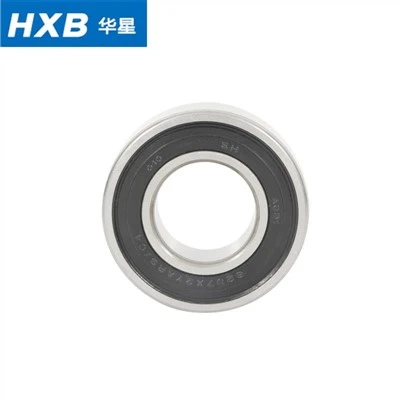
Don’t wait for a spindle to seize mid-shift to figure this out. A small switch in lube type can add hundreds of hours to your bearing life, cut your maintenance costs, and keep your production running smoothly. If you’re dealing with high-speed spindle bearing issues, or just want to run your setup more efficiently, reach out to our team to connect and talk through your needs.
Precision Angular Contact Ball Bearings References
- Harris, T.A., & Kotzalas, M.N. (2007). Advanced Concepts of Bearing Technology. CRC Press.
- Rumbarger, J.H. (2011). High-Speed Spindle Bearing Systems. Journal of Manufacturing Science and Engineering.
- ASTM International. (2018). Standard Test Method for Shear Stability of Lubricating Greases. ASTM D217.
- Spirk, S. (2020). Oil Lubrication for High-Speed Machine Tool Spindles. Tribology International.
Hangzhou Huaxing Kechuang Holding Group Co., Ltd.
Hangzhou Huaxing Kechuang Holding Group Co., Ltd. is one of the leading manufacturers and suppliers of high speed spindle bearings in China, featured by quality products and good service. Please rest assured to buy bulk durable high speed spindle bearings from our factory. Welcome to view our website for more information.
Address: No.553 Yingbin Road, Linping, Hangzhou, 311100, China
E-mail: wmb@huaxingbearing.com
WebSite: https://www.hxbbearing.com/
