Hey there, if you’ve ever shopped around for layflat hoses—whether you’re a farm owner, construction site manager, or someone who deals with emergency water response—you’ve probably stumbled down a tiny rabbit hole: do layflat hoses actually need a special kind of coupling? For years, I heard people mix this up—some grabbed random pipe fittings from the local hardware store, figured “one size fits all,” and ended up with leaky hoses, burst connections, or worse, whole sets of hoses that were useless after one use. As a layflat hose supplier, I’ve seen this mess happen way too often, so let’s break this down like we’re chatting over a coffee (no stuffy jargon, promise). Layflat Hose
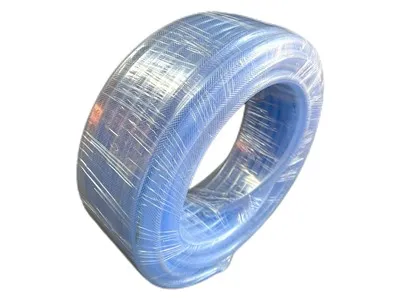
First, let’s get clear on what a layflat hose actually is. It’s that flat, foldable tube you use for moving water fast—think irrigation lines across a field, dewatering a flooded basement, or pumping water to a fire line. The big difference between this and a rigid PVC pipe or a bulky industrial hose? Its whole design is built to collapse when empty, fold up small for storage, and stretch tight when under pressure. That flexibility is awesome for portability, but it also means it acts differently under tension and pressure than rigid piping. Rigid pipes just sit straight and stay fixed, but a layflat hose can kink, stretch, or even pull away from a bad coupling if the connection isn’t designed to keep up.
Now, let’s talk about the bad thing that happens when you use a regular coupling. I’m not talking about the standard hose fittings you’d use for a garden hose—those are way too flimsy. Even some heavy-duty rigid pipe couplings don’t cut it. See, when your layflat hose is under working pressure (say, 50 PSI for farm irrigation, 100 PSI for dewatering), it’s not just holding water—it’s exerting outward pressure along its entire length. A regular coupling, which is usually a clamp or a threaded fitting that just grips the outside of the hose, won’t lock into the hose’s structure. So what happens? The hose starts to slip off the coupling. Or, if you crank the clamp too tight to try and stop that slip, you can puncture the hose’s wall—layflat hoses are made of tough materials like PVC or polyurethane, but they’re not meant to be squeezed hard enough to seal a weak fitting. I’ve had customers come back to me with hoses that had pinhole leaks right where the clamp was, all because they tried to force a generic coupling to work.
Wait, but what’s the “special” coupling we’re talking about here? It’s not some fancy, overpriced gizmo—let’s be real, we hate paying extra for nothing. The right coupling for layflat hoses works with the hose’s structure, not against it. Most good layflat couplings are either cam-lock (that’s the quick-connect type, perfect for fast setup) or bolted couplings, but they have one key feature: they have a barbed insert that goes inside the end of the hose, not just around the outside. That barbed part digs into the inner wall of the layflat hose, creating a mechanical lock instead of just a friction seal. Then, you have a clamp (usually a stainless steel worm clamp or a double-ear clamp) that tightens over the outside, but now that the barbs are holding the hose from slipping, you don’t have to crank that clamp so hard that you damage the hose. It’s a two-part system that works with the hose’s flexibility, not against it.
Let’s test this with a real example I saw last month. A construction guy came in, said he’d been using 6-inch layflat hoses for site dewatering, and he was going through three sets of couplings a week. He’d been using regular 6-inch pipe clamps, just clamping the outside of the hose. After a few days, the clamps would corrode from the wet dirt, the hose would slip, and he’d have to replace both the hose and the coupling. We set him up with our standard barbed cam-lock couplings for layflat hoses, plus stainless steel clamps. He called me a week later, super stoked—no leaks, no slipped hoses, no broken couplings. He even said he saved money because he wasn’t replacing hoses every other day. That’s the proof right there.
But wait, are there any cases where a regular coupling would work? Let’s be fair—if you’re using a super short, low-pressure line, like a 10-foot layflat hose to move water between two buckets on a lawn, maybe a standard garden hose clamp would do. But that’s not the actual use case for layflat hoses, right? Most people buy them for long runs, high pressure, heavy use. If you’re running a 500-foot irrigation line across a farm, or pumping water out of a 10-foot deep excavation at 80 PSI, a regular coupling is just asking for trouble. It’ll fail when you least want it to—like right in the middle of a crop irrigation window, or during a rainstorm when you’re scrambling to dewater a site.
Another thing people miss: size matching. Layflat hoses aren’t like rigid pipes where you can use a slightly different size coupling and fudge it. If your hose is 4-inch layflat, you can’t use a 4.5-inch regular coupling—you need a coupling made specifically for 4-inch layflat. Because layflat hoses have a specific inner diameter when expanded, right? A 4-inch layflat hose doesn’t have a 4-inch inner diameter when flat—it’s smaller, so the coupling has to fit the flat width or the expanded inner size exactly. That’s another mistake I see: people grab a coupling labeled “4-inch” for a rigid pipe, and it’s too big or too small for their layflat hose, leading to a bad seal.
Let’s also touch on materials, because that’s a big one for couplings that see a lot of use. Layflat hoses are often used in rough environments—mud, sun, chemicals, maybe even saltwater if you’re near a coast. So a coupling made of cheap plastic will crack after a few uses, and a coupling made of regular steel will rust, corrode, and fall apart. The right layflat couplings are usually made of aluminum (lightweight, corrosion-resistant) or stainless steel, just like our hoses are made to hold up to those conditions. That’s another reason generic couplings fail—they’re made for indoor, low-stress use, not for dragging a hose across a dirt construction site or leaving it out in the sun all summer.
Wait, what about bulkheads? Some people ask if they can use a bulkhead fitting to mount a layflat hose to a tank or a pump. Again, not without a layflat-specific coupling. A standard bulkhead fitting just has a smooth inner edge, so the hose will pull right through it when under pressure. You need a bulkhead insert with barbs, designed to lock into layflat hose, to make that connection secure. I’ve had a few farm owners try to mount layflat hoses to their water tanks with regular bulkheads, and they ended up with their whole irrigation line blowing off the tank mid-pump. That’s the kind of mistake that costs you time and money, so why risk it?
Now, let’s clear up a myth I hear all the time: “Layflat couplings are just a scam to charge more.” No, they’re not. You get what you pay for, and a good layflat coupling is built to protect your investment in the hose. A layflat hose can cost a few hundred dollars for a big 6-inch, 500-foot run—why would you ruin that with a $5 generic coupling that leaks and damages the hose? A good layflat coupling might cost a few extra dollars, but it’ll save you from having to replace the whole hose or deal with downtime. For contractors or farmers, downtime is money lost—if your irrigation line leaks during a critical growing week, your crops could die. If your dewatering hose fails during a flood, you could have water damage to equipment. That’s where the right coupling pays for itself, quick.
Let’s talk about a common installation mistake too, even with the right coupling. A lot of people don’t prep the hose end before attaching the coupling. You can’t just cut the hose with a sharp pair of scissors and slap a coupling on—you need to make a clean, straight cut, no frayed edges, because frayed edges will make the hose slip even if you have barbs. Some people also don’t stretch the hose a little before putting the coupling on—layflat hoses contract a bit when not under pressure, so if you put the coupling on while the hose’s flat, when you inflate it, the end might pull away from the coupling. Prepping the end right with a layflat-specific coupling ensures a tight, secure seal every time.
Wait, what about cam-lock vs bolted couplings? Which is better? That depends on your use case. Cam-lock is great for quick setup—you can connect and disconnect in seconds, which is perfect for emergency water response or temporary irrigation lines. Bolted couplings are more heavy-duty, better for long-term, permanent installations on pumps or tanks, where you don’t need to disconnect often. Both are “special” for layflat hoses, but they’re designed for different needs, so it’s not one size fits all. But neither works with regular couplings—they need that barbed, layflat-specific design.
I also want to mention safety. If you’re working with high-pressure water, a bad coupling can fail violently. I’ve heard stories of layflat hoses blowing off generic couplings, flying across a yard, and hitting a piece of equipment or even a person. That’s a huge safety risk. The right layflat coupling is designed to hold that pressure safely, so you don’t have to worry about a flying hose end taking out something or someone. That’s a big part of why it’s not just a convenience—it’s a safety thing, too.
Let’s wrap this up with what I tell every customer who comes to me unsure about couplings: yes, layflat hoses absolutely need a special type of coupling. Not the garden hose ones, not the rigid pipe fittings, not whatever you find at the corner hardware store. You need a coupling that locks into the hose’s inner wall (barbed insert), matches the exact size and construction of your layflat hose, and is made for the conditions you’re using it in. Skip the generic stuff, and you’ll save yourself from leaks, damaged hoses, downtime, and even safety hazards.
If you’re currently dealing with leaky couplings, slipped hoses, or you’re setting up a new line and want to get it right the first time, don’t guess. Reach out to us to chat through your needs—whether it’s a small farm irrigation line, a construction dewatering setup, or a temporary fire suppression line, we can help you pick the right couplings to go with your layflat hoses. No pushy sales talk, no confusing jargon—just straight talk that comes from seeing hundreds of customers make the same mistakes with couplings. It’s way better to get it right from the start than to fix a mess later.
PVC Pipe References
- American Society of Agricultural and Biological Engineers (ASABE). (2020). Standard for Layflat Irrigation Hose and Fittings.
- Occupational Safety and Health Administration (OSHA). (2021). Hazard Assessment for High-Pressure Water Hose Systems.
- Industrial Hose and Fittings Association (IHFA). (2019). Guidelines for Coupling Selection for Flexible Layflat Hoses.
- “Layflat Hose Performance Testing Report.” (2022). National Agricultural Water Quality Association (NAWQA).
Weifang Xinzhiyuan Plastic Co., Ltd.
As one of the most experienced layflat hose manufacturers and suppliers in China, we offer a wide range of products with superior quality. Please feel free to wholesale premium layflat hose made in China here from our factory. We also accept customized orders.
Address: No. 700, Tongle Street, Economic Development Zone, Changle County, Weifang City, Shandong Province
E-mail: hua@xzypvchose.com
WebSite: https://www.pvchose-xzy.com/
