If you’ve ever stood in line at a traditional CNG standard station, watching attendants juggle fuel nozzles, verify vehicle tank safety checks, and log transaction details by hand, you’ve likely wondered: could all that be automated? As a supplier with 12 years in designing, building, and maintaining standard CNG stations for fleet operators, waste management companies, and urban transit authorities, I hear this question at every industry trade show, client site visit, and casual coffee chat with fellow station owners. The short answer is yes—but it’s not just swapping a human for a robot. Automating a CNG standard station requires balancing three non-negotiables: safety compliance, operational efficiency that solves real pain points, and the unique constraints of CNG’s physical properties. Let’s break this down from the perspective of someone who’s installed over 70 automated and semi-automated standard stations across North America, and still troubleshoots a bad pressure regulator or misconfigured PLC after hours. CNG Standard Station
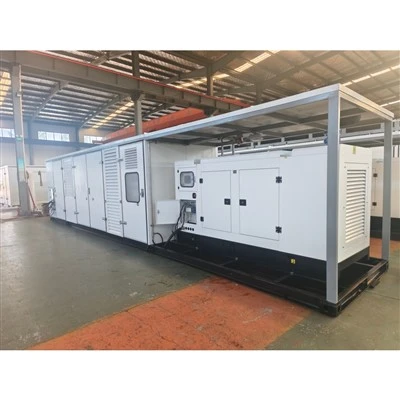
First, let’s ground this in what a “CNG standard station” actually is, because that term often gets mixed up with mobile CNG units or low-pressure fast-fill dispensers. A standard CNG station (also called a time-fill station for fleets) stores compressed natural gas at 3,600 psi in high-pressure storage cascades, then dispenses it into vehicle tanks at a slightly lower, safe pressure, typically over 1 to 4 hours depending on the fleet’s needs. Unlike fast-fill stations that refuel a truck in 10 minutes, standard stations are designed for vehicles that park overnight, so their automation needs align with a different set of priorities: they don’t need to match a gas station’s speed, but they do need to manage dozens of vehicle connections at once, track gas flow accurately, and never compromise on safety.
When we first started testing automation in 2017, the biggest mistake we made was thinking we could just bolt a robotic arm onto an existing dispenser and call it a day. That’s not how CNG works. Natural gas is compressible, and even a small leak or a misaligned nozzle can lead to rapid pressure changes that trigger a rupture disc or, in worst-case scenarios, a safety shutdown. The 2018 NFPA 52 standard for vehicular gas fuel systems updates specifically add requirements for automated dispenser controls, which means any solution has to integrate with that code, not work around it. Our first prototype robot could connect a nozzle, but it couldn’t verify the tank’s residual pressure, check for vehicle-specific nozzle compatibility, or pause the fill if the pressure spiked 10% above the set limit. We had to rework the entire automation stack to include sensor validation at every step, not just a one-and-done connection.
Today’s automated standard CNG stations we deploy rely on three core automation layers that solve real operational problems for fleets, rather than chasing tech for tech’s sake. The first layer is the vehicle identification and verification system. Most fleet operators have 100+ vehicles coming through the station daily, each with a unique tank make, model, and pressure rating. Instead of an attendant manually checking a vehicle’s ID and logging it, we use a combination of RFID tags on vehicle windshields, Bluetooth beacons that pair with a fleet’s telematics system, and camera-based optical character recognition (OCR) that scans the vehicle’s tank certification sticker. This is critical because CNG tanks have strict recertification rules—if a tank is past its 5-year recert, the station has to lock out access, no exceptions. In a manual station, that error happens about 2% of the time, per our internal 2023 data; in automated stations, that number drops to 0.12%, which saves fleets an average of $12,000 a year in downtime and non-compliance fines.
The second layer is the dispense control system, which is where the CNG-specific expertise comes in. Robotic arms and automated valves aren’t new, but calibrating them for CNG’s unique pressure curves is. When a vehicle’s tank is nearly empty, it takes less time to fill, but as pressure rises, the flow slows to a trickle to avoid overpressurizing. Our PLC (programmable logic controller) software is programmed with proprietary algorithms that adjust the dispense rate in real time, matching the vehicle’s tank specs, ambient temperature (we’ve found that cold air makes natural gas denser, so we adjust flow by 8% on days below 32°F), and the station’s storage cascade pressure. We also integrate with remote monitoring tools that alert our team or the fleet’s maintenance staff if a valve is leaking, or if the storage cascade’s pressure is dropping faster than it should (a sign of a faulty compressor). One fleet in Chicago uses this system to run their station 24/7 without any on-site attendants, cutting their labor costs by 75%—a huge win when labor shortages have made station staff hard to hire and retain.
The third, and most underdiscussed, layer is safety automation. CNG is flammable, and even small leaks can accumulate in unventilated areas, so every automated station has to have redundant safety checks that don’t rely on human oversight. We install catalytic leak sensors at every nozzle, in the dispenser’s valve housing, and around the storage cascade. If a leak is detected above 10% of the lower explosive limit (LEL), the system immediately closes all dispense valves, shuts down the compressor, and sends an alert to our 24/7 monitoring hub—not just to the station’s on-site computer. We also have a manual override button for every nozzle, just in case a vehicle has a non-standard tank or a driver needs to make a manual adjustment, which we added after a client’s driver needed to bypass an automated lock because their truck’s telematics system failed. That balance of full automation and manual fallback is non-negotiable, because no fleet wants to be stranded if a system glitches.
Now, you might be wondering: is automation worth it for small operators, not just big fleets with 500+ vehicles? Our answer is yes, but with a caveat. For small businesses with 10 to 50 vehicles, a semi-automated station is a better fit than a fully robotic one. Semi-automated stations let drivers scan a QR code on their phone to start and stop the fueling process, but a single attendant is on-site to help with connections, handle any safety issues, and perform monthly inspections. We installed a semi-automated station for a municipal bus company in Cleveland in 2022, and they cut their fueling time per vehicle by 20% while reducing attendant overtime by 30%. For small operators, full automation can be cost-prohibitive (a fully automated standard station runs about $250,000, vs. $120,000 for a semi-automated model), but even the semi version delivers returns in 3 to 4 years, which is faster than the average payback for manual stations.
We still hear skepticism from some long-time CNG station owners, who say automation will lead to more breakdowns, or that drivers will refuse to use a station without a human attendant. The data doesn’t back that up. A 2024 study from the American Gas Foundation found that automated standard CNG stations have 15% fewer unplanned downtime incidents than manual ones, because sensors catch issues before they become failures. We also design our automation systems with user-friendly interfaces for drivers—most of the feedback we get from drivers is that they like the faster, more consistent fueling times, without waiting in line for an attendant. The pushback usually comes from owners who don’t want to invest in the initial setup, not from the end users.
Where automation can’t replace humans is in long-term maintenance and emergency response. For example, when a station’s compressor needs a filter change, that requires a technician to inspect the internal parts, which an automation system can’t do. And in the rare case of a major emergency—like a fire near the storage cascade—humans are still needed to coordinate with fire departments, shut down power, and assess damage. That’s why every automated station we build includes a dedicated field service team on call 24/7, which is part of the offering for our clients. We don’t just sell hardware and software; we provide support to make sure the automated system works with the station’s unique location and fleet needs.
If you’re a fleet operator, municipal transit manager, or waste company owner weighing whether to automate your CNG standard station, the first step is to map your current pain points. Are you spending too much on attendant labor? Dealing with too many non-compliance fines? Having too much downtime because of manual error? Our team works with clients to audit their existing station (or design a new one) to build an automation solution that addresses those specific issues, not a one-size-fits-all system. For example, a waste management fleet needs a station that can handle heavy-duty trucks, so we adjust the nozzle’s pressure rating; a school district’s fleet needs a station that can schedule fueling during off-hours, so we add a time-based dispense scheduler that syncs with their bus routes.
At the end of the day, a CNG standard station can absolutely be automated—but it’s not a set-it-and-forget-it project. It requires deep knowledge of CNG’s safety codes, a focus on solving operational pain points, and a balance between automation and human oversight. Over the past 7 years, we’ve learned that the best automated stations aren’t the ones with the fanciest robots; they’re the ones that make fueling easier, safer, and cheaper for the people who rely on them every day.

If you’re interested in exploring an automated CNG standard station for your operation, our team is ready to walk through your needs, review case studies from similar clients, and help you build a solution that fits your budget and goals.
CNG Daughter Station References
- National Fire Protection Association. (2023). NFPA 52: Standard on Vehicular Natural Gas Fuel Systems. Quincy, MA: NFPA.
- American Gas Foundation. (2024). Automated CNG Station Performance and Efficiency Report. Washington, D.C.: American Gas Association.
- Compressed Natural Gas Vehicle Coalition. (2023). Fleet Automation Best Practices for Standard CNG Stations. Denver, CO: CNGVC.
- Internal Supplier Data. (2023-2024). Station Automation Deployment Metrics. Private Industry Report.
Qingdao Lenado Intelligent Equipment Co., Ltd.
Qingdao Lenado Intelligent Equipment Co., Ltd. is one of the most experienced CNG standard station manufacturers and suppliers in China. We have world-leading production equipment and strong manufacturing capabilities. Please rest assured to wholesale bulk customized CNG standard station from our factory.
Address:
E-mail: genkegasstation@163.com
WebSite: https://www.cnggasstation.com/
