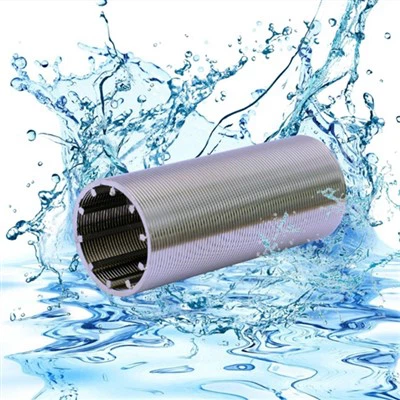
In the realm of industrial filtration, sintered metal filter elements stand out as a reliable and high – performance solution. As a supplier of sintered metal materials and filter elements, I’ve witnessed firsthand the importance of understanding their filtration efficiency. This blog will delve into the concept of filtration efficiency, the factors that influence it, and how it impacts various applications in different industries. Sintered Metal Material and Filter Element
Defining Filtration Efficiency
Filtration efficiency is a measure of how effectively a filter element removes contaminants from a fluid (either liquid or gas) as it passes through the filter. It is typically expressed as a percentage, representing the ratio of the mass or number of particles removed by the filter to the initial mass or number of particles in the fluid before filtration.
For sintered metal filter elements, this efficiency is crucial as it directly affects the quality of the filtered fluid. In industries such as pharmaceuticals, food and beverage, and electronics manufacturing, high – purity fluids are essential. A filter with low filtration efficiency may allow harmful particles to pass through, leading to product contamination, equipment damage, and in some cases, safety hazards.
How Sintered Metal Filter Elements Work
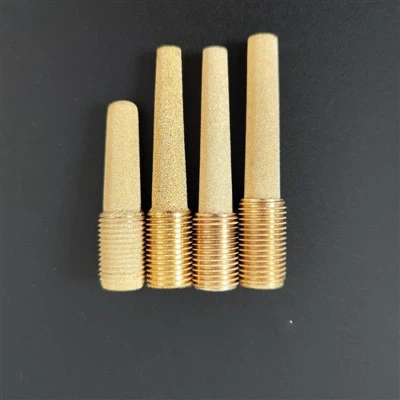
Sintered metal filter elements are made by compacting metal powders and then heating them to a temperature below their melting point. This process, known as sintering, causes the metal particles to bond together, creating a porous structure. The size and distribution of these pores play a significant role in determining the filtration efficiency of the element.
When a fluid containing contaminants flows through the sintered metal filter element, the pores act as barriers. Particles larger than the pore size are trapped on the surface or within the pores of the filter, while the clean fluid passes through. The effectiveness of this particle – trapping mechanism depends on several factors.
Factors Influencing Filtration Efficiency
Pore Size
The most obvious factor affecting filtration efficiency is the pore size of the sintered metal filter element. A smaller pore size generally results in higher filtration efficiency, as it can capture smaller particles. However, there is a trade – off. Smaller pores can also lead to higher pressure drops across the filter, which may require more energy to pump the fluid through the system. Additionally, the filter may clog more quickly, reducing its service life.
For example, in a hydraulic system where fine particles can cause wear and tear on components, a sintered metal filter with a very small pore size (e.g., 1 – 5 microns) may be used to achieve a high level of filtration efficiency. On the other hand, in a less critical application such as pre – filtration in a water treatment plant, a larger pore size (e.g., 20 – 50 microns) may be sufficient.
Pore Distribution
The uniformity of pore distribution also impacts filtration efficiency. A filter element with a more uniform pore size distribution is more likely to provide consistent filtration performance. In contrast, a filter with a wide range of pore sizes may allow some particles to bypass the larger pores, reducing the overall efficiency of the filter.
Advanced manufacturing techniques are used to ensure a more uniform pore distribution in sintered metal filter elements. By carefully controlling the particle size and shape of the metal powders used in the sintering process, as well as the sintering conditions, we can produce filter elements with a high degree of pore uniformity.
Filter Thickness
The thickness of the sintered metal filter element can affect its filtration efficiency. A thicker filter element generally provides more opportunities for particles to be trapped as they pass through the filter. However, like a smaller pore size, increasing the filter thickness can also lead to higher pressure drops and a shorter service life due to more rapid clogging.
The optimal filter thickness depends on the specific application. In applications where the fluid contains a high concentration of contaminants, a thicker filter may be necessary to maintain an acceptable level of filtration efficiency. Conversely, in applications where pressure drops must be minimized, a thinner filter may be more appropriate.
Fluid Properties
The properties of the fluid being filtered, such as its viscosity, density, and flow rate, also influence filtration efficiency. A more viscous fluid will flow more slowly through the filter, allowing more time for particles to be trapped. However, it may also cause higher pressure drops across the filter.
Higher flow rates can reduce filtration efficiency as particles may have less time to be captured by the filter pores. Additionally, the density of the fluid can affect the way particles behave within the fluid. For example, in a dense fluid, heavier particles may settle more quickly, reducing the likelihood of them being filtered out.
Measuring Filtration Efficiency
There are several methods for measuring the filtration efficiency of sintered metal filter elements. One common method is the gravimetric method, which involves weighing the filter element before and after filtration to determine the mass of particles removed. This method provides a direct measure of the amount of contaminants captured by the filter.
Another method is the particle counting method. This involves using a particle counter to measure the number and size of particles in the fluid before and after filtration. By comparing these values, the filtration efficiency can be calculated as a percentage.
In addition to these laboratory – based methods, in – situ monitoring techniques are also being developed. These techniques allow for real – time monitoring of filtration efficiency in industrial settings, enabling operators to take timely action if the efficiency drops below an acceptable level.
Applications and the Importance of Filtration Efficiency
The high filtration efficiency of sintered metal filter elements makes them suitable for a wide range of applications in various industries.
Chemical Industry
In the chemical industry, sintered metal filter elements are used to filter chemicals and solvents to remove impurities. High – efficiency filtration is crucial to ensure the quality of the final chemical products. For example, in the production of pharmaceutical intermediates, even small amounts of contaminants can affect the efficacy and safety of the final drugs.
Food and Beverage Industry
In the food and beverage industry, sintered metal filter elements are used to filter liquids such as wine, beer, and fruit juices. Filtration efficiency is important to remove particles, microorganisms, and other contaminants, ensuring the clarity, taste, and safety of the products.
Oil and Gas Industry
In the oil and gas industry, sintered metal filter elements are used in various processes, including upstream exploration, mid – stream transportation, and downstream refining. They are used to filter oil, gas, and water to protect equipment from damage and to meet environmental regulations. High – efficiency filtration is essential to remove solid particles, such as sand and rust, as well as liquid contaminants.
Our Offerings as a Supplier
As a supplier of sintered metal materials and filter elements, we understand the importance of filtration efficiency. We offer a wide range of filter elements with different pore sizes, thicknesses, and configurations to meet the specific needs of our customers.
Our manufacturing process is highly controlled to ensure consistent quality and high filtration efficiency. We use state – of – the – art equipment and advanced techniques to produce filter elements with uniform pore distribution and precise pore sizes.
We also provide comprehensive technical support to our customers. Our team of experts can help you select the most suitable filter element for your application, taking into account factors such as fluid properties, flow rate, and required filtration efficiency.
Conclusion
The filtration efficiency of sintered metal filter elements is a critical parameter that determines their performance in various industrial applications. By understanding the factors that influence filtration efficiency, such as pore size, pore distribution, filter thickness, and fluid properties, customers can make informed decisions when selecting filter elements.
Sintered Metal Powder Filter If you are in need of high – quality sintered metal filter elements with excellent filtration efficiency, we invite you to contact us. Our experienced team is ready to discuss your requirements and provide you with the best filtration solutions. Whether you are in the chemical, food and beverage, oil and gas, or any other industry, we can help you achieve your filtration goals.
References
- "Filtration Handbook" by Christopher D. Metzger
- "Industrial Filtration Technology" by Peter A. Schweitzer
- Research papers on sintered metal filtration in journals such as "Journal of Membrane Science" and "Filtration & Separation"
Henan Easy Filter Equipment Co., Ltd.
As one of the leading sintered metal material and filter element manufacturers and suppliers in China, we offer a wide range of products with superior quality. Please rest assured to buy advanced sintered metal material and filter element from our factory. We also accept customized orders.
Address: Apartment No.1, Building No.2, Zhengshang Jinyushijia, Xinzhong Street, Xinxiang, Henan, China.
E-mail: vivian@easyfiltertech.com
WebSite: https://www.easyfilter-china.com/
