Hey there! As a supplier of Schottky diodes, I often get asked about the differences between Schottky diodes and PIN diodes. So, I thought I’d write this blog to break it down for you in a simple and easy – to – understand way. Schottky Diodes
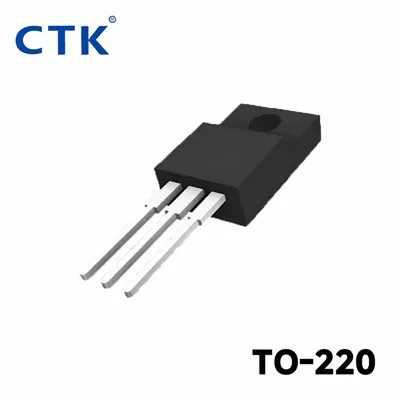
Let’s start with Schottky diodes. These little guys are pretty cool. A Schottky diode is formed by the junction of a metal and a semiconductor. Usually, it’s a metal like platinum or molybdenum with an n – type semiconductor. This metal – semiconductor junction gives Schottky diodes some unique characteristics.
One of the most significant features of Schottky diodes is their low forward voltage drop. Unlike regular PN junction diodes that typically have a forward voltage drop of around 0.6 – 0.7 volts, Schottky diodes can have a forward voltage drop as low as 0.15 – 0.45 volts. This low voltage drop means less power is wasted as heat when current flows through the diode. It’s a huge advantage in applications where power efficiency is crucial, like in power supplies.
Another great thing about Schottky diodes is their fast switching speed. They can turn on and off really quickly. This makes them ideal for high – frequency applications. For example, in radio frequency (RF) circuits, Schottky diodes can be used as mixers, detectors, and in voltage clamping circuits. Their fast response time allows them to handle high – frequency signals without significant distortion.
Now, let’s talk about PIN diodes. A PIN diode consists of three layers: a P – type layer, an intrinsic (I) layer, and an N – type layer. The intrinsic layer in the middle is the key to the PIN diode’s unique behavior.
PIN diodes are mainly used for their variable resistance characteristics. When a forward bias is applied, the carriers from the P and N regions flood into the intrinsic layer, reducing its resistance. On the other hand, when a reverse bias is applied, the intrinsic layer acts as an insulator, and the resistance is very high. This variable resistance property makes PIN diodes excellent for applications like RF switches and attenuators.
In terms of forward voltage drop, PIN diodes have a relatively higher forward voltage drop compared to Schottky diodes. This is because of the presence of the intrinsic layer, which adds some resistance to the current flow. So, if power efficiency is a top priority, Schottky diodes are usually the better choice.
When it comes to switching speed, while PIN diodes can also switch fast, they are generally not as fast as Schottky diodes. The presence of the intrinsic layer slows down the movement of carriers, which affects the switching time. However, PIN diodes can handle higher power levels compared to Schottky diodes. This makes them suitable for applications where high – power handling is required, such as in high – power RF transmitters.
Let’s look at some specific applications to see how these differences play out.
In power supply circuits, Schottky diodes are the go – to option. They are used in rectifier circuits to convert alternating current (AC) to direct current (DC). Their low forward voltage drop means less power is lost as heat, which improves the overall efficiency of the power supply. For example, in a laptop charger, Schottky diodes can help reduce energy consumption and keep the charger cool.
PIN diodes, on the other hand, are commonly used in RF communication systems. They are used as RF switches to route signals between different parts of the circuit. For instance, in a mobile phone, PIN diodes can be used to switch between different frequency bands or to turn on and off the antenna. Their variable resistance property allows for precise control of the signal flow.
In terms of cost, Schottky diodes are generally more cost – effective for low – power and high – frequency applications. Since they are simpler in structure and have less material requirements, their production cost is relatively low. PIN diodes, due to their more complex structure and the need for the intrinsic layer, can be more expensive, especially for high – power and high – performance applications.
Now, if you’re in the market for Schottky diodes, I’m here to help. As a supplier, I can offer you high – quality Schottky diodes at competitive prices. Whether you need them for a small DIY project or a large – scale industrial application, I’ve got you covered.
I understand that choosing the right diode for your application can be a bit confusing. But don’t worry, I’m more than happy to answer any questions you might have. If you’re not sure whether Schottky diodes are the right fit for your project, just drop me a message. I can help you analyze your requirements and make the best decision.
So, if you’re interested in purchasing Schottky diodes, feel free to reach out. We can discuss your specific needs, quantities, and pricing. I’m committed to providing excellent customer service and ensuring that you get the best products for your money.
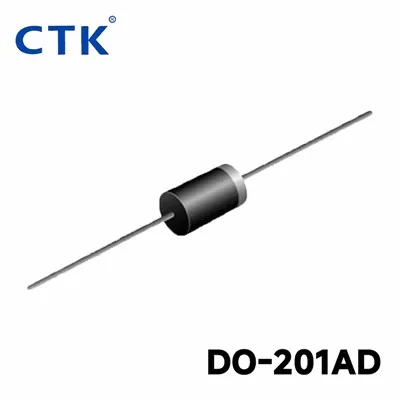
In conclusion, Schottky diodes and PIN diodes have their own unique characteristics and applications. Schottky diodes are great for low – voltage, high – frequency, and power – efficient applications, while PIN diodes are more suitable for high – power, RF – switching, and variable – resistance applications. If you’re in the market for Schottky diodes, give me a shout, and let’s start a conversation about your procurement needs.
Rectifer References:
- "Semiconductor Devices: Physics and Technology" by S. M. Sze
- "RF and Microwave Circuit Design for Wireless Applications" by Chris Bowick
Tongke Electronic Co., Ltd
Tongke Electronic Co., Ltd. is one of the most experienced schottky diodes manufacturers and suppliers in China, featured by quality products and low price. Please rest assured to wholesale advanced schottky diodes made in China here from our factory. Contact us for pricelist.
Address: No.3,Chayuan Rd, Street 3, AilingKan, Dalingshan, Dongguan, Guangdong, China.
E-mail: jack@ctk-elec.com
WebSite: https://www.ctkchip.com/
