Hey everyone, it’s [Your Name] here from that electrical transmission tower supplier you might’ve seen popping up at industry trade shows—you know, the one with the tattered booth banner and the guy who always has extra energy bars stashed. For the last decade, I’ve talked to everyone from utility operators in small towns to grid engineers working on cross-border projects, and one question comes up more than any other: “What’s actually different between towers I build for my home state and ones I need to ship overseas?” Electrical Transmission Tower

I get it—when you’ve been installing towers in your backyard for years, it’s easy to think “a tower’s a tower.” But trust me, after hauling crates of galvanized steel from Houston to Lagos and bolt sets from Toronto to Bangkok, I can tell you those designs are night and day. And if you’re a utility manager or a project lead trying to source the right tower? Mess up those differences, and you’re looking at delayed installations, code fines, or even safety risks. Let’s break this down like we’re over a coffee (I’m pulling a double shot right now, so no stuffy industry jargon).
First, let’s start with the basics: domestic vs. international grid rules. Here in the U.S. and Canada, we’ve got NESC (National Electrical Safety Code) and CSA standards—super specific, straightforward, and designed for a grid that’s been humming along for 100+ years. For example, NESC’s Rule 232 is all about span lengths and ground clearance, and it’s got this whole table for what voltage needs how much space between the tower top and the nearest power line. When I build a tower for, say, a new subdivision in Ohio, I just pull up that table, plug in the 138kV line specs, and we’re off to the races—no surprises.
But over in Europe, they go by EN 50341, and that’s a whole different playbook. Last year, we had a client in Poland who insisted on a tower with a 15% higher ground clearance than NESC requires for the same voltage. Turned out, their rural areas have way more stork nests and traditional farmhouses—they had to adjust all tower heights to protect both and comply with local heritage rules. And that’s not a quirk—every country has its own set of regulations, and international designs have to check so many more boxes before they even hit the drawing board.
Then there’s weather, which is where 90% of the “oops moments” happen. Domestic towers get tested for our weird, localized extremes: Texas gusts up to 70 mph, Wisconsin ice storms that coat steel like a popsicle, Florida hurricanes that scream at 150 mph. We design those in, right? Add extra bracing, upsize the base bolts, maybe switch to a heavier steel grade for the Midwest. But international weather? It’s a mixed bag of stuff most domestic folks don’t deal with regularly.
Last year, we shipped 20 towers to a project in coastal Vietnam, and we almost messed up big time. Back home, when we build for salt air (like the Gulf Coast), we use hot-dip galvanization with an extra thick coating—standard. But Vietnam’s South China Sea humidity is way higher, plus they have these monsoon seasons with relentless rain that washes salt right through even thick coatings. Our usual galvanization would’ve rusted through in 5 years, so we switched to a duplex coating: a zinc primer plus a polyurethane topcoat, and added 20% more steel thickness to handle both salt and the sudden wind shifts from typhoons. Domestic weather doesn’t have that kind of dual threat—most of the time, you’re either dealing with wind or ice, not both at once.
Then there’s geography and terrain, which dictate everything from tower shape to weight. Here in the U.S., most of our transmission lines run through open plains or cleared rural areas—so we can use lattice towers, which are lightweight, easy to assemble, and cheap to ship. They’re perfect for long spans because the lattice doesn’t catch as much wind as a solid metal tube. But when we work in mountainous regions like the Alps or the Andes, that’s a whole different story.
A client in Peru needed towers for a line that cuts through the Amazon foothills, where the ground is soft mud and there are narrow, winding roads that can’t handle heavy equipment. We couldn’t use our standard lattice towers—they’re too big and heavy to haul up those mountain paths. Instead, we switched to pole towers made of high-strength steel that come in flat, stacked sections. Each section only weighs 1,200 pounds, so local workers with a small crane can haul them piece by piece without closing the whole mountain road for a week. Back in the States, we rarely deal with terrain that makes heavy equipment impossible—most of our construction sites can handle a standard 10-ton crane. International projects? Half the time, you’re relying on mules or local trucks to move parts. That means tower components have to be modular, light, and easy to piece together without fancy tools.
Wait, let’s not forget about electrical load and voltage capacity. Domestic grids are pretty standardized for regions—most places stick to 110kV, 230kV, or 500kV lines. But international grids? Some countries use 400kV, others 750kV, and a handful even use lower voltages for rural areas that can’t support higher power. A tower built for 500kV domestic lines is overkill for a small village in Kenya that only needs 33kV, and it’d be way more expensive than necessary. But if you underbuild for voltage, you get line sags, overheating, and even power outages. We recently supplied towers to a 33kV project in Tanzania, and we had to adjust the conductor spacing on the tower arms—tighter spacing than a standard domestic 33kV tower because their lines don’t have the same steady load balance we do here. That’s not a code thing, that’s a grid compatibility thing.
Now, let’s talk about logistics, which is the unspoken big difference. Domestic shipments are easy—we drive a truck to the site, unload the towers, and have a team of 3 guys with a wrench and a torque gun putting them up in a day. International? You’ve got to deal with import taxes, customs paperwork (I once spent 3 days at a port in Dubai just getting bolts cleared), and shipping containers that can only hold so much weight. So international tower designs have to be optimized for shipping—no bulky parts that take up extra space. We cut down on excess bracing where we can, use smaller, standardized bolt sizes that work in every country, and even mark every part with QR codes so customs can verify what’s inside without opening every crate. Domestic? We just write “steel parts” on the shipping label and go.
Also, safety requirements for workers are way different internationally. Back here, OSHA has strict rules for tower construction: fall protection, harnesses every step, designated safety officers on site. In places like India, where labor costs are lower and construction crews are used to working at height without much gear, the tower design has to be safer for less experienced workers. We added wider platform edges on the tower arms, extra handholds that are easier to grip with calloused hands, and less exposed sharp edges. Back home, we build for experienced crews who know how to use harnesses—international, you build for anyone who can pick up a wrench, so safety is built into the design, not just the site rules.
Wait, let’s be real—there are some similarities, too. Galvanization is still standard, the base has to be anchored to the ground so it doesn’t tip over, and we still run load tests to make sure it doesn’t collapse in high wind. But the differences are so big that if I tried to send a domestic tower to a client in Southeast Asia, it’d be a disaster. Last year, I almost made that mistake with a project in Thailand. I quoted a standard 230kV lattice tower, and the client laughed and said “that’s twice the weight we need, and it won’t fit on our roads.” We redesigned it in 2 weeks, added modular sections, adjusted the steel grade to a lighter but stronger one, and saved them 30% on shipping costs. That’s the kind of thing you only learn from doing this cross-border work.
So why does this matter for you? If you’re a utility operator, contractor, or project manager looking to build a transmission line, skipping the research on domestic vs. international tower designs can cost you time, money, and headaches. We’ve had clients come to us after trying to source a cheap tower from a foreign supplier that didn’t adjust for local weather, and they had to replace 10 towers in the first winter because they couldn’t handle ice. Domestic towers work great for domestic projects—period. International projects need a design that’s built for their specific grid, weather, terrain, and even labor force.
Here’s the thing: I didn’t get into this industry to deal with customs paperwork or red tape. But over the years, I’ve seen how good tower design can power a whole town, a whole region, even a whole country. And bad design? It leaves communities in the dark. That’s why we don’t just sell towers—we work with you from the drawing board to the final bolt, making sure every design fits exactly what your project needs, whether it’s 10 miles outside of Chicago or 100 miles outside of Lagos.
If you’re working on a project right now—domestic or international—and you’re not sure if your tower design is right, hit us up. No sales pitch, no confusing terms, just me and my team walking through your needs, pointing out what’s different, and making sure you get a tower that works for you. We’ve done projects all over North America, Europe, Africa, and Asia, so we’ve seen almost every possible scenario. Let’s chat, no pressure, no fine print.
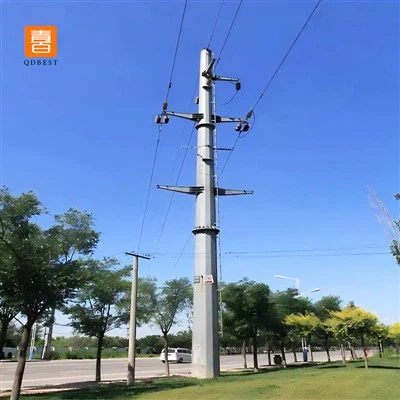
And for what it’s worth, next time you see a transmission tower zapping power through the lines, take a second to think about what went into it. For domestic ones, it’s mostly about local code and weather. For international? It’s about learning a whole new set of rules, adapting to a new place, and making sure power gets where it needs to go, no matter what. That’s the part I love about this job—every project teaches me something new, and every tower is a little different from the last.
Lattice Tower References:
- National Electrical Safety Code (NESC) – American National Standards Institute, 2022
- EN 50341: Overhead electrical lines exceeding AC 1 kV – European Committee for Electrotechnical Standardization, 2020
- International Building Code (IBC) – International Code Council, 2021
- Galvanizing Principles for International Corrosive Environments – International Zinc Association, 2019
- Transmission Line Design for Mountainous Terrain – IEEE Transactions on Power Delivery, Vol. 34, No. 2, 2019
Qingdao BEST Steel Structure Co., Ltd.
Qingdao BEST Steel Structure Co., Ltd. is one of the most professional electrical transmission tower manufacturers and suppliers in China. We warmly welcome you to buy customized electrical transmission tower made in China here from our factory. If you have any enquiry about OEM service, please feel free to email us.
Address: Jiaobei Industrial Park, Qingdao, China
E-mail: sales@qdbsstower.com
WebSite: https://www.qdbsstower.com/
