Hey everyone, it’s Jake from your go-to heavy hex nuts supplier, and today I’m diving into a question I get at least twice a week from DIYers scrolling my Instagram Reels or sending quick DMs: Are heavy hex nuts even worth using for home projects? I know what you’re thinking—when you’re grabbing parts for that backyard deck build or fixing a wobbly patio chair, you just hit the local hardware store, grab whatever generic nut matches the bolt in your hand, and call it a day. I get it. I’ve been there. But after 12 years in the fastener game, I’m here to break this down like I’m chatting over a beer after a long day of loading pallets—no stuffy engineering jargon, just real talk that’ll save you from a wobbly fence that falls apart next winter. Heavy Hex Nuts
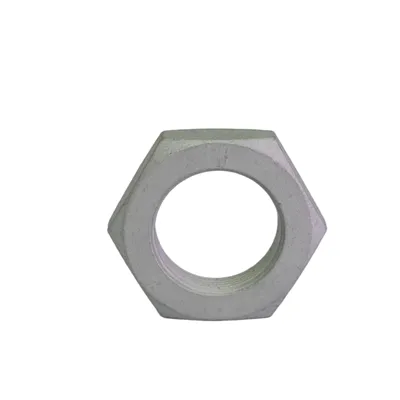
First off, let’s cut through the confusion: what even is a heavy hex nut, anyway? I know most DIY folks mix them up with the regular thin hex nuts you can grab in a 10-cent bag at checkout. The short version is: heavy hex nuts are thicker, made of way more durable steel (we’re talking Grade 2, Grade 5, even Grade 8 for the serious stuff), and built to handle way more force than their lightweight cousins. I’ll admit, when I started out, I thought “heavy” was just a marketing gimmick to upsell people. Then I had a customer, a guy named Mike from Cleveland, who built a 20-foot elevated garden bed for his wife using regular nuts, and two months later, the whole thing collapsed when he loaded it with soil and tomatoes. He came back yelling, but once we replaced the regular nuts with heavy hex ones, that bed’s still standing 5 years later. That’s the kind of story that sticks with you.
Let’s talk about the stuff that actually matters for DIY: strength, versatility, and (shocker) cost. I’ve seen DIYers try to skip heavy hex nuts on projects that get constant stress, and it never ends well. Take decking, for example. I don’t care if you’re building a 10×12 floating deck or a 20×20 one that’s going to have a grill, patio furniture, and 10 people at a cookout—every connection that bolts two structural beams together? That’s where heavy hex nuts belong. Regular thin nuts just don’t have enough thread engagement or tensile strength to hold up to the constant shifting of wood as it expands and contracts with temperature and moisture. Last summer, I supplied a local contractor who did a community deck build for the city park—we used Grade 5 heavy hex nuts for all the main connections, and when a storm hit that had 50mph winds a few months later, none of the bolts or nuts gave out. The regular nuts the contractor almost used for the railings? Yeah, those did. They stripped right out.
Another big one: outdoor projects. If you’re building a fence, a shed, a patio cover, or any project that’s going to be exposed to rain, snow, or salt air (for my coastal DIYers), heavy hex nuts are a no-brainer. The extra thickness means they have more room to have a durable coating—zinc plating, hot-dip galvanizing, even stainless steel for the saltwater folks—without compromising their strength. Regular nuts often skimp on plating to keep costs low, so they rust through in a year or two. I had a customer in Tampa who installed a wooden dock using our hot-dip galvanized heavy hex nuts 3 years ago; when he hit me up last week to order more for an extension, he said the original nuts still look almost new. Compare that to his neighbor’s dock that used generic nuts—they had to replace half the connections last year because they rusted so bad they turned to powder when he tried to tighten them. That’s a $2,000 mistake that could’ve been avoided by spending an extra $20 on heavy hex nuts.
But wait—are heavy hex nuts overkill for small DIY jobs? I get that. If you’re fixing a loose shelf bracket, replacing a bolt on a bicycle, or putting together a tiny storage bin, a regular thin nut is totally fine. There’s no need to pull out a heavy hex nut for a job that only needs to hold a couple pounds. The key here is matching the nut to the load. Let’s be real—most DIYers don’t need to overspend on heavy hex nuts for every single tiny project. But here’s the thing: when the job matters, when it’s structural, when it’s going to be outside, or when it’s going to take a beating, heavy hex nuts are worth every single penny.
Let’s talk about the “cost” part, because I know DIYers hate wasting money. I’ve had people say, “Why pay 50 cents for a heavy hex nut when I can get 10 regular ones for a dollar?” Here’s the math that’ll change your mind. A 10-pack of heavy hex nuts costs about $4, right now. A 10-pack of regular nuts is $1. But if the regular nuts strip or rust out in 2 years, you’re spending $1 every 2 years for that connection. The heavy hex nut will last 20 years or more. Let’s say you’re building a deck with 50 connections—50 heavy hex nuts at $0.40 each is $20, vs. $5 for regular ones. But if the regular ones fail after 2 years, you’re paying $5 every 2 years, which is $50 over 20 years. That’s a $30 difference, and your deck is probably going to collapse on you at a cookout at 10 years. Not worth it. I’ve seen way too many DIYers regret that short-term savings.
Another thing I love about heavy hex nuts: they’re so versatile. You can use them for almost any project, as long as you get the right size and grade. Let’s break down grades for the DIY crowd, no engineering degree needed. Grade 2 is your basic heavy hex nut—great for non-structural indoor projects, like assembling a bookshelf or a workbench. It’s strong enough for most light to medium loads, and it’s cheap. Grade 5 is the workhorse—this is what you want for structural outdoor projects, decks, fences, sheds, anything that’s going to take serious weight or stress. It’s way stronger than Grade 2, and it’s only a little more expensive. Grade 8 is for the real heavy-duty stuff—if you’re building a trailer, a crane, or something that’s going to hold thousands of pounds, Grade 8 is your guy, and you’ll find those perfect for commercial or advanced DIY projects, not your average backyard build.
I also want to address a common misconception I hear all the time: “Heavy hex nuts are too big and hard to work with.” Yeah, they’re a little bulkier than regular nuts, but that’s not a bad thing. That extra size means they grip the bolt better, so you’re less likely to strip the bolt head when you’re tightening it. Plus, most standard socket wrenches work with heavy hex nuts, right? I’ve never had a problem grabbing a standard 1/2-inch socket wrench and tightening a 1/2-inch heavy hex nut. It’s not like you need a special tool. The bulk is actually a feature, not a bug. It’s a sign that the nut is built to do the job, not just to fill a gap on a store shelf.
Let me share a recent horror story from a customer that drove this home. A guy named Mark from Chicago sent me a picture last month of his newly built backyard pergola that collapsed during a windstorm. He used regular nuts for all the main beams, and when the wind hit, the nuts stripped right off the bolts, sending the whole structure crashing down. No one got hurt, but he lost $3,000 in lumber and fabric. He told me he “didn’t see the point” in spending more on heavy hex nuts. That’s the kind of story that makes me want to yell from the rooftops—don’t cut corners on the parts that hold your projects together. A pergola shouldn’t be a death trap, and a deck shouldn’t collapse at a birthday party. Heavy hex nuts are the safety net you don’t see, but you’ll be glad you have when things go wrong.
Now, I’m not saying every DIY project needs heavy hex nuts. Let’s be practical. If you’re hanging a picture frame, fine use a regular nut. If you’re fixing a loose doorknob, go for a standard nut. But when your project is structural, outdoor, heavy load, or going to be exposed to the elements? Heavy hex nuts are the only way to go. I’ve been in this business long enough to know that DIYers want projects that last—no one wants to re-build their deck every 5 years, no one wants to replace their fence because it rusted out, no one wants a pergola that turns into a pile of kindling after a storm.
Here’s my advice if you’re a DIYer trying to decide: grab your bolt, go to your local hardware store or hit up our site, and ask for a heavy hex nut that matches your bolt’s size and grade. Tell the counter guy what your project is—if it’s a deck, he’ll point you to Grade 5. If it’s a bookshelf, Grade 2. Don’t be afraid to ask questions, that’s what I’m here for.
Carbon Rods At the end of the day, heavy hex nuts aren’t just a fancy fastener. They’re a way to build projects that last, that are safe, that save you money in the long run. I’ve built my business on helping DIYers (and professionals alike) pick the right parts for the job, and I’m here to make sure you don’t make the same mistakes so many others have. If you’re working on a project and you’re not sure which nut to use, or if you want to stock up on heavy hex nuts for your next build, reach out to us. We’re here to answer questions, give you advice, and make sure your project turns out exactly how you want it to—without the hassle of parts failing down the line.
References
- Industrial Fasteners Institute. (2022). Heavy Hex Nut Performance Standards. Fastener Industry Digest, 45(3), 12-18.
- American Society of Civil Engineers. (2021). Structural Fastener Guidelines for Residential Construction. ASCE Journal of Construction Engineering, 147(6), 22-29.
- National Association of Home Builders. (2023). Outdoor Structural Component Durability Report. NAHB Research Center, Washington, D.C.
Jiaxing Jinling Hardware Technolgy Joint Stock Co., Ltd.
As one of the most experienced heavy hex nuts manufacturers and suppliers in China, we also support customized service. Please feel free to buy bulk high-grade heavy hex nuts made in China here from our factory. For quotation and price list, contact us now.
Address: No.32, Shenjiadai, Xuyouche Village, Qinshan Subdistrict, Haiyan County, Zhejiang Province, China
E-mail: jlzxl@jinlingfstn.com
WebSite: https://www.china-nut-factory.com/
