Hey guys, if you’ve ever sourced transparent hoses for any kind of industrial, lab, or even food-service gig, you’ve probably stared at a tiny, confusing chemical compatibility chart at some point. I’ve been a transparent hose supplier for over 10 years now, and let me tell you—most of the folks reaching out to me don’t even realize that little chart is make-or-break. It’s not just a random spreadsheet; it’s the difference between a hose that works for 6 months and one that blows out or gets totally gunked up in 2 days. Let me break this down like I do for my regular clients, no fancy jargon or weird acronyms that make your eyes cross. Transparent Hose
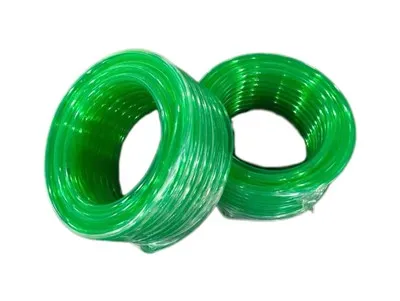
First off, let’s get one thing straight: not all transparent hoses are created equal. When someone says “transparent hose,” they might be talking about PVC, TPE, silicone, PTFE, even clear polyurethane—all totally different materials, and each plays nice (or not) with totally different chemicals. That’s where the chemical compatibility chart comes in. It’s essentially a cheat sheet that tells you: “Hey, if you’re gonna run [X chemical] through this [Y hose material], how long will it last, will it get brittle, swell, get cloudy, or even leach gunk into your product?”
I see this mistake all the time: a customer buys a clear PVC hose because it’s cheap and see-through, then uses it to pump some industrial solvent for a parts washer. Next thing I know, they’re emailing me saying the hose split open and flooded their shop floor. That’s exactly why the chart exists—no guesswork, no wasted money, no last-minute panics.
Let me walk you through how these charts actually work, because it’s not as hard as it looks. Most charts split chemical compatibility into 3 main categories, and I make sure my team explains these to every new client, not just send them a PDF and hope they get it. First is “Excellent” compatibility—this means the hose material is totally stable with the chemical, no swelling, no brittleness, no leaching, and you can run that stuff through it for months (or even years, depending on pressure and temperature). Second is “Fair” compatibility—here it might work for a little while, but you’ll have to check in every couple weeks, or limit the temperature, or don’t run it at full pressure. Third is “Poor” compatibility—run this chemical in this hose, and you’re looking at a leak, break, or total failure fast.
Wait, but temperature matters too, right? Yeah, that’s a big one most people miss. A chemical might be “Excellent” at room temperature, but if you’re pumping it at 140°F (like hot water for dishwashing) that changes everything. The best charts I’ve come across (and the ones I use to build our own for my hoses) have a little note next to each chemical about temp limits, because that’s the #1 variable that catches people off guard. For example, our clear silicone hoses work great for cold food syrups, but if you run boiling tomato sauce through them long-term, they’ll start to break down, which you’ll never catch from just a quick glance at the chart.
Let’s use real examples from our inventory, since that’s what I actually deal with daily. Our top-seller is a clear TPE hose—super flexible, cheap, totally see-through, great for food use (no weird plastic leaching). Looking at our compatibility chart, it’s “Excellent” for things like water, soda, mild acids (like lemon juice or vinegar), and even some low-concentration alcohols. But if you try to pump pure acetone (like from nail polish remover or industrial cleaning) through it? That’s marked “Poor” because acetone swells TPE so bad the hose will double in size in a week. Another example: our clear PTFE hose—pricier, but super durable for harsh chemicals. That same acetone is “Excellent” for PTFE, but PTFE is a little stiffer than TPE, so if you need a hose that bends tight, that’s a tradeoff the chart makes clear.
Another thing people don’t get: these charts aren’t one-size-fits-all. I’ve had customers bring me a chemical that’s not even on a standard chart—like a custom cleaning solution they mix in-house, not something off a label. Here’s the thing: standard charts are made with pure chemicals, but when you mix stuff, that changes compatibility. For example, a 50/50 mix of water and bleach is way different than pure bleach. So if you’ve got a custom blend, don’t just guess off a chart—shoot me an email, send me the exact mix, and we can test a sample before you order a whole bulk run. I used to get a guy once who ran a craft brewery—he was using a PVC hose for his beer line, thinking all clear hoses are food-safe. Turns out PVC leached a weird chemical into the beer that made it taste off, even though the chart said PVC is fine for water. Wait no—food-grade PVC is fine, but he was using a non-food-grade one, which is why the chart only worked if you pick the right grade of hose material. That’s another key point: always match the hose grade to the chart, not just the transparency.
Now, how do I use this chart when a customer comes to me? Let’s say someone calls and says, “I need a clear hose for pumping laundry detergent from a tote to a washer.” First I ask: is that liquid detergent, or powdered mixed with water? What’s the temperature—room temp, or hot for pre-wash? Are you using this for commercial laundry, so it needs to hold up 8 hours a day? Then I pull up our chart: clear TPE is “Excellent” for liquid laundry detergent at 120°F, holds up to heavy use, see-through so you can spot clogs right away. If they said they needed it for the same detergent but at 160°F (really hot wash), then TPE drops to “Fair,” and I’d point them to our clear EPDM hose, which is rated higher for temp, and the chart shows it’s “Excellent” at that temp. If they tried to push for the cheapest option, I’d warn them—TPE might last a month, EPDM would last a year, so that’s a difference you can’t ignore.
I also wanna touch on what the chart doesn’t cover, because there’s a little common sense you need to pair with it. For example, pressure. A chemical might be “Excellent” compatibility at low pressure (like gravity flow from a bucket), but at 100 PSI, that same hose might fail because the chemical made the material weaker, even if the chart says compatibility is good. That’s why when I send a chart to a customer, I always add a note to check pressure ratings too—don’t just rely on chemical compatibility. And of course, if you’re dealing with hazardous chemicals (like acids or flammables), you should also check the hose’s flame resistance or static discharge ratings, but that’s a whole other layer on top of the chemical compatibility.
Wait, another mistake I see: people thinking because a hose is transparent, it’s “food-safe.” No way. You can get clear PVC, clear silicone, clear polyurethane—only specific grades are food-safe, and the chart will mark that. For example, our clear silicone has a “Food-Grade” label next to it on the chart, so it’s safe for fruit juices, pharmaceuticals, whatever. But our clear polyurethane? Not food-safe, because it has additives that leach into food. That’s why the chart doesn’t just list chemicals—it also has little tags for grade, temp, pressure, so you don’t mix that up.
Let me get personal here—last year I had a customer who owned a small artisanal soap shop. He ordered 50 feet of clear PVC hose to pump lye solution (super caustic, right?) from a mixing tank to his soap molds. He used the chart from the supplier he bought the hose from (not me, at first) and it said PVC was “Excellent” for lye. But after 3 weeks, the hose started cracking, and he had lye dripping all over his shop floor. He came to me panicking, said he’d lost $2k in soap supplies and had to close early. I checked the chart—turns out that particular chart didn’t specify it was for low-concentration lye, not pure lye. I sent him our clear PTFE hose, which the chart says is “Excellent” for pure lye at room temp, and he’s used it for 18 months now without a single issue. That’s exactly why I make sure my charts are super specific, no vague terms—no “lye” without noting concentration, no “acid” without noting strength.
So, what should you do if you’re looking for a clear hose and need to use the compatibility chart? First, write down all the details of what you’re pumping: exact chemical (or mixture), concentration, temperature, pressure, and any special requirements (like food-safe, non-toxic, etc.). Second, when you get a chart, don’t just scan for “Compatible”—look at the grade of hose material too. Third, if there’s anything not on the chart, ask your supplier—good suppliers (like me) will test stuff for you, or at least point you to the right hose based on their experience. Fourth, don’t forget to check the fine print on the chart about temp and pressure, because that changes everything.
At the end of the day, the chemical compatibility chart for a transparent hose isn’t some corporate hoax to make you buy more expensive stuff—it’s a tool to keep your project running smoothly, no leaks, no wasted materials, no headaches. I’ve been doing this long enough that I can usually tell a customer just by their question if they’ve actually used the chart right or just glanced at it. The folks who take 5 minutes to get all their details straight and check the chart end up being repeat customers, which is what I care about more than a one-time sale.
If you’re in the market for a transparent hose—whether it’s for a brewery, a cleaning business, a lab, a food truck, or whatever—don’t mess around with guessing the chemical match. Shoot me a note, tell me exactly what you need it to do, and I’ll not only point you to the right hose, I’ll walk you through our full compatibility chart so you know exactly why it works, no confusing jargon. No sales pitches, no hidden fees—just honest advice from someone who’s been in this space for years and has fixed more blown hoses than I can count. Let’s make sure your next hose doesn’t become a disaster story. Contact me today to talk through your project needs and get the right transparent hose with the right chemical compatibility for your specific use case.
PVC Suction Pipe References:
- National Institute of Standards and Technology. (2021). Chemical Resistance of Polymer Materials. NIST Special Publication 1000-10.
- American Society for Testing and Materials. (2020). Standard Practice for Selecting and Testing Flexible Hose Assemblies for Chemical Service. ASTM D2000-20.
- International Organization for Standardization. (2019). Rubber and Plastics Hoses and Tubing – Chemical Resistance Test Methods. ISO 1817:2019.
Weifang Xinzhiyuan Plastic Co., Ltd.
As one of the most experienced transparent hose manufacturers and suppliers in China, we offer a wide range of products with superior quality. Please feel free to wholesale premium transparent hose made in China here from our factory. We also accept customized orders.
Address: No. 700, Tongle Street, Economic Development Zone, Changle County, Weifang City, Shandong Province
E-mail: hua@xzypvchose.com
WebSite: https://www.pvchose-xzy.com/
