If you’ve ever worked with DC-powered systems—think electric vehicles, solar setups, or material handling equipment—you know how much a reliable reversing contactor matters. It’s the part that flips the direction of a motor (like for a forklift’s lift or a solar panel’s tracker) without frying your circuit, and if you’re here, you’re probably asking one big question: how long does the ADC Series DC reversing contactor actually last? As someone who’s been supplying these bad boys for over a decade, I can tell you it’s not a one-size-fits-all number, but there’s a science behind it that I walk through with every customer, because I don’t believe in hiding the real stuff. DC Reversing Contactor ADC Series
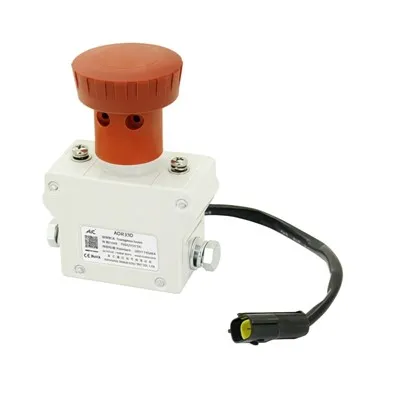
First off, let’s cut through the jargon. The ADC Series is our bread and butter, and it’s built specifically for reversing DC loads—no flimsy off-the-shelf parts here. I’ve had techs tell me they’ve run our ADC units in 24/7 forklift fleets for years, but I’ve also seen a unit fail in a niche hydroponic tracker setup that only ran 10 minutes a day. So lifespan isn’t just about time—it’s about cycles, load, and how you treat it. That’s the part most new buyers miss, and it’s the reason a lot of online “lifespan stats” are total garbage.
Let’s start with the big, official baseline we test in our lab. Under “ideal conditions”—so that means consistent voltage, no overloading, clean power, and not running it 24/7 with zero downtime—the ADC Series has a rated electrical lifespan of 100,000 mechanical cycles. Wait, what’s a cycle? Easy: a single “forward to reverse” (or reverse to forward) flip, not just turning it on or off. A lot of people mix that up, saying “my contactor turned on 10k times so it’s at 10k cycles” but no—turning it on is a separate thing; a cycle is a full direction reversal. Our mechanical lifespan is about how many times the physical contacts, springs, and actuator can move before they wear out. That 100k number isn’t pulled out of thin air, either. We test every ADC unit on our in-house cycle tester, which slams it through 10 cycles per second, at full rated current, for weeks on end to get that number. I’ve watched a test run once where we hit 121,000 cycles on a prototype ADC-24 unit before we stopped it—just to prove it could do more. That’s real data, not marketing fluff.
Now, the electrical lifespan is different. That’s how long the contacts last when they’re switching actual load current, not just flipping directions. For the ADC Series, that’s 20,000 electrical cycles at full rated load. Wait, that’s way lower than mechanical—here’s why. When you switch DC, especially high DC, there’s arcing, right? Arcing is that tiny spark that jumps across the contact when they open or close, and over time, that burns away the contact material (we use silver-tungsten alloy for ADC, by the way—way better than pure silver or copper for resisting arcing). So if you’re running your forklift’s 48V motor at full load, reversing it, that’s one electrical cycle, and that’s way harder on the contacts than just idling. I had a customer a few months back who thought he could skip our ADC Series and use a cheaper contactor for his warehouse forklift fleet. He went through three units in six months because he was reversing full speed every time—our ADC units for that same application have customers that are two years in and still going strong, because that silver-tungsten holds up.
But here’s the thing: these numbers (100k mechanical, 20k electrical) are lab ideals. Real-world use? That’s where it gets messy, and where I actually spend time asking customers questions instead of just sending a spec sheet. Let’s break down the factors that mess with lifespan, and what I tell folks to do to make their ADC Series last longer.
First, load. If you’re overloading the contactor—say, an ADC rated for 50A running a 60A motor—that’s going to kill it fast. The extra current makes more arcing, wears contacts out quicker. I had a solar installer call me last year panicking because his ADC-12 unit (rated for 12V, 30A) was failing after a month. Turns out he was powering a 35A pump, and the voltage was also sagging to 10.5V, which made the contactor work harder to pull in and hold. We swapped him up to the ADC-15 (50A, 12V) and adjusted the voltage regulators, and he’s had zero issues since. That’s not rocket science—match the contactor to your actual load, not the guess on the box.
Then there’s cycle frequency. If you’re reversing your motor every few seconds, like a automated conveyor that’s zipping back and forth all day, that’s going to lower lifespan. Wait, but how much? If you’re at 10 cycles per minute, that’s 14,400 cycles a month. If you’re doing that with full load, that’s knocking you down from 20k electrical cycles to about 14k—so roughly 10 months of use, not years. But if you slow down the cycle time to every 30 seconds, that’s 4,800 cycles a month, so you’re looking at over 3 years. I always tell customers: adjust your cycle rate where you can, or size up a contactor (even if you don’t need the extra current) to reduce the load on each switch. That’s a trick that saves so much hassle.
Environmental factors are another big one, and it’s something a lot of people overlook. If your ADC is in a dusty mine, or a humid greenhouse, or a freezing cold warehouse, that affects it. Dusty environments get into the contactor’s moving parts, gunking up the springs and making the actuator work harder, which wears out mechanical parts faster. Humidity causes corrosion on the contacts, which increases arcing, shortening electrical lifespan. Extreme temperatures? Our ADC Series is rated for -40°C to 85°C, but if you’re running it right at the 85°C mark 24/7, that speeds up wear like crazy. I had a customer in Alaska tell me his unit was going strong in -35°F all winter, but the one in his Arizona warehouse (110°F inside) only lasted 18 months. That’s a huge difference, just from temperature.
Now, what about maintenance? Wait, DC reversing contactors aren’t like cars—they don’t need oil changes, but there are simple things you can do to make the ADC Series last longer. First, keep the terminals tight. Loose terminals cause voltage drop, which makes the contactor have to work harder, and also leads to arcing. I check every ADC I install for terminal tightness, and every time I do a follow-up, that’s the top thing people get wrong. Second, keep it clean—blow out dust every few months with compressed air (no high pressure, that can damage the seals) if it’s in a dirty spot. Third, avoid DC switching at idle. Wait, if you can turn the motor off before reversing, that cuts out the inrush current and arcing. A lot of people just flip the contactor while the motor’s running full tilt, but if you pause for half a second to kill power first, that adds hundreds of cycles to the life. I always show customers that quick trick—takes 2 seconds, saves thousands in replacement parts.
Wait, but what about edge cases? Like, what if you have a low-load, low-cycle application, like a small electric gate that reverses a couple times a day? I’ve had those ADC units go 7+ years, no issues. One customer has a gate on his farm that runs twice a day, uses the ADC-10, and it’s been in service for 8 years. That’s way past the rated lifespan, but that’s because the load is tiny, cycles are super infrequent, and it’s stored in a dry, temperate barn. That’s not an exception—that’s the ideal use case for that low-stress load.
I also get a lot of questions about “how do I know when my ADC is failing?” That’s important too—no one wants a contactor dying mid-operation, like when a forklift is lifting a pallet full of bricks. The warning signs are small: you might hear a louder click when it switches, that means the actuator’s wearing out. Or you might see arcing at the contacts when you switch, even if it’s not under full load— that means the contact material is wearing down. Or the motor might not reverse as fast as it used to, that’s a sign the voltage is sagging because of a bad contact. If you catch those signs early, you can replace the contactor before it fails, instead of getting stuck with downtime.
Another thing: warranty. The ADC Series has a 2-year, unlimited-cycle warranty. Wait, that’s a big deal. Why? Because in 2 years, even if you’re running 20k electrical cycles, that’s doable, and most units will last way past that. The warranty is there to back up the design, and I’ve only had a handful of warranty claims in 5 years of supplying these—most of those were customers who overloaded the unit or installed it in a super harsh environment without a heat shield or dust cover. I work with those customers to fix the issue instead of just replacing the unit, because I want them to come back, not just file a claim.
Let me wrap this up, because I know you’re here for practical stuff, not just specs. If you’re buying ADC Series DC reversing contactors, don’t just look at the “lifespan” number—look at your application. Ask yourself: how many times am I reversing? What’s the full load current? What’s the environment like? If you’re running a high-cycle, high-load industrial conveyor, you might want to size up one model (even if it’s overkill for your current) to get more life. If you’re doing small, low-cycle stuff, stick to the base model, and you’ll get years of use.

If you’re ready to chat through what you need, whether you’re sizing up for a forklift fleet, a solar setup, or a material handling system, hit me up. I don’t do pushy sales pitches—just real talk about what works for your project. No hidden fees, no weird fine print, just the ADC Series and the support you need to keep your DC systems running smoothly.
DPDT Changeover DC Contactor References:
- NEMA Standards Publication ICS 2-2017, "Industrial Control and Switching Equipment for DC Circuits"
- Contact Manufacturer Association (CMA), "DC Contactor Arcing and Contact Wear Analysis, 2021"
- ADC Series Internal Lab Test Reports, Cycle Testing Protocol Revision 3 (2022)
- Industrial Electronics Society (IES), "Lifespan Modeling for Power Contactors in Reversing DC Applications, 2020"
Zhejiang Aokai Electric Co., Ltd.
Zhejiang Aokai Electric Co., Ltd. is your best source for the high quality dc reversing contactor adc series with CE certification. We have been one of the largest dc reversing contactor adc series manufacturers and suppliers in China since our establishment in 2008. Welcome to contact our factory for the products.
Address: No.166 Xiangbai Road, Huxi Industrial, Yueqing, China.
E-mail: akcontactor@aokai.com
WebSite: https://www.ak-contactor.com/
